Causes, Symptoms & When to Worry
If you’ve ever heard a strange, raspy noise coming from your feline friend, you’ve probably asked yourself, “Is this cat coughing sound normal, or should I be worried?” Coughing in cats is more common than most owners realize, but it isn’t always harmless.
Sometimes it’s a simple hairball working its way up. Other times, it’s an early warning sign of asthma, infection, or even heart disease.
This guide breaks down everything you need to know about a cat coughing sound what it means, what causes it, how to tell it apart from similar noises like gagging or sneezing, and when it’s time to call the vet.
What Does a Cat Coughing Sound Like?
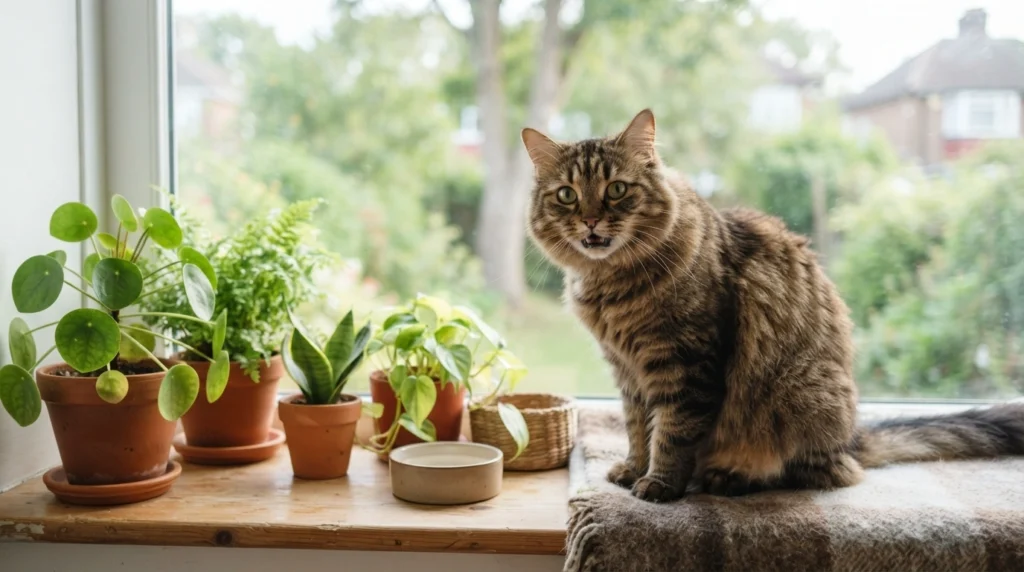
Most owners describe a cat coughing sound as a short, forceful, hacking noise, often accompanied by a crouched body posture and an extended neck. It can sound dry and raspy, or wet and phlegmy, depending on the underlying cause.
Here are the most common variations owners report:
- Dry, hacking cough sounds like a quick, repetitive “cough-cough-cough,” often linked to airway irritation.
- Wet or productive cough sounds moist or gurgly, sometimes followed by gagging, which may indicate mucus or fluid in the airways.
- Wheezy cough a whistling or high-pitched sound during breathing, commonly associated with feline asthma.
- Single, sharp cough often mistaken for a sneeze, usually caused by minor throat irritation.
“Coughing is a reflex that helps clear the airways of irritants, mucus, or foreign material but persistent coughing in cats should never be ignored.” Cornell Feline Health Center
Recognizing the specific tone and pattern of a cat coughing sound can help you and your veterinarian narrow down the cause much faster.
Common Causes of a Cat Coughing Sound
There isn’t just one reason cats cough. The underlying cause can range from something as mild as a hairball to a chronic respiratory condition.
Hairballs
One of the most frequent triggers of a cat coughing sound is a hairball. Cats groom themselves constantly, and loose fur accumulates in the stomach.
When it can’t pass through the digestive tract, the body tries to expel it through coughing and retching, which often looks and sounds like a productive cough.
Feline Asthma
Feline asthma is a chronic inflammatory condition of the airways. It typically produces a wheezy cat coughing sound, sometimes paired with open-mouth breathing or a hunched posture.
Asthma attacks can range from mild to life-threatening and often require long-term management.
Upper Respiratory Infections
Viral or bacterial infections similar to a cold in humans are a leading cause of a cat coughing sound, especially in kittens or cats in shelters and multi-cat households.
These infections are often accompanied by sneezing, nasal discharge, and watery eyes.
Heartworm Disease
Although less common in cats than dogs, heartworm disease can cause a chronic, dry cat coughing sound due to inflammation in the lungs and airways. It’s a serious condition that requires prompt veterinary attention.
Foreign Objects or Irritants
Grass blades, small toys, dust, smoke, or strong household chemicals can irritate a cat’s throat and trigger sudden coughing. In these cases, the cat coughing sound usually appears suddenly and may resolve once the irritant is cleared.
Allergies
Just like humans, cats can develop seasonal or environmental allergies. Pollen, mold, or certain cleaning products can inflame the airways, leading to a persistent cat coughing sound during specific seasons or after exposure to certain triggers.
Cat Coughing Sound vs Gagging vs Sneezing
Owners often confuse coughing with other respiratory noises, which can delay proper diagnosis. Here’s how to tell them apart:
- Coughing a forceful expulsion of air from the lungs, usually with a hacking or wheezing tone.
- Gagging often follows a cough and may involve retching or attempting to vomit, especially with hairballs.
- Sneezing a quick burst of air through the nose, typically linked to nasal irritation rather than the lungs or throat.
Understanding this distinction is important because a true cat coughing sound points toward the lower respiratory tract, while sneezing usually points toward the upper respiratory tract or nasal passages.
When a Cat Coughing Sound Becomes an Emergency
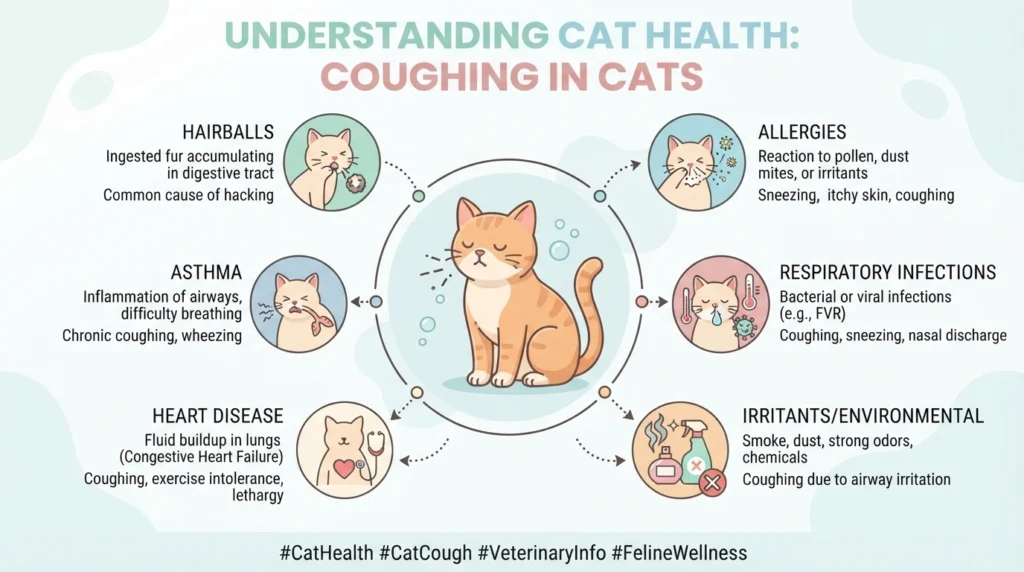
While occasional coughing (like clearing a hairball) is usually not urgent, some symptoms alongside a cat coughing sound indicate a medical emergency. Watch for:
- Difficulty breathing or rapid, labored breaths
- Blue or pale gums (a sign of oxygen deprivation)
- Coughing that lasts longer than a few days
- Coughing paired with lethargy or loss of appetite
- Visible weight loss over time
- Coughing up blood or unusual discharge
- Open-mouth breathing (cats rarely breathe this way unless distressed)
“Any cat showing labored breathing alongside coughing should be seen by a veterinarian immediately this combination can indicate a life-threatening emergency.” American Veterinary Medical Association
If your cat shows any of these signs, don’t wait to see if the cat coughing sound resolves on its own. Seek veterinary care right away.
How Vets Diagnose the Cause of a Cat Coughing Sound
Veterinarians typically use a combination of tools to identify what’s triggering a cat coughing sound. Common diagnostic steps include:
- Physical examination listening to the lungs and heart with a stethoscope.
- Chest X-rays to check for fluid, masses, or signs of asthma or heart disease.
- Blood tests to rule out infections, parasites, or heartworm disease.
- Fecal exams to check for intestinal parasites that may contribute to respiratory symptoms.
- Bronchoscopy or airway wash used in more complex or chronic cases to examine the airways directly.
A precise diagnosis is essential because treatment for a cat coughing sound caused by asthma looks very different from treatment for one caused by infection or heart disease.
Home Care Tips for a Mild Cat Coughing Sound
If your veterinarian has confirmed the cough isn’t an emergency, there are a few supportive steps you can take at home:
- Use a hairball-control diet or supplement to reduce fur ingestion.
- Keep the home free of smoke, aerosols, and strong-scented cleaning products.
- Use an air purifier to reduce airborne allergens.
- Maintain a stress-free, clean litter environment to support overall respiratory health.
- Monitor and log how often the coughing occurs, along with its sound and duration, to share with your vet.
These steps won’t replace professional care, but they can help reduce triggers that worsen an occasional cat coughing sound.
How to Prevent a Cat Coughing Sound
Prevention largely depends on the underlying cause, but general best practices include:
- Regular grooming to minimize hairball formation
- Routine veterinary checkups, especially for senior cats
- Keeping vaccinations up to date to prevent respiratory infections
- Using heartworm preventatives recommended by your vet
- Avoiding exposure to smoke, dust, and strong chemical fumes indoors
Consistent preventive care is the most effective way to reduce the frequency of an unexplained cat coughing sound over time.
Frequently Asked Questions
Is it normal for cats to cough occasionally?
Yes, occasional coughing especially related to hairballs is usually normal. However, a cat coughing sound that becomes frequent, persistent, or paired with other symptoms should be evaluated by a vet.
Can stress cause a cat to cough?
Stress itself doesn’t typically cause coughing, but it can weaken the immune system, making cats more susceptible to respiratory infections that trigger coughing.
How long should I wait before taking my cat to the vet for coughing?
If the cough lasts more than 2–3 days, worsens, or is accompanied by breathing difficulty, lethargy, or appetite loss, seek veterinary care promptly rather than waiting.
Does a cat coughing sound always mean asthma?
No. While asthma is a common cause, coughing can also result from hairballs, infections, allergies, heartworm disease, or irritants. Only a vet can confirm the exact cause.
Can kittens develop a coughing sound too?
Yes, kittens are especially prone to upper respiratory infections, which often produce a coughing or sneezing sound along with nasal discharge.
Conclusion
A cat coughing sound can range from a harmless hairball reflex to a symptom of a serious underlying condition like asthma, infection, or heart disease.
Paying close attention to the type, frequency, and accompanying symptoms of the cough can help you determine whether it’s something to monitor at home or a reason to visit the vet.
When in doubt, especially if breathing difficulty or lethargy is involved, always consult a veterinary professional promptly. Early diagnosis is often the key to a faster, easier recovery for your cat.
References
- Cornell Feline Health Center Respiratory Health in Cats:
- American Veterinary Medical Association (AVMA) Feline Respiratory Disease:
- VCA Animal Hospitals Coughing in Cats:
- American Association of Feline Practitioners (AAFP):
- ASPCA Cat Health and Wellness Resources: