What It Really Means
Most cat owners assume coughing automatically means a hairball is on its way. But what happens when your cat is coughing but no hairball ever appears?
This scenario is more common than people realize, and it often points to something other than simple fur buildup. A cat coughing but no hairball present could be dealing with anything from a minor throat irritation to a chronic respiratory condition.
This article walks through the most likely explanations, how to recognize warning signs, and when professional veterinary care becomes necessary so you’re never left guessing what’s really going on with your cat.
Why Is My Cat Coughing But No Hairball Comes Up?
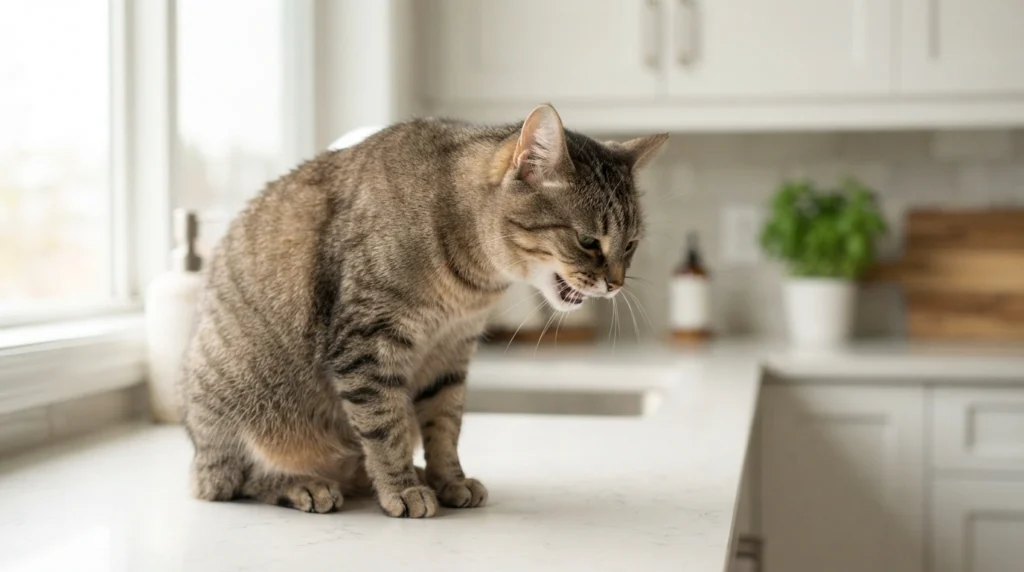
When a cat coughs repeatedly without producing a hairball, it usually means the irritation is coming from somewhere other than the digestive tract. Coughing is a reflex triggered by irritation in the throat, airways, or lungs — and hairballs are just one of many possible triggers.
A cat coughing but no hairball situation typically falls into one of these categories:
- Respiratory tract irritation — from allergens, dust, or smoke
- Airway inflammation — such as feline asthma or chronic bronchitis
- Infections — viral or bacterial respiratory illness
- Structural issues — including foreign objects lodged in the throat
- Underlying disease — such as heartworm or, less commonly, heart-related fluid buildup
Because the possible causes vary so widely, tracking how often the coughing happens and what it sounds like can help your vet narrow things down quickly.
Common Causes of a Cat Coughing But No Hairball
Feline Asthma
Feline asthma is one of the most frequent reasons behind a cat coughing but no hairball ever showing up. This chronic condition inflames the airways, causing wheezing, rapid breathing, and recurring coughing fits often with no mucus or hair involved at all.
Upper Respiratory Infections
Viral infections like feline herpesvirus or calicivirus can inflame the throat and airways, leading to persistent coughing. In these cases, cats are often coughing but no hairball is present because the irritation stems from infection, not digestion.
Chronic Bronchitis
Long-term inflammation of the bronchial tubes can cause a dry, recurring cough. This condition is sometimes mistaken for hairball-related coughing, but a cat coughing but no hairball for weeks at a time may actually be dealing with bronchitis.
Foreign Object in the Throat
Occasionally, a blade of grass, small string, or food particle becomes lodged in a cat’s throat. This triggers sudden, forceful coughing as the body tries to dislodge it — with no hairball involved whatsoever.
Heartworm Disease
Though less common in cats than dogs, heartworm disease can cause chronic coughing due to inflammation in the pulmonary arteries and lungs.
A cat coughing but no hairball combined with lethargy or rapid breathing should raise concern for this possibility.
Environmental Allergies
Dust, pollen, mold spores, and scented candles or sprays can all irritate a cat’s respiratory system. Seasonal or environmental allergies are a frequent, often overlooked cause of a cat coughing but no hairball ever produced.
Heart Disease
In rare cases, especially in older cats, coughing can be linked to fluid accumulating around the lungs due to underlying heart conditions. This type of cough tends to be persistent and may worsen with activity.
“Chronic coughing in cats without an obvious cause, such as hairballs, warrants a full veterinary workup to rule out asthma, infection, or heart disease.” VCA Animal Hospitals
How to Tell If It’s Serious
Not every instance of a cat coughing but no hairball requires an emergency visit, but certain signs indicate it’s time to act. Watch closely for:
- Coughing that occurs daily or multiple times per day
- Wheezing or whistling sounds while breathing
- Rapid or labored breathing, even at rest
- Lethargy, hiding, or reduced appetite
- Weight loss over several weeks
- Blue-tinged or pale gums
- Coughing fits that end in gagging without producing anything
If your cat displays several of these symptoms together, it’s a strong sign that the coughing isn’t just a passing irritation.
Cat Coughing But No Hairball: When to See a Vet
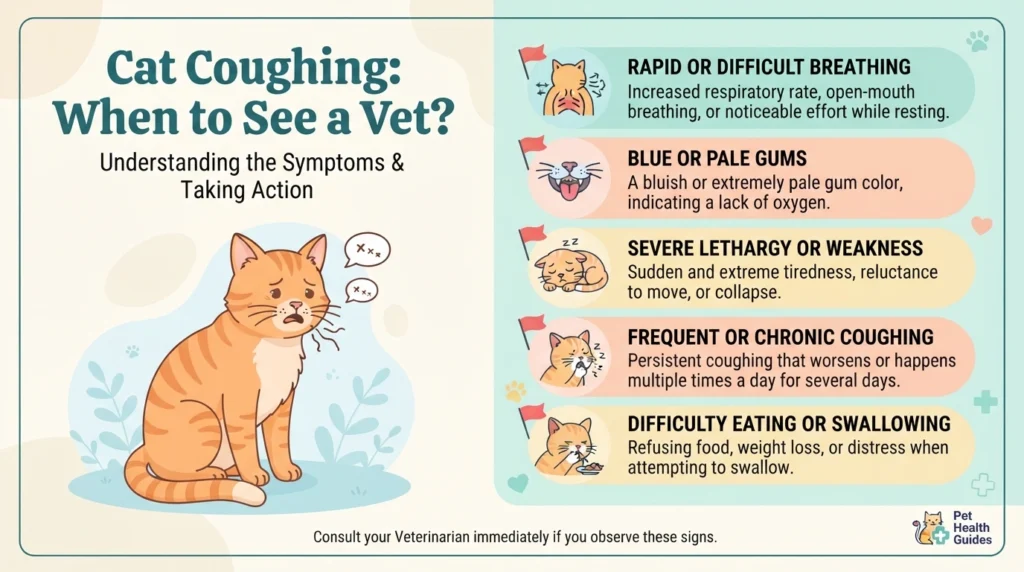
A single, isolated cough usually isn’t cause for panic. However, you should schedule a veterinary visit if:
- The coughing persists for more than 2–3 days
- It happens frequently or seems to be increasing in intensity
- Your cat shows signs of breathing difficulty
- There’s noticeable weight loss or appetite change
- Your cat seems unusually tired or withdrawn
- The cough sounds wheezy, wet, or paired with gagging
“Persistent coughing without a clear cause should never be dismissed — early diagnosis significantly improves treatment outcomes for chronic respiratory conditions in cats.” — Cornell Feline Health Center
Bringing a video or voice recording of the coughing episode to your vet appointment can also be extremely helpful, since cats often don’t cough on cue during exams.
How Vets Diagnose a Cat Coughing But No Hairball Case
Since there are multiple possible causes, veterinarians typically follow a structured diagnostic process:
- Physical exam — listening to the lungs and heart for abnormal sounds
- Chest X-rays — to check for inflammation, fluid, or masses in the lungs
- Bloodwork — to detect infections, parasites, or organ-related issues
- Heartworm testing — especially in cats with outdoor access
- Airway cytology or bronchoscopy — used for chronic or unexplained cases
- Allergy assessment — to identify environmental triggers
This step-by-step approach helps rule out the most dangerous possibilities first, ensuring your cat receives the right treatment rather than a generic solution.
Managing a Cat Coughing But No Hairball at Home
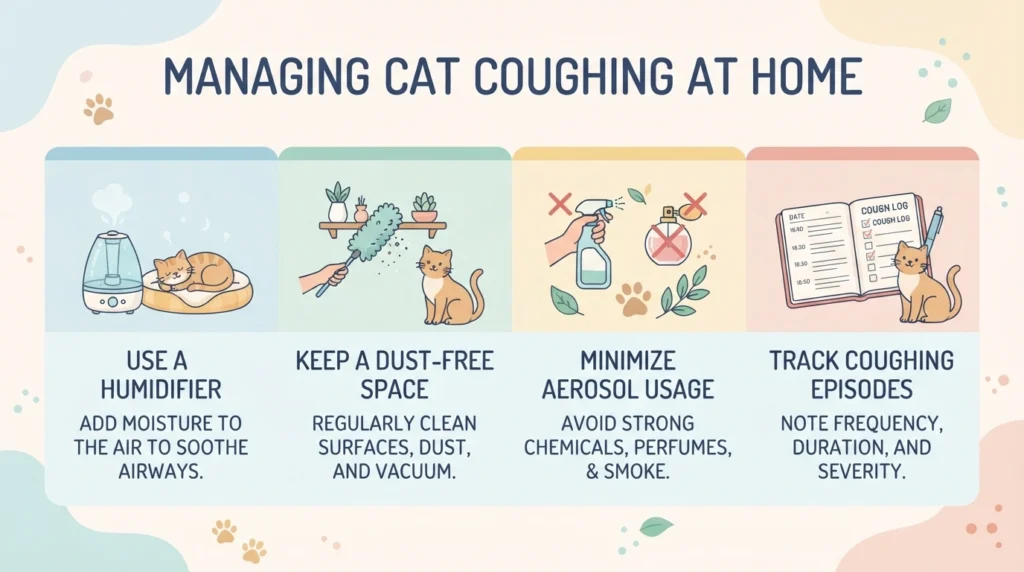
Once serious conditions have been ruled out by a vet, some supportive care steps can help reduce mild, occasional coughing:
- Switch to a fragrance-free, low-dust cat litter
- Avoid smoking or using aerosol sprays near your cat
- Use an air purifier to reduce airborne allergens indoors
- Keep a symptom diary noting frequency, sound, and duration of coughing
- Ensure your cat stays up to date on parasite prevention, including heartworm protection
These steps won’t cure an underlying medical condition, but they can minimize environmental triggers that make coughing worse.
Preventing Future Coughing Episodes
While not every cause is preventable, several proactive habits can reduce the risk of unexplained coughing:
- Schedule annual or biannual veterinary checkups
- Keep vaccinations current to prevent respiratory infections
- Reduce exposure to household chemicals, smoke, and strong fragrances
- Use vet-approved heartworm and parasite prevention year-round
- Monitor senior cats closely for early signs of heart-related issues
Consistent preventive care remains the most reliable way to catch respiratory issues early, before a cat coughing but no hairball situation develops into something more serious.
Frequently Asked Questions
Is it normal for a cat to cough without ever producing a hairball?
Occasional coughing without a hairball can be normal, especially if it’s infrequent. However, if it becomes a regular pattern, it’s worth having your vet investigate the underlying cause.
Can allergies really cause a cat to cough repeatedly?
Yes. Environmental allergens like dust, pollen, and mold can irritate a cat’s airways, leading to recurring coughing episodes without any hairball involvement.
How can I tell the difference between coughing and gagging in cats?
Coughing usually involves a forceful, repetitive sound from the chest, while gagging often looks like retching and may be an attempt to bring something up, such as a hairball or foreign object.
Should I be worried if my cat coughs only once in a while?
A single, isolated cough is usually not alarming. Frequent, worsening, or symptom-paired coughing is what typically signals a need for veterinary evaluation.
Can asthma in cats be managed long-term?
Yes, feline asthma is a manageable chronic condition. With proper veterinary guidance, including medication and environmental adjustments, many cats live comfortably despite the diagnosis.
Conclusion
A cat coughing but no hairball in sight can be confusing and even a little worrying for pet owners who assume all coughing points to fur buildup.
In reality, the causes range widely from asthma and infections to allergies, foreign objects, and, in rarer cases, heart or heartworm-related disease.
Paying attention to frequency, sound, and accompanying symptoms is the best way to determine whether the coughing is minor or something that needs professional attention.
When in doubt, a veterinary visit offers the clearest path to an accurate diagnosis and effective treatment plan for your cat’s long-term health.
References
- VCA Animal Hospitals Coughing in Cats:
- Cornell Feline Health Center Feline Asthma and Respiratory Disorders:
- American Veterinary Medical Association (AVMA) Respiratory Diseases in Cats:
- American Association of Feline Practitioners (AAFP):
- American Heartworm Society Heartworm in Cats:
- ASPCA Cat Care and Health Guidance: