Few things worry a pet owner more than hearing their cat coughing and sneezing at the same time. On their own, either symptom can be relatively harmless, tied to dust, a hairball, or a passing irritation.
But when a cat is coughing and sneezing together, it often points to something affecting the respiratory system more broadly, and that combination deserves a closer look.
In this guide, we’ll walk through exactly why cats develop both symptoms at once, the most common underlying causes, how vets typically diagnose the issue, and the warning signs that mean it’s time to stop waiting and book an appointment.
What Does It Mean When a Cat Is Coughing and Sneezing?

Coughing and sneezing come from two different parts of the respiratory tract, but they’re closely connected. A cough originates in the lower airway and lungs, while a sneeze originates in the nasal passages.
When both happen together, it usually means the irritation or infection isn’t isolated to one small area, but is instead affecting a broader stretch of the respiratory system.
This combination is especially common with infections, since viruses and bacteria that affect the upper respiratory tract can easily irritate the throat and airway at the same time, triggering both symptoms in quick succession.
Quick Insight: A cat coughing and sneezing at the same time is more likely dealing with a spreading respiratory issue than two completely unrelated, isolated symptoms.
It’s also worth paying attention to timing. If sneezing started first and coughing developed a day or two later, that pattern often suggests an infection that began in the nasal passages and gradually spread toward the throat and airway.
On the other hand, if both symptoms appeared suddenly and together, it’s more likely tied to a single irritant, like dust, smoke, or a strong household chemical, affecting the whole respiratory tract at once.
Common Causes of Cat Coughing and Sneezing Together
There are several possible explanations for why your cat is coughing and sneezing, ranging from mild and temporary to more serious and chronic conditions.
1. Upper Respiratory Infections (URIs)
The most frequent cause of cat coughing and sneezing together is a viral or bacterial upper respiratory infection. Feline herpesvirus and calicivirus are especially common culprits, particularly in kittens, shelter cats, or multi-cat households.
2. Feline Asthma or Bronchitis
While asthma is usually linked more closely to cat coughing and sneezing, flare-ups can sometimes irritate the nasal passages as well, especially if the trigger is an airborne allergen like dust, pollen, or smoke that affects both the airway and the nose.
3. Allergies and Environmental Irritants
Household triggers like scented candles, cleaning sprays, cigarette smoke, or strong perfumes can irritate a cat’s respiratory system enough to cause both coughing and sneezing, particularly in cats with sensitive airways.
4. Sinus Infections
A sinus infection can cause persistent cat coughing and sneezing , sometimes with thick nasal discharge, and if it spreads toward the throat, coughing can follow as well.
5. Dental Disease
It might seem unrelated, but severe dental infections in the upper jaw can sometimes affect the nasal passages, leading to sneezing, and irritate the throat enough to trigger occasional coughing.
6. Foreign Objects or Irritants
A blade of grass, dust, or small foreign object lodged in the nose or throat can cause sudden, intense cat coughing and sneezing at the same time, often appearing suddenly with no other warning signs.
7. Fungal Infections
Less common but still possible, fungal infections like cryptococcosis can affect the nasal passages and respiratory tract, leading to a combination of chronic sneezing, coughing, and sometimes nasal discharge.
8. Nasal Polyps or Growths
In some cats, particularly middle-aged and senior cats, benign growths called nasal polyps can develop inside the nasal passages or upper throat. These growths can cause chronic sneezing, noisy breathing, and an occasional cough if they partially obstruct airflow, and they typically require veterinary evaluation and, in many cases, surgical removal.
How Vets Diagnose Cat Coughing and Sneezing
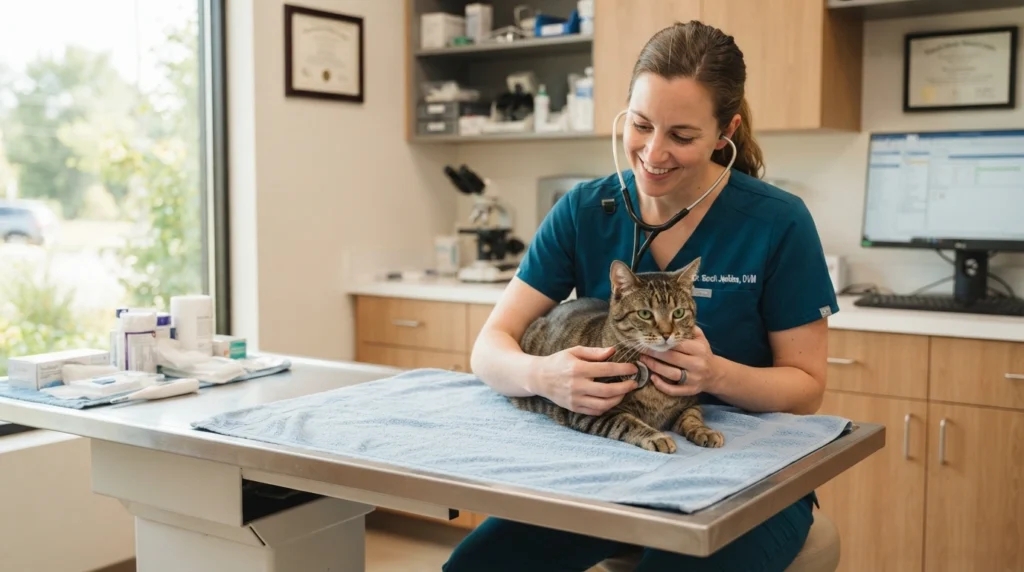
When a cat is brought in for coughing and sneezing together, veterinarians typically take a structured approach to narrow down the cause.
Physical Examination
Your vet will check the nose, mouth, throat, and chest, listening for abnormal sounds and looking for nasal discharge, redness, or swelling.
Diagnostic Testing
Depending on the severity and duration of symptoms, your vet may recommend:
- Bloodwork to check for underlying infections or immune issues
- Nasal or throat swabs to identify viral or bacterial causes
- Chest X-rays to rule out pneumonia or lung involvement
- Dental examination if oral disease is suspected
Treatment Trials
In some cases, especially with suspected allergies or asthma, vets may recommend a short treatment trial with antihistamines or anti-inflammatory medication to see if symptoms improve, which helps confirm the diagnosis.
This trial-based approach is particularly useful when test results come back inconclusive, since some respiratory conditions in cats don’t always show up clearly on standard bloodwork or imaging.
Tracking your cat coughing and sneezing in a simple log, noting when the coughing and sneezing happen, how long each episode lasts, and any possible triggers you’ve noticed, can also give your vet valuable information that supports a faster, more accurate diagnosis.
When Should You Be Concerned About Cat Coughing and Sneezing?
Occasional, mild coughing and sneezing isn’t usually an emergency, but certain signs mean you shouldn’t wait to contact your vet.
Seek veterinary care promptly if your cat’s coughing and sneezing is accompanied by any of the following:
- Thick, colored, or bloody nasal discharge
- Loss of appetite or noticeable weight loss
- Lethargy or hiding more than usual
- Difficulty breathing or open-mouth breathing
- Watery, red, or swollen eyes
- Symptoms lasting longer than a week
- Fever or noticeable warmth around the ears and paws
As many veterinary professionals point out, persistent nasal and respiratory symptoms lasting beyond a few days are rarely something that resolves entirely on its own without treatment.
Home Care Tips for Mild Cat Coughing and Sneezing
If your cat coughing and sneezing are mild, occasional, and not accompanied by any of the warning signs above, a few simple steps at home can help support recovery while you monitor the situation.
- Use a humidifier to keep the air from becoming too dry
- Gently wipe away nasal discharge with a warm, damp cloth
- Avoid scented candles, air fresheners, and smoke near your cat
- Encourage eating and drinking, even if you need to warm up wet food to enhance the smell
- Keep bedding and litter areas clean to reduce additional irritants
- Isolate a sick cat from other pets to prevent potential spread
These steps are meant to support comfort, not replace a proper diagnosis, especially if symptoms persist or worsen.
Is Cat Coughing and Sneezing Contagious to Other Cats?
If the underlying cause is viral or bacterial, such as feline herpesvirus or calicivirus, then yes, it can spread fairly easily to other cats through shared food bowls, litter boxes, grooming, or close contact.
This is especially important to keep in mind in multi-cat households or if you’re fostering a new cat, since even cats that appear healthy can sometimes carry and spread these viruses.
Isolating a coughing and sneezing cat, disinfecting shared surfaces, and washing your hands after handling a sick cat are simple ways to reduce the risk of spreading infection to other pets in the home.
Can Stress Trigger Cat Coughing and Sneezing?
Stress alone rarely causes coughing and sneezing directly, but it can weaken a cat’s immune response, making them more susceptible to flare-ups of underlying viral infections like feline herpesvirus, which often lies dormant until triggered by stress.
Moving to a new home, introducing a new pet, or even loud construction noise nearby can be enough to trigger a flare-up in cats that already carry a dormant virus, so keeping your cat’s environment calm and predictable can play a supporting role in reducing symptom frequency over time.
Multi-cat households in particular tend to see stress-related flare-ups more often, simply because competition for resources like food, litter boxes, and resting spots can create ongoing low-level tension.
Providing separate feeding stations, multiple litter boxes, and enough vertical space for each cat to retreat to can meaningfully reduce this kind of chronic stress, which in turn may lower how often dormant respiratory viruses resurface.
Frequently Asked Questions
Is it normal for cats to cough and sneeze occasionally?
Occasional, isolated cat coughing and sneezing can be normal, especially with dust or minor irritants. However, when both happen together frequently, it usually points to an underlying respiratory issue worth checking.
Why is my cat coughing and sneezing but still eating normally?
This is common in mild upper respiratory infections or allergy flare-ups, where cats can still eat and act relatively normal despite intermittent symptoms. It’s still worth monitoring closely and mentioning to your vet.
Can kittens get coughing and sneezing more easily than adult cats?
Yes, kittens have less developed immune systems, making them more vulnerable to upper respiratory infections that commonly cause both coughing and sneezing together.
How long does cat coughing and sneezing typically last?
Mild cases tied to minor irritants may resolve within a few days, but viral or bacterial infections can last one to two weeks, sometimes longer without proper treatment.
Can allergies really cause both coughing and sneezing in cats?
Yes, environmental allergens like dust, pollen, and mold can irritate both the nasal passages and airway simultaneously, leading to a combination of sneezing and coughing.
Should I take my cat to the vet the first time I notice coughing and sneezing?
If it’s a single, mild episode with no other symptoms, monitoring at home for a day or two is usually fine. However, if it repeats or worsens, a vet visit is the safer choice.
Conclusion
Cat coughing and sneezing together can range from a mild, temporary irritation to a sign of a more significant respiratory infection or allergy.
Paying attention to how often it happens, what other symptoms accompany it, and how your cat is behaving overall will help you decide whether home monitoring is enough or whether it’s time to see a vet.
When in doubt, especially with young kittens, senior cats, or symptoms lasting more than a few days, a veterinary check-up is always the safer path toward keeping your cat healthy and comfortable.
References
- Cornell Feline Health Center “Upper Respiratory Infections in Cats,” Cornell University College of Veterinary Medicine
- American Veterinary Medical Association (AVMA) “Respiratory Disease in Cats”
- VCA Animal Hospitals “Upper Respiratory Infections in Cats”
- American Association of Feline Practitioners (AAFP) “Feline Respiratory Disease Guidelines”
- Merck Veterinary Manual “Respiratory Diseases of Cats”
- ASPCA “Common Cat Health Problems”
- PetMD “Sneezing and Nasal Discharge in Cats”