What It Means and What to Do
You watch your cat take a few laps at the water bowl, then suddenly hunch over coughing. It’s a strange, unsettling moment, and it’s more common than most owners realize.
Cat coughing after drinking water can happen for reasons as simple as drinking too fast, or it can point to something that genuinely needs veterinary attention.
This guide covers exactly why this happens, how to tell a harmless one-off from a pattern worth worrying about, and practical steps you can take at home to reduce how often it occurs.
Why Does Cat Coughing After Drinking Water Happen?
At its core, coughing after a drink usually means a small amount of water has slipped into the windpipe instead of following its normal path down the esophagus.
The cough is simply the body’s reflex to clear that liquid out before it reaches the lungs. In most cases, cat coughing after drinking water is a brief, self-resolving event tied to drinking speed or bowl setup rather than a sign of illness.
That said, when this becomes a regular pattern rather than an occasional slip, it’s worth paying closer attention. Persistent cat coughing after drinking water can be a signal of something affecting the throat, airway, or swallowing mechanism that deserves a proper look.
Understanding why cat coughing after drinking water happens in the first place is the first step toward knowing whether it’s harmless or worth a vet visit.
Common Causes of Cat Coughing After Drinking Water
There isn’t a single explanation here. Vets typically point to a range of possibilities behind cat coughing after drinking water, from harmless habits to underlying medical conditions.
- Drinking too quickly – Gulping water rapidly, especially after play or exercise, can send small amounts into the windpipe instead of the esophagus.
- Water bowl depth or design – A bowl that forces the head too far down can increase the chance of water entering the airway.
- Foreign objects in the mouth – Hair, kibble, or debris stuck at the back of the throat can trigger coughing during or after drinking.
- Feline asthma or bronchitis – Cats with sensitive airways may cough more easily when water irritates already-inflamed tissue.
- Dental disease – Painful or inflamed gums and teeth can change how a cat swallows, increasing the chance of coughing.
- Laryngeal paralysis – A less common condition where the larynx doesn’t function properly, allowing water to slip into the airway.
- Upper respiratory infections – Viral illnesses like feline calicivirus or herpesvirus can irritate the throat and worsen coughing around drinking.
- Tight collars – Pressure on the throat from an ill-fitting collar can make swallowing water uncomfortable and trigger coughing.
Drinking Too Fast: The Most Common Trigger
If cat coughing after drinking water only happens occasionally, especially after a burst of play or a long stretch without water, rapid gulping is often the simple explanation for cat coughing after drinking water.
When a cat laps up water too quickly, some of it can accidentally enter the windpipe rather than the esophagus, triggering an immediate cough reflex to clear it. This is sometimes referred to as mild water aspiration, and it typically resolves within seconds without any lasting effect.
Bowl Setup and Water Quality
Environmental factors play a bigger role than many owners expect. A water bowl that’s too deep can force a cat to lower its head at an awkward angle, increasing the risk of water slipping into the airway.
Water that’s too cold, contains strong chlorine, or simply tastes “off” to a cat’s sensitive palate can also trigger gagging that looks like coughing. Switching to a shallower bowl or filtered water sometimes resolves the issue entirely.
Respiratory and Airway Conditions
When cat coughing after drinking water happens frequently and isn’t linked to fast drinking, an underlying respiratory issue becomes more likely.
Feline asthma and bronchitis both make the airway more reactive, meaning even a small amount of water can trigger a stronger cough response than it would in a healthy cat.
In these cases, cat coughing after drinking water tends to show up alongside other symptoms like wheezing or occasional rapid breathing, rather than appearing as an isolated event.
Is It a Cough, a Gag, or Reverse Sneezing?
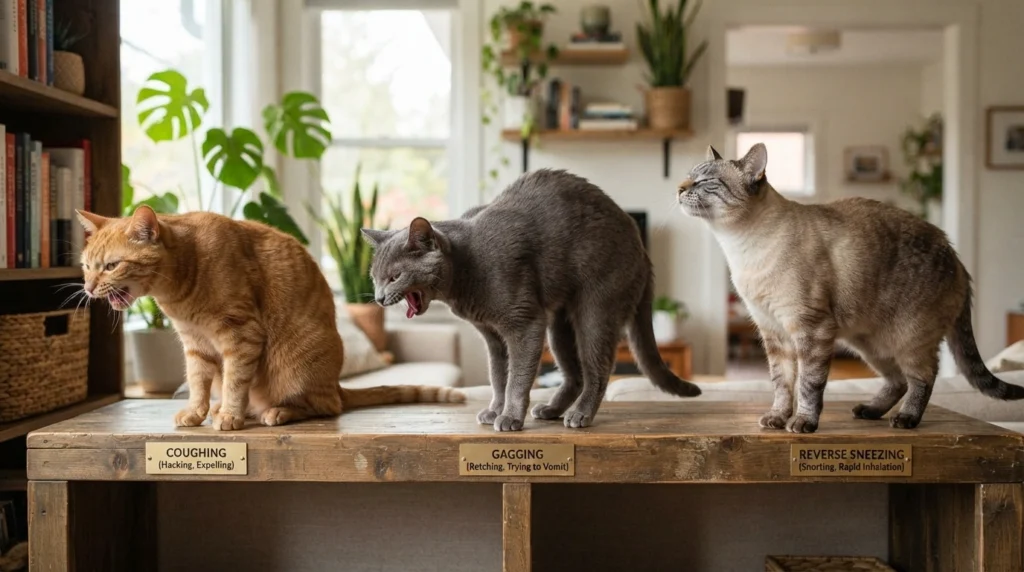
Owners sometimes struggle to tell these apart, and the distinction matters for figuring out what’s actually going on with cat coughing after drinking water. True coughing involves a deep chest effort, often with the neck extended.
Gagging tends to look more like retching, frequently ending with a hairball or small amount of saliva. Reverse sneezing produces a repetitive snorting sound with the mouth closed and lips flared. Recording a short video of the episode can help your vet quickly narrow down which of these is actually happening.
“When lapping up water too fast, it can accidentally enter the windpipe, which will cause coughing,” explains Hepper’s veterinary-reviewed pet health resource.
Warning Signs That Mean You Shouldn’t Wait
Occasional, brief coughing tied to fast drinking rarely needs urgent care. But certain signs shift cat coughing after drinking water from a minor habit into something requiring prompt veterinary attention:
- Coughing that persists for more than a few days
- Coughing after every single drink, not just occasionally
- Labored or open-mouth breathing
- Lethargy or noticeable weakness
- Loss of appetite or reluctance to drink water at all
- Coughing paired with vomiting or regurgitation
- Visible choking or difficulty breathing
- Excessive drooling or repeated swallowing after drinking
If your cat shows any combination of these alongside cat coughing after drinking water, a same-day or next-day veterinary visit is the safer choice.
What to Do at Home to Reduce Coughing Episodes
For mild, occasional coughing without emergency symptoms, a few practical adjustments often help reduce cat coughing after drinking water.
- Switch to a shallower bowl. This reduces how far your cat has to lower its head, lowering the risk of water entering the windpipe.
- Offer smaller, more frequent servings. This discourages the rapid gulping that often triggers coughing.
- Try a slow-feeder water bowl or fountain. These are designed specifically to slow down drinking pace.
- Check your cat’s collar. Make sure it isn’t too tight and doesn’t press against the throat while swallowing.
- Use fresh, room-temperature filtered water. This reduces the chance of taste- or temperature-related gagging.
- Keep a simple log. Note when the coughing happens, how often, and whether it’s tied to fast drinking or occurs randomly.
These adjustments address the most common triggers, but they aren’t a substitute for a vet visit if the coughing continues or worsens over time.
How Vets Diagnose the Cause
When you describe cat coughing after drinking water to your vet, they’ll typically start with a physical exam, checking the mouth, throat, and teeth for any obvious irritation or obstruction.
Imaging and Diagnostic Tests
If cat coughing after drinking water is frequent or severe, vets may recommend chest X-rays to check for asthma, bronchitis, or fluid buildup. A tracheal wash can help identify infection or inflammation directly in the airway.
In cases involving laryngeal concerns, a vet may examine the larynx directly to check how well it’s functioning during swallowing.
Ruling Out Underlying Illness
Excessive thirst combined with coughing can sometimes point toward conditions like kidney disease, diabetes, or urinary tract infections that increase how much a cat drinks and, in turn, how often coughing occurs.
Tracking your cat’s daily water intake over a 24-hour period gives your vet useful context for narrowing down the cause behind persistent cat coughing after drinking water.
Treatment Options Based on the Underlying Cause
Once a cause is identified, treatment for cat coughing after drinking water is tailored accordingly:
- Rapid drinking is managed with slow-feeder bowls and smaller, more frequent water servings.
- Bowl or water-quality issues are resolved by switching bowl type, depth, or water source.
- Asthma and bronchitis are typically managed with inhalers, steroids, or bronchodilators.
- Dental disease is treated with a dental cleaning or extraction, depending on severity.
- Infections are managed with antibiotics for bacterial cases or supportive care for viral ones.
- Laryngeal issues may require specialist evaluation and, in some cases, surgical correction.
Most cats improve quickly once the actual trigger behind cat coughing after drinking water is identified and addressed properly.
Preventing Future Episodes
A few consistent habits go a long way toward reducing how often cat coughing after drinking water shows up in the first place:
- Use a shallow, wide bowl or a cat water fountain
- Offer multiple water stations around the home
- Keep water fresh, filtered, and at room temperature
- Avoid overly tight collars near the throat
- Schedule regular dental checkups to catch issues early
- Monitor water intake patterns for sudden increases
Consistency here often turns an occasional coughing habit into a rare, manageable occurrence.
FAQs About Cat Coughing After Drinking Water
Is it normal for a cat to cough occasionally after drinking water?
Yes, an isolated cough tied to fast drinking is usually harmless. Frequent or worsening episodes are what warrant a closer look.
Why does my cat cough after drinking water every single time?
Coughing after every drink, rather than occasionally, often points to an underlying issue like airway sensitivity, dental pain, or a structural problem rather than simple gulping. This pattern of cat coughing after drinking water usually warrants a vet check.
Can a water bowl really cause coughing?
Yes. A bowl that’s too deep can force an awkward head angle, increasing the chance that water slips into the windpipe instead of the esophagus.
Should I worry if my cat coughs and then seems completely fine?
A brief episode followed by normal behavior is usually not urgent. Keep watching for repeat occurrences over the following days.
Can dehydration make coughing worse?
Indirectly, yes. A cat hesitant to drink due to coughing may become dehydrated, which can further irritate the throat and airway over time.
When should I take my cat to the vet for this?
Seek care if coughing persists for several days, happens after every drink, or comes with lethargy, appetite loss, or breathing difficulty.
Can asthma cause coughing specifically after drinking water?
Yes, cats with feline asthma often have more reactive airways, meaning even small amounts of water can trigger a stronger cough response than in a healthy cat.
Conclusion
Cat coughing after drinking water is rarely a reason for panic on its own, especially if it’s a brief, occasional occurrence tied to fast drinking or an awkward bowl setup.
But when this pattern becomes frequent, happens after every drink, or comes paired with other symptoms like lethargy or breathing trouble, it deserves a proper veterinary evaluation rather than being brushed off.
Small changes like a shallower bowl or slower drinking pace solve the issue for many cats, while others need medical treatment for an underlying cause. Watching the pattern closely is the best way to know which situation you’re dealing with.
References
- Catster – “My Cat Coughs After Drinking Water, What Should I Do? Our Vet Answers.”
- Hepper Pet Resources – “Why Does My Cat Cough After Drinking Water? 7 Vet-Verified Reasons.”
- PetMD – “Cat Coughing: Why It Happens and When To Call Your Vet.”
- VCA Animal Hospitals – “Coughing in Cats.”
- Litter-Robot – “Why Is My Cat Coughing? 7 Common Causes.”
- Cornell University Feline Health Center – Feline Respiratory Health Resources.