If your cat is coughing, it can be alarming and confusing. Unlike dogs, cats do not cough frequently, so even occasional coughing may indicate an underlying issue. Many pet owners mistakenly assume their cat is trying to expel a hairball, but persistent coughing can be a sign of respiratory disease, allergies, or infections.
This comprehensive guide explains why your cat is coughing, backed by insights from veterinary literature and clinical research, along with structured tables and infographic-style summaries.
What Does It Mean When a Cat Is Coughing?
When a cat is coughing, it is a protective reflex triggered by irritation in the airways, including the trachea, bronchi, or lungs. The purpose of coughing is to remove mucus, foreign particles, or inflammatory substances.
According to veterinary literature, coughing in cats is less common than in other animals, which is why it should always be taken seriously.
In many cases, cat owners confuse coughing with retching caused by hairballs. However, if your cat is coughing without producing a hairball, it may indicate a respiratory problem rather than a digestive one. Clinical reviews suggest that coughing is often associated with lower airway diseases such as asthma or bronchitis.
How Common Is It When a Cat Is Coughing?
Scientific studies show that respiratory disorders are a leading cause when a cat is coughing. The prevalence varies depending on age, environment, and exposure to allergens.
Table: Prevalence of Conditions When a Cat Is Coughing
| Condition | Estimated Prevalence | Source |
| Feline asthma | 1–5% of cats | Cornell Feline Health Center |
| Chronic bronchitis | Common in adult cats | MSD Veterinary Manual |
| Respiratory infections | High in multi-cat households | Veterinary literature reviews |
| Lung parasites | Rare but present | Clinical parasitology studies |
These figures are derived from peer-reviewed veterinary sources such as the Cornell Feline Health Center and the MSD Veterinary Manual.
Research indicates that asthma alone affects up to 5% of cats, making it one of the most common chronic causes when a cat is coughing.
Main Reasons Why a Cat Is Coughing
There are several possible explanations for why a cat is coughing, and identifying the cause is essential for proper treatment. These causes can be broadly categorized into inflammatory, infectious, and environmental factors.
Cat Is Coughing Due to Asthma
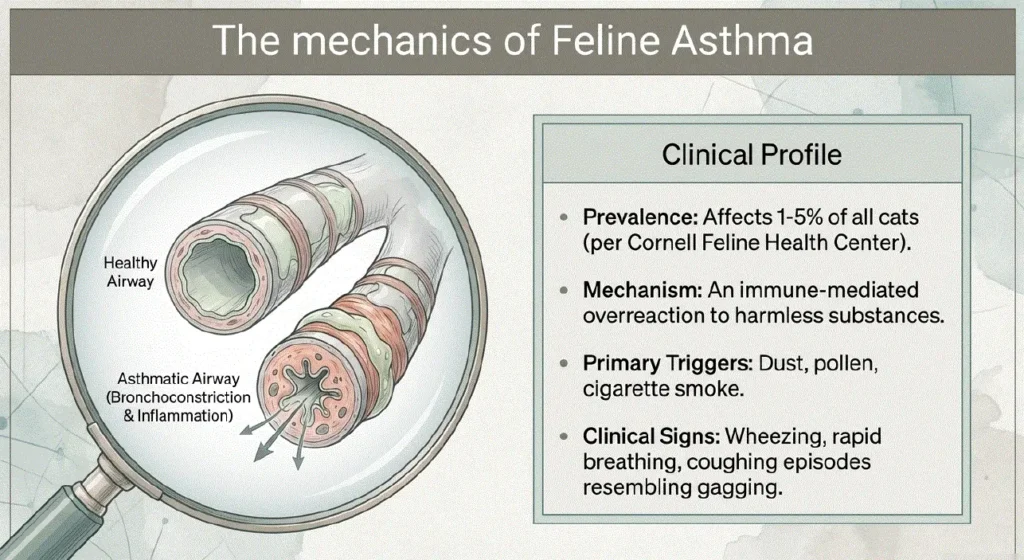
Feline asthma is one of the most common reasons a cat is coughing. It is a chronic inflammatory condition triggered by allergens such as dust, pollen, or smoke. When exposed to these triggers, the airways become inflamed and constricted, making it difficult for the cat to breathe.
Cats with asthma often show symptoms such as wheezing, rapid breathing, and coughing episodes that may resemble gagging. Veterinary research highlights that asthma is an immune-mediated condition, meaning the body overreacts to harmless substances in the environment.
Cat Is Coughing Due to Respiratory Infections
Another common reason a cat coughing is respiratory infection. These infections may be viral, bacterial, or fungal in nature. Upper respiratory infections are especially common in shelters or multi-cat households.
When a cat is coughing due to infection, additional symptoms such as nasal discharge, sneezing, fever, and lethargy may be present. Literature reviews confirm that infections are among the leading acute causes of coughing in cats.
Cat Is Coughing Due to Allergies
Environmental allergies are a significant contributor when a cat is coughing. Common allergens include dust, cigarette smoke, strong perfumes, and cleaning chemicals. These irritants can inflame the airways and trigger coughing.
Studies in veterinary immunology suggest that allergic reactions in cats often manifest as respiratory symptoms, including chronic coughing. Managing environmental triggers is key to reducing symptoms.
Cat Is Coughing Due to Chronic Bronchitis
Chronic bronchitis is a long-term condition characterized by persistent inflammation of the airways. When a cat is coughing due to bronchitis, the cough is usually ongoing and may worsen over time.
Clinical guidelines indicate that chronic bronchitis shares similarities with asthma but may not always involve allergic triggers.
Cat Is Coughing Due to Foreign Objects
Sometimes, a cat coughing because it has inhaled a foreign object such as grass, dust, or small particles. This type of coughing is usually sudden and may resolve once the irritant is expelled.
However, if the object becomes lodged in the airway, it can cause persistent coughing and require veterinary intervention. Case studies in veterinary medicine highlight foreign body inhalation as an occasional but important cause.
Cat Is Coughing Due to Parasites
Although less common, parasites such as lungworms or heartworms can cause coughing. When a cat coughing due to parasites, the symptoms may include breathing difficulty and reduced activity levels.
Parasitic infections are more likely in outdoor cats or those exposed to infected environments. Veterinary parasitology research confirms that these conditions, while rare, should not be overlooked.
Symptoms to Watch When a Cat Is Coughing
Recognizing associated symptoms can help determine the severity of the condition when your cat coughing.
Table: Symptoms and Their Possible Meaning
| Symptom | Possible Interpretation |
| Dry cough | Airway irritation or asthma |
| Wet cough | Infection or fluid buildup |
| Wheezing | Narrowed airways |
| Lethargy | Systemic illness |
| Labored breathing | Emergency condition |
These symptom patterns are based on clinical observations reported in veterinary literature and help guide diagnosis.
When Should You Worry If Your Cat Is Coughing?
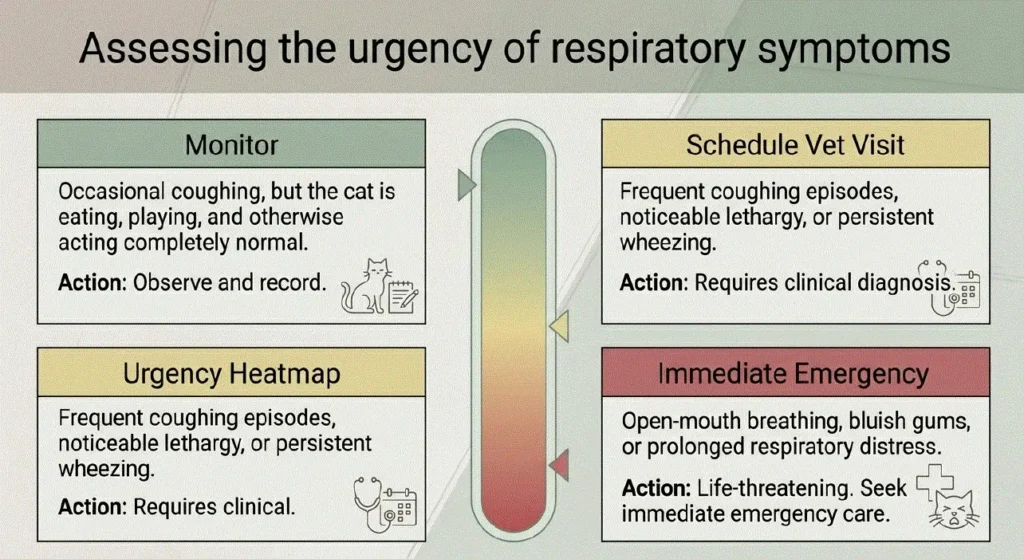
While occasional coughing may not be serious, certain signs indicate a need for immediate veterinary attention. If your cat is coughing frequently or shows difficulty breathing, it should not be ignored.
Emergency signs include open-mouth breathing, bluish gums, and prolonged coughing episodes. Veterinary guidelines emphasize that respiratory distress in cats can escalate quickly and may become life-threatening without prompt treatment.
Diagnosis of a Cat That Is Coughing
When a cat is coughing, veterinarians use a combination of diagnostic tools to determine the cause. Diagnosis typically begins with a physical examination and medical history.
Additional tests may include chest X-rays, blood tests, and airway sampling. According to veterinary research, diagnosing respiratory conditions in cats often involves ruling out multiple possible causes before reaching a final conclusion.
Treatment Options When a Cat Is Coughing
Treatment depends on the underlying cause of the problem. When a cat is coughing, therapy may involve medications, environmental changes, or supportive care.
Cats with asthma are often treated with corticosteroids to reduce inflammation and bronchodilators to improve airflow. Infections may require antibiotics or antiviral medications. Allergies are managed by eliminating triggers and improving air quality.
Home Care Strategies When a Cat Is Coughing
If your cat is coughing mildly, certain home care strategies can help reduce symptoms. Avoiding smoke and strong fragrances can also make a significant difference.
Proper ventilation and humidity control are recommended in veterinary care guidelines. These measures help minimize airway irritation and improve respiratory health.
Prevention Tips When a Cat Is Coughing
Preventing future episodes is crucial if your cat coughing regularly. Environmental management plays a major role in prevention.
Infographic-Style Summary: Prevention Strategy
Clean Environment → Reduce Allergens → Regular Vet Visits → Monitor Symptoms
Key preventive steps include using low-dust litter, cleaning frequently, and scheduling routine veterinary checkups. Vaccination and parasite control also contribute to overall respiratory health.
Long-Term Outlook When a Cat Is Coughing
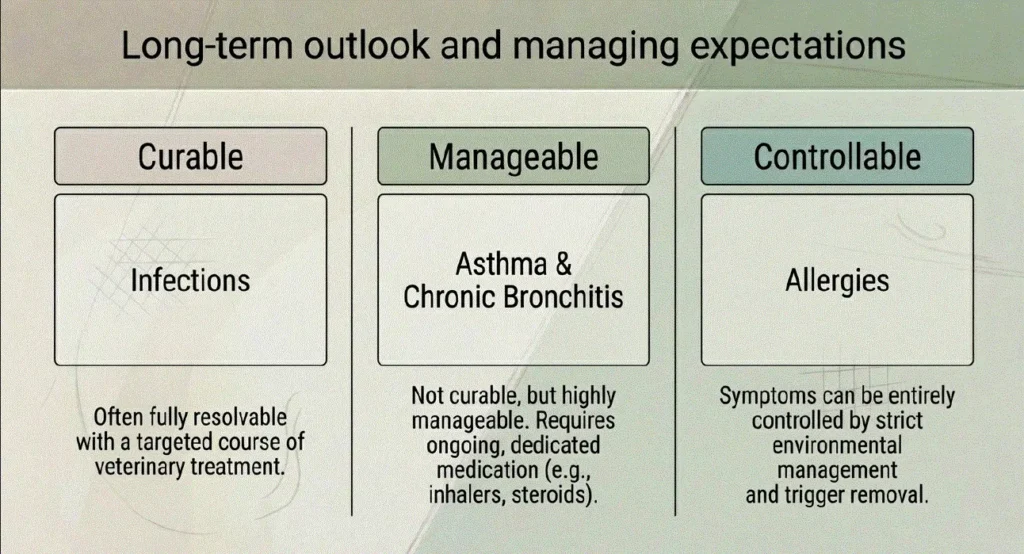
The prognosis depends on the underlying cause. When a cat coughing due to asthma or chronic bronchitis, the condition is usually manageable but not curable. Infections, on the other hand, are often treatable with proper care.
Table: Prognosis Based on Condition
| Condition | Long-Term Outlook | Source |
| Asthma | Manageable with medication | Cornell Feline Health Center |
| Infections | Often curable | Veterinary clinical studies |
| Allergies | Controlled with environment | Immunology research |
| Chronic bronchitis | Requires ongoing care | MSD Veterinary Manual |
These outcomes are supported by veterinary literature and clinical treatment guidelines.
Conclusion
If your cat is coughing, it is important to understand that this symptom should never be ignored. While some causes are mild, others may indicate serious respiratory conditions such as asthma, infections, or chronic bronchitis.
Veterinary research shows that respiratory diseases are relatively common in cats, with asthma affecting up to 5% of the feline population.
Early diagnosis, proper treatment, and preventive care are essential to ensuring your cat’s well-being. By maintaining a clean environment, minimizing allergens, and monitoring symptoms closely, you can help reduce the risk of recurring issues and keep your cat healthy.
FAQs about “Cat Is Coughing”
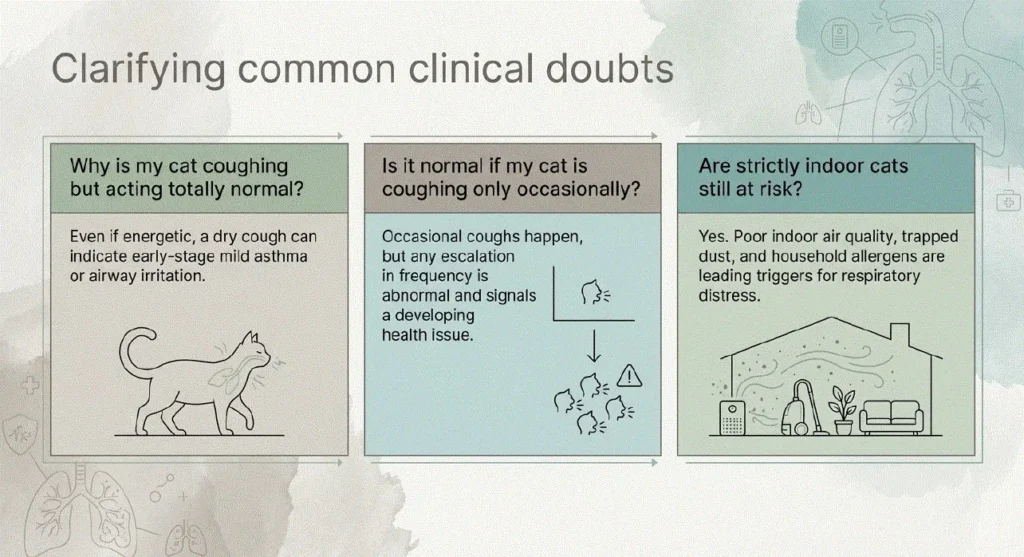
Why is my cat coughing but acting normal?
If your cat is coughing but otherwise appears healthy, it may be experiencing mild asthma or irritation.
Is it normal if my cat is coughing occasionally?
Occasional coughing can occur, but frequent episodes are not normal and may indicate a health issue.
How can I tell if my cat is coughing or trying to pass a hairball?
Coughing usually involves a dry, hacking sound without producing anything, while hairballs result in vomiting.
Can indoor cats develop coughing problems?
Yes, indoor cats can develop respiratory issues due to dust, allergens, or poor air quality.
What should I do if my cat is coughing severely?
Seek immediate veterinary care, especially if your cat shows signs of breathing difficulty or distress.