Introduction
The simple answer to the question “are cats mammals” is yes cats are mammals. Scientifically, the domestic cat, known as Felis catus, belongs to the class Mammalia, which includes all mammals such as humans, whales, and bats.
However, understanding why cats are mammals requires a deeper look into biology, classification, anatomy, and evolutionary traits. This research-based blog explores all aspects of the topic “are cats mammals”, supported by authentic scientific sources and literature reviews.
What Does It Mean to Be a Mammal?
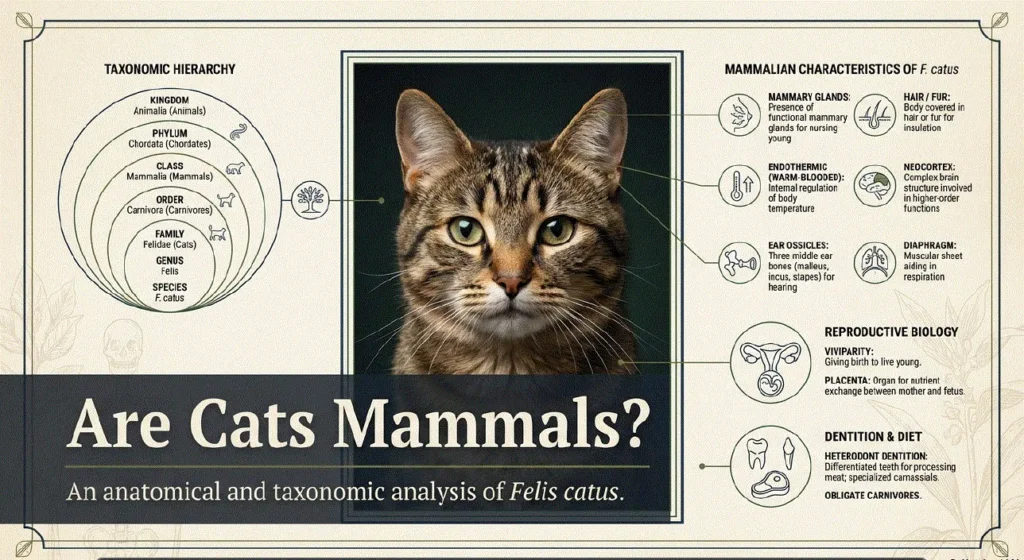
To fully understand are cats mammals, we must first define what a mammal is.
Mammals are vertebrate animals characterized by specific biological traits, including:
Presence of mammary glands (milk production)
Body covered with hair or fur
Warm-blooded metabolism
Three middle ear bones
Advanced brain structure (neocortex)
These traits clearly distinguish mammals from reptiles, birds, and amphibians.
Key Mammalian Traits
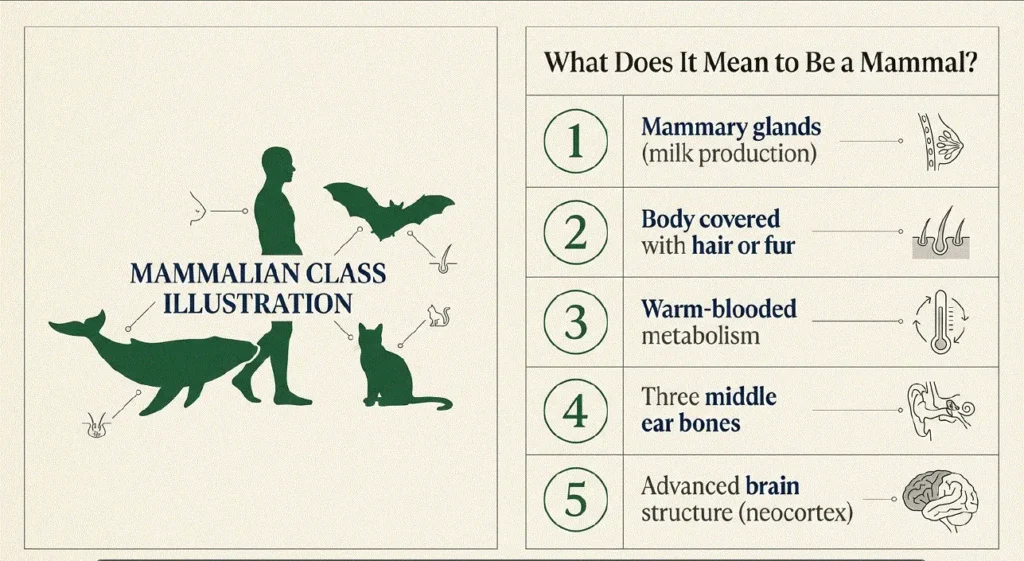
| Trait | Description | Present in Cats? |
| Mammary glands | Feed young with milk | Yes |
| Fur or hair | Body covering | Yes |
| Warm-blooded | Regulate body temperature | Yes |
| Live birth | Give birth to young | Yes |
| Complex brain | Advanced nervous system | Yes |
From this table, it is evident that cats fulfill all mammalian characteristics.
Scientific Classification: Are Cats Mammals in Biology
Understandings are cats mammals requires looking at their taxonomy.
Taxonomic Classification of Cats
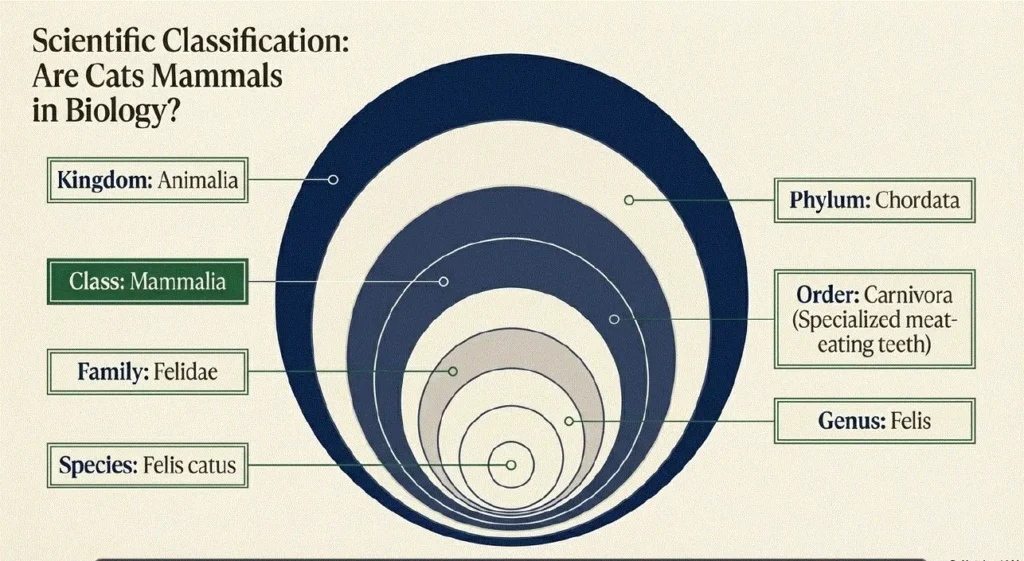
| Rank | Classification |
| Kingdom | Animalia |
| Phylum | Chordata |
| Class | Mammalia |
| Order | Carnivora |
| Family | Felidae |
| Genus | Felis |
| Species | Felis catus |
This classification confirms that cats belong to the mammal class.
Cats are also part of the carnivorous group, meaning they primarily consume meat and possess specialized teeth for hunting.
Why Are Cats Mammals? Key Biological Reasons
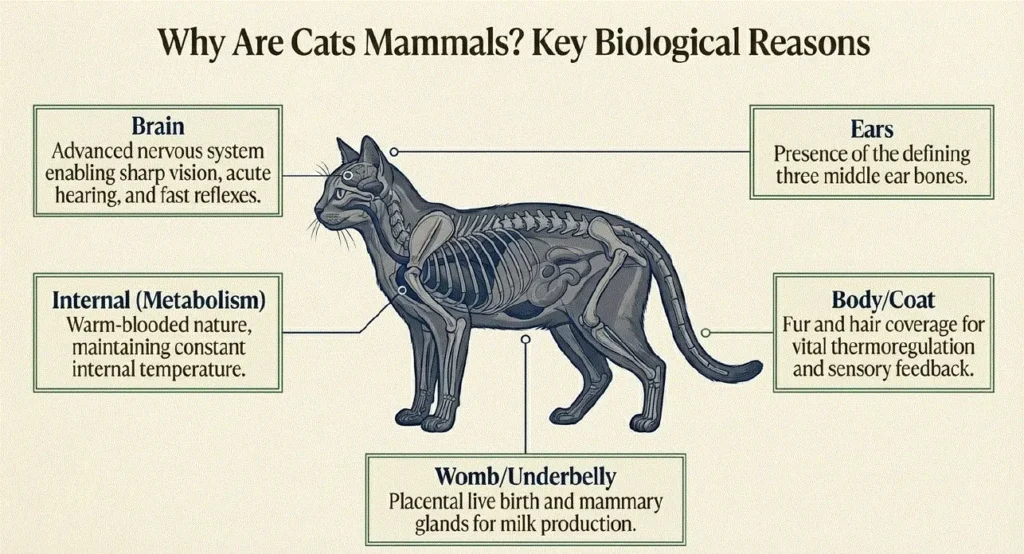
Mammary Glands (Milk Production)
One of the strongest reasons why the answer to are cats mammals is yes lies in their ability to produce milk.
Female cats nurse their kittens through mammary glands, a defining characteristic of mammals.
Fur and Hair
Cats have a body covered with fur, which helps regulate body temperature and provides sensory feedback.
Hair is a universal feature among mammals, further supporting that cats are mammals.
Warm-Blooded Nature
Cats maintain a constant internal body temperature regardless of environmental conditions, making them warm-blooded animals a key mammalian trait.
Live Birth and Placental Development
Cats are placental mammals, meaning their young develop inside the mother’s womb and receive nutrients via a placenta.
Advanced Nervous System
Cats have a well-developed brain and sensory system, enabling:
Sharp vision
Acute hearing
Fast reflexes
These features are consistent with mammalian biology.
Evolutionary Perspective: Are Cats Mammals Through History
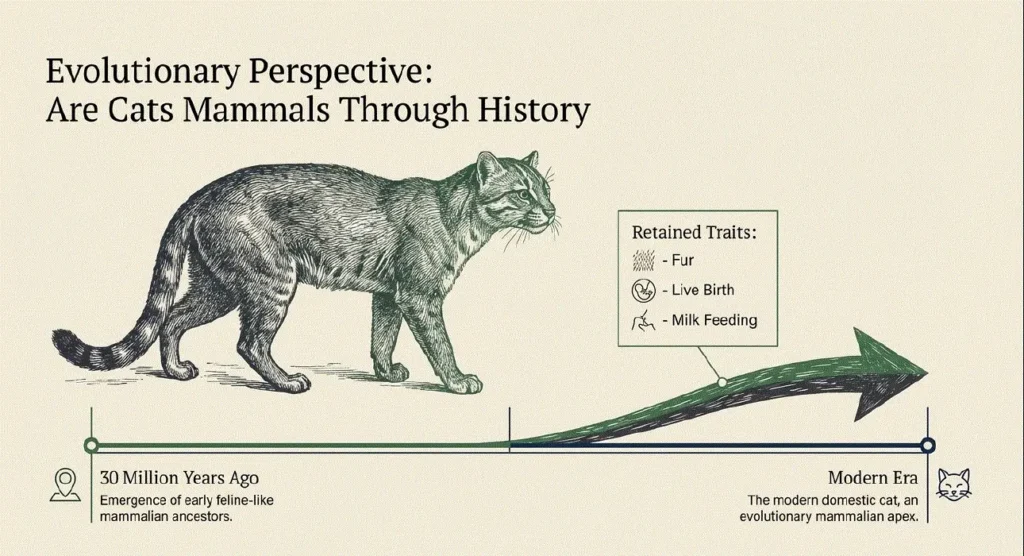
The answer to are cats mammals is also rooted in evolution.
Cats evolved from early mammalian ancestors that lived millions of years ago. The earliest feline-like mammals appeared around 30 million years ago, eventually evolving into modern cats.
Over time, cats retained core mammalian traits such as:
Fur
Live birth
Milk feeding
This evolutionary continuity confirms their classification as mammals.
Domestic Cats as Mammals: Global Distribution and Adaptation
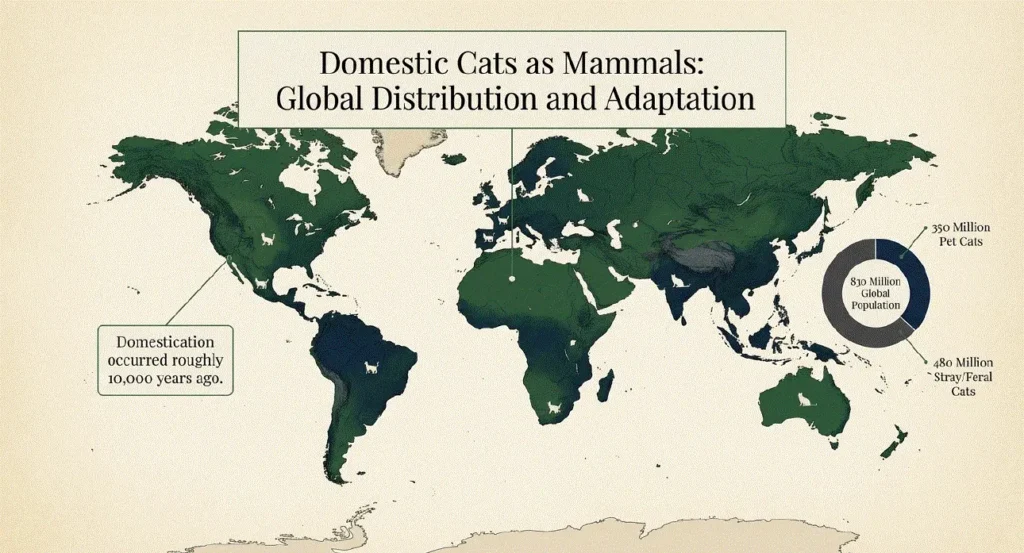
Domestic cats are among the most widespread mammals in the world.
Found on every continent except Antarctica
Domesticated around 10,000 years ago
Thrive in both wild and urban environments
Global Cat Population (Estimated)
| Category | Population |
| Pet cats | 350 million |
| Stray/feral cats | 480 million |
| Total global population | 830 million |
Source: BBC Earth and global animal studies
This widespread presence further highlights their success as mammals.
Are Cats Mammals Compared to Other Animals
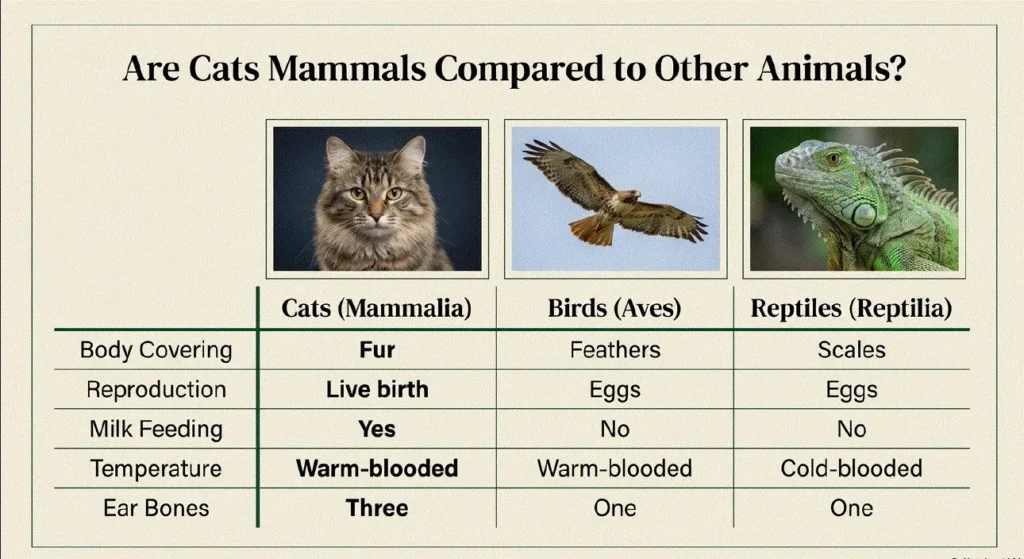
To better understand are cats mammals, let’s compare them with other animal groups.
Comparison Table: Mammals vs Other Animals
| Feature | Cats (Mammals) | Birds | Reptiles |
| Body covering | Fur | Feathers | Scales |
| Reproduction | Live birth | Eggs | Eggs |
| Milk feeding | Yes | No | No |
| Temperature | Warm-blooded | Warm-blooded | Cold-blooded |
| Ear bones | Three | One | One |
This comparison clearly shows that cats align with mammals, not birds or reptiles.
Behavioral Traits Supporting Are Cats Mammals
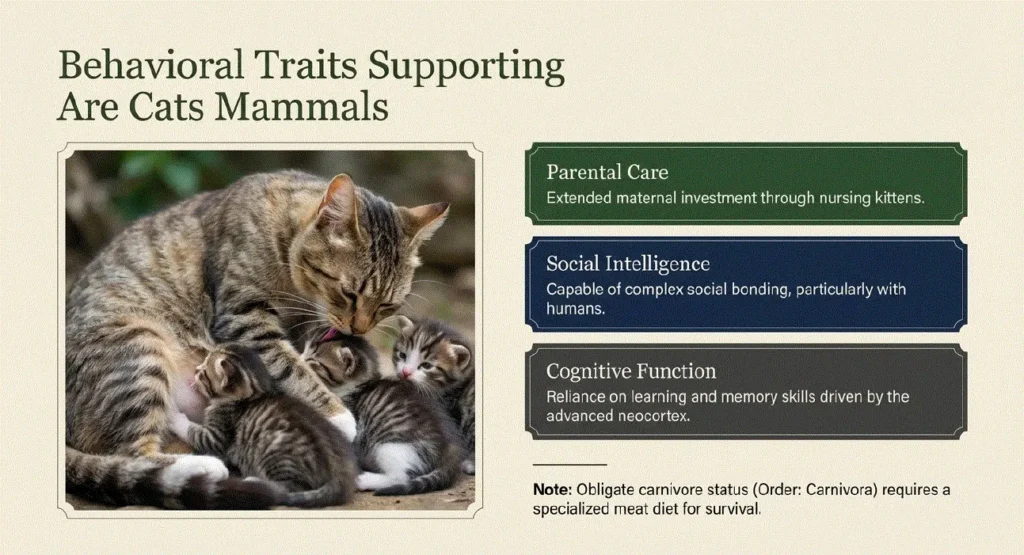
Cats exhibit behaviors typical of mammals, such as:
Parental care (nursing kittens)
Social bonding with humans
Learning and memory skills
They are also obligate carnivores, relying on meat for survival, which aligns with their classification in the order Carnivora.
Infographic: Key Reasons Why Cats Are Mammals
Are Cats Mammals – Quick Facts
✔ Produce milk for young
✔ Covered in fur
✔ Warm-blooded
✔ Give live birth
✔ Have complex brains
✔ Possess three middle ear bones
All these points confirm the answer to are cats mammals.
Scientific Literature Insights on Are Cats Mammals
Research literature consistently classifies cats as mammals based on:
Anatomical traits
Genetic similarities
Reproductive systems
Biological databases such as Animal Diversity Web and Britannica confirm that cats belong to class Mammalia.
Common Misconceptions About Are Cats Mammals
Misconception 1: Cats Are Different From Mammals
Some people believe cats are separate because of their unique behavior. However, biological classification is based on traits, not behavior.
Misconception 2: Only Large Animals Are Mammals
Mammals range from tiny bats to massive whales. Cats fall comfortably within this category.
Misconception 3: All Mammals Look Similar
Mammals vary greatly in appearance, but they share core biological features—which cats clearly possess.
Importance of Knowing Are Cats Mammals
Understanding are cats mammals is important for:
Veterinary science
Animal care and nutrition
Evolutionary biology
Wildlife conservation
It helps in providing proper care, diet, and medical treatment for cats.
Conclusion: Final Answer to Are Cats Mammals
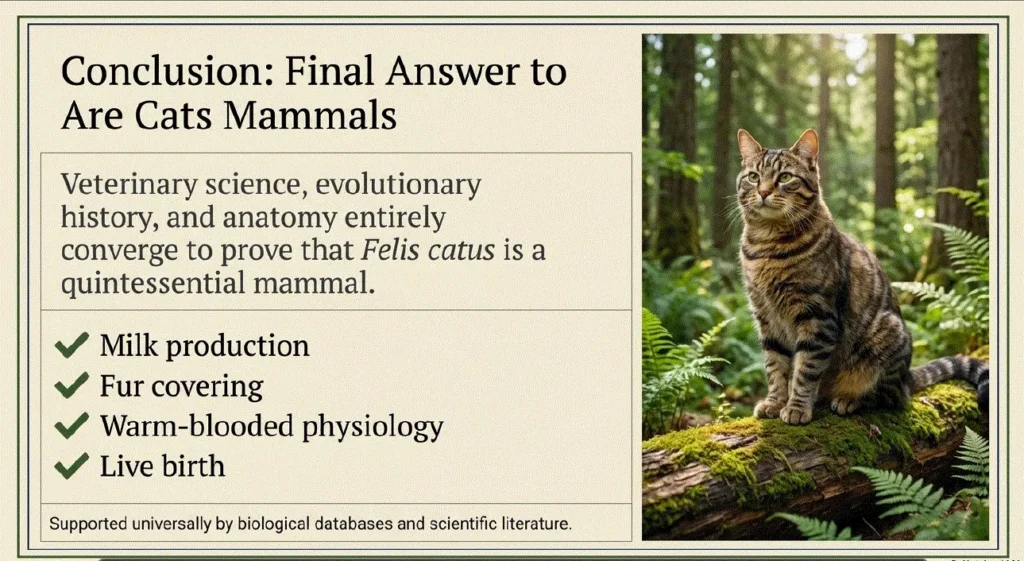
To conclude, the answer to “are cats mammals” is definitively yes. Cats meet every scientific criterion required for classification as mammals, including:
Milk production
Fur covering
Warm-blooded physiology
Live birth
Their taxonomy, anatomy, and evolutionary history all confirm their place in the class Mammalia. Supported by scientific literature and biological databases, there is no doubt that cats are mammals.
FAQs: Are Cats Mammals
Are cats mammals or reptiles?
Cats are mammals, not reptiles.
Why are cats classified as mammals?
Cats are classified as mammals because they have fur, produce milk, give live birth, and possess mammalian anatomy.
Are all cats mammals?
Yes, all species of cats domestic and wild belong to the class Mammalia.
What type of mammal is a cat?
Cats are placental mammals, meaning their young develop inside the womb.
Are cats warm-blooded animals?
Yes, cats are warm-blooded, maintaining a constant body temperature.
Do cats feed their babies milk?
Yes, mother cats nurse their kittens with milk produced in mammary glands.