If you adore cats but constantly battle sneezing, itchy eyes, or breathing discomfort, you’re definitely not alone. Cat allergies affect a significant portion of the global population, making it difficult for many animal lovers to enjoy feline companionship. Fortunately, there’s a solution worth exploring Hypoallergenic Cats.
Although no cat is entirely allergen-free, certain breeds produce fewer allergens or spread them less, making them ideal for people with sensitivities. In this comprehensive, research based guide, we’ll explore the 12 best Hypoallergenic Cats, explain the science behind allergies, and provide statistical insights and practical solutions to help you make an informed decision.
What Are Hypoallergenic Cats?
Understanding Hypoallergenic Cats and Allergies
Hypoallergenic Cats are breeds that produce fewer allergens compared to typical cats. However, it’s important to understand:
No cat is 100% hypoallergenic
Allergies are caused by Fel d 1 protein
Shedding spreads allergens into the environment
Studies show that reducing allergen exposure not eliminating it is the key to managing symptoms.
Infogram: What Causes Cat Allergies?
Cat Allergies Breakdown (Approximate Contribution)
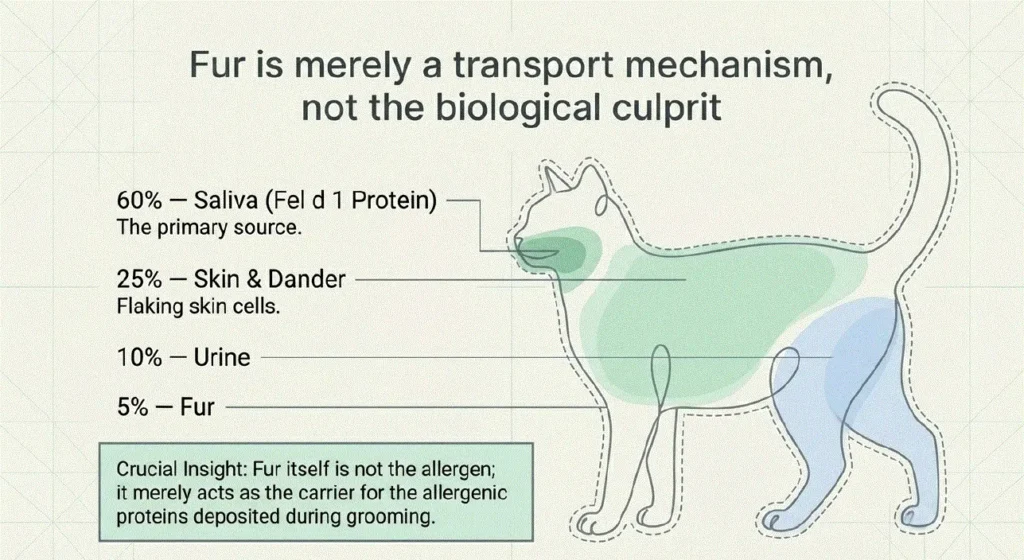
Saliva (Fel d 1 Protein) ██████████ 60%
Skin/Dander ████████ 25%
Urine ███ 10%
Fur (Carrier Only) █ 5%
Insight: Fur itself is not the allergen it only carries allergenic proteins.
Top 12 Hypoallergenic Cats for Allergy Sufferers
Siberian (A Surprising Hypoallergenic Cat)
Despite its long fur, the Siberian produces lower levels of Fel d 1 protein.
Key Traits:
Friendly and affectionate
Thick coat but low allergen production
Ideal for families
Siamese (Short Coat, Lower Allergen Spread)
The Siamese cat sheds less, reducing allergen dispersion.
Why it’s a top Hypoallergenic Cat:
Minimal shedding
Highly social and vocal
Easy grooming
Bengal (Exotic yet Hypoallergenic Cats)
With a sleek coat, Bengals require less grooming and spread fewer allergens.
Highlights:
Wild appearance
Active and intelligent
Low shedding
Russian Blue (Elegant and Allergy-Friendly)
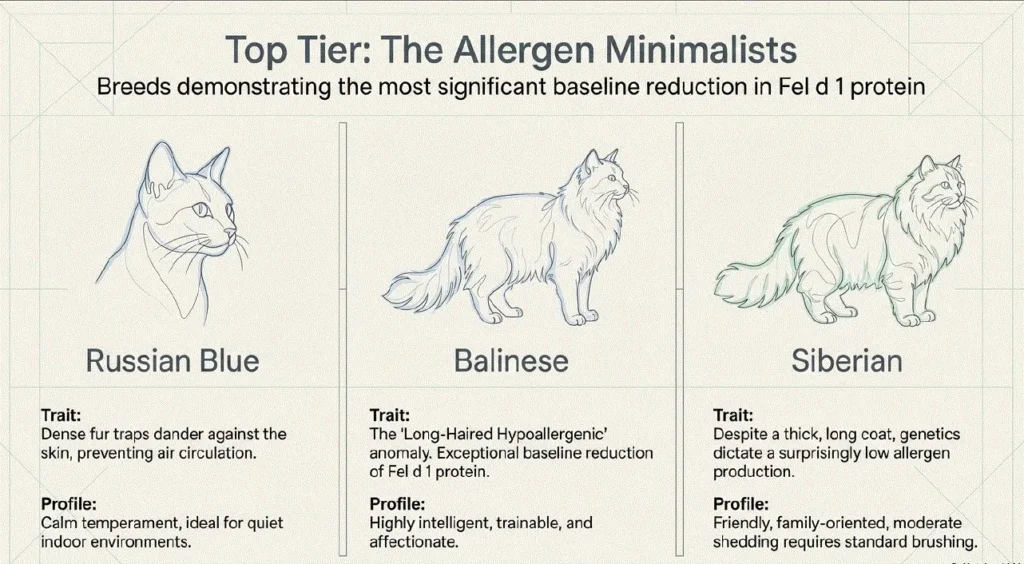
Known for producing fewer allergens and having dense fur that traps dander.
Benefits:
Calm temperament
Low allergen production
Ideal indoor companion
Sphynx (The Hairless Hypoallergenic Cats)
The Sphynx is often considered the best option for allergy sufferers.
Why?
No fur to trap allergens
Requires regular bathing
Still produces allergens (important)
Devon Rex (Minimal Fur, Maximum Comfort)
This breed has curly, short hair and sheds very little.
Key Features:
Playful and affectionate
Needs attention
Great for small homes
Cornish Rex (Ultra Low-Shedding Breed)
Cornish Rex cats have only a soft undercoat.
Advantages:
Very low shedding
Energetic personality
Suitable for allergy-sensitive owners
Javanese (Elegant yet Hypoallergenic Cats)
Despite longer fur, they lack an undercoat, reducing allergen spread.
Traits:
Intelligent
Social and playful
Requires grooming
Balinese (Known as the “Long-Haired Hypoallergenic Cats”)
Produces less Fel d 1 protein compared to many breeds.
Highlights:
Highly affectionate
Intelligent and trainable
Moderate grooming needs
Oriental Shorthair (Sleek and Allergy-Friendly)
Short coat means less shedding and fewer allergens.
Why choose this Hypoallergenic Cat:
Low maintenance
Highly active
Unique appearance
Burmese (Low-Shedding Companion)
Burmese cats have short coats and produce fewer allergens.
Key Benefits:
Loyal and affectionate
Requires minimal grooming
Great for families
Tonkinese (Hybrid Hypoallergenic Cats)
A mix of Siamese and Burmese, combining low allergen traits.
Features:
Friendly and social
Moderate shedding
Playful personality
Statistical Table: Comparison of Hypoallergenic Cats
| Cat Breed | Shedding Level | Allergen Production | Grooming Needs | Allergy Friendliness |
| Siberian | Medium | Low | Medium | High |
| Siamese | Low | Medium-Low | Low | High |
| Bengal | Low | Low | Low | High |
| Russian Blue | Low | Low | Low | Very High |
| Sphynx | None | Medium | High | High |
| Devon Rex | Very Low | Low | Low | High |
| Cornish Rex | Very Low | Low | Medium | High |
| Javanese | Low | Low | Medium | High |
| Balinese | Low | Very Low | Medium | Very High |
| Oriental Shorthair | Low | Medium-Low | Low | High |
| Burmese | Low | Medium-Low | Low | High |
| Tonkinese | Low | Medium-Low | Low | High |
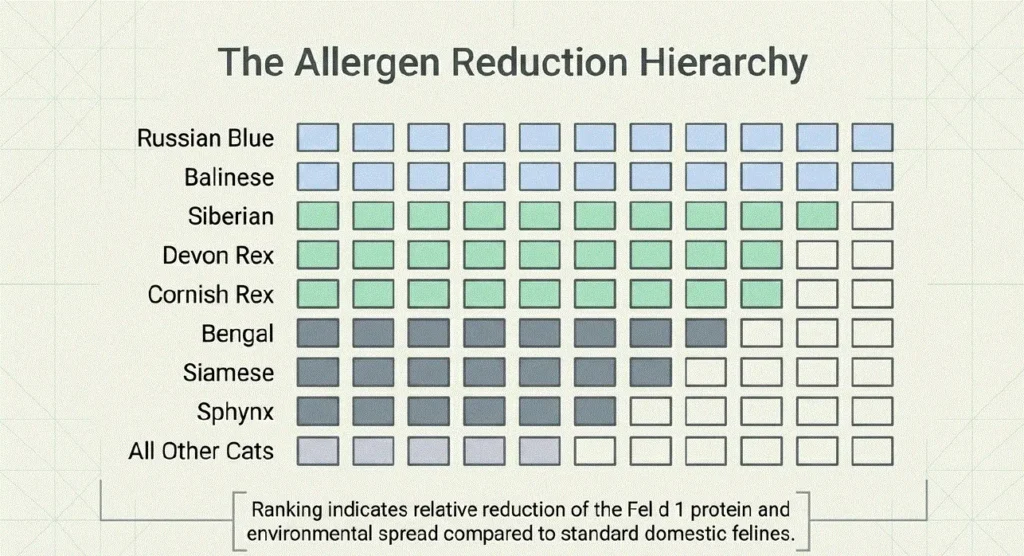
Infogram: Best Hypoallergenic Cats Ranking (Based on Allergen Reduction)
Top Allergy-Friendly Cats (Relative Scale)
Russian Blue ██████████
Balinese ██████████
Siberian █████████
Devon Rex ████████
Cornish Rex ████████
Bengal ███████
Siamese ███████
Sphynx ██████
Others █████
How to Choose the Right Hypoallergenic Cats
Factors to Consider When Selecting Hypoallergenic Cat
Allergy Severity
Mild allergies → Most hypoallergenic breeds work
Severe allergies → Consider Sphynx or Russian Blue
Lifestyle Compatibility
Active owners → Bengal, Siamese
Calm homes → Russian Blue
Maintenance Level
Low grooming → Siamese, Burmese
High maintenance → Sphynx
Tips to Reduce Allergies Even Further
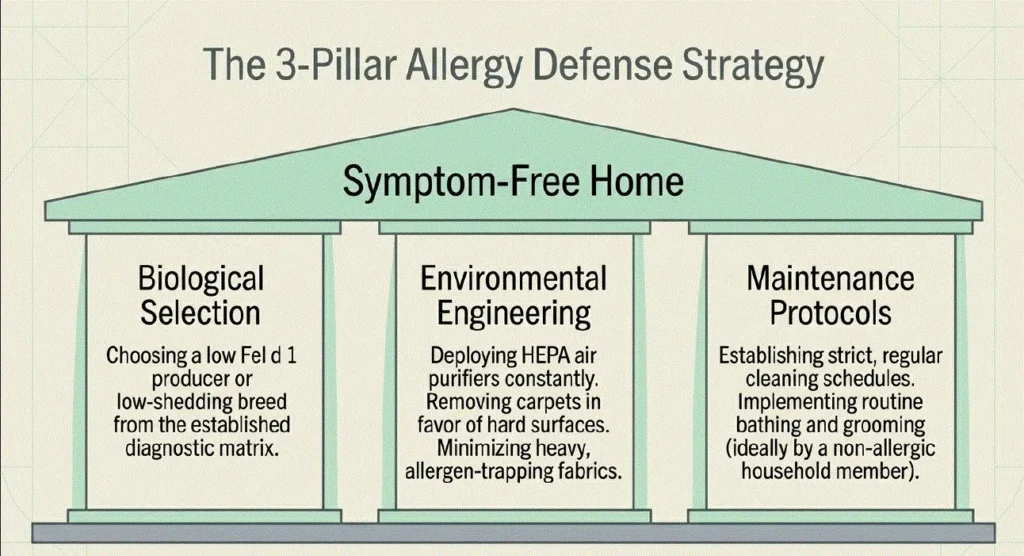
Even with Hypoallergenic Cats, you should:
Use HEPA air purifiers
Clean regularly
Bathe your cat when needed
Avoid carpets and heavy fabrics
Experts emphasize that environmental control is just as important as breed selection.
Conclusion
Choosing the right Hypoallergenic Cats can truly transform the lives of people who love felines but struggle with allergies. While it is important to understand that no cat is completely allergen free, scientific research clearly shows that certain breeds produce fewer allergens or shed less dander, making them far more suitable for sensitive individuals. This means that, with the right approach, living with cats is not only possible but can also be an enjoyable and fulfilling experience.
Throughout this guide, we explored the 12 best Hypoallergenic Cats, each offering unique characteristics, personalities, and levels of allergen production.
From the elegant Russian Blue and intelligent Balinese to the playful Bengal and distinctive Sphynx, there is a wide variety of options to suit different lifestyles and preferences. Some breeds are better for highly active households, while others thrive in calm, quiet environments. Understanding your lifestyle and matching it with the right breed is just as important as considering allergy levels.
However, selecting one of the best Hypoallergenic Cats is only part of the solution. Managing your home environment plays a crucial role in reducing allergic reactions.
Simple steps such as regular cleaning, using air purifiers, grooming your cat, and creating allergy-free zones can significantly lower allergen exposure. Combining these practices with the right breed can greatly improve your comfort and overall quality of life.
It is also highly recommended to spend time with a specific breed before making a final decision. Allergies responses can vary from person to person, and direct interaction will help you better understand how your body reacts. This step can prevent future discomfort and ensure a smoother transition into pet ownership.
In conclusion, Hypoallergenic Cats provide a practical and effective solution for allergy sufferers who do not want to give up the joy of having a feline companion. With informed choices, proper care, and a well-maintained environment, you can successfully enjoy the love, companionship, and happiness that cats bring without letting allergies stand in your way.
FAQs about Hypoallergenic Cats
Are Hypoallergenic Cats completely allergy-free?
No, all cats produce allergens, but some produce less.
Which Hypoallergenic Cat is best for severe allergies?
Sphynx and Russian Blue are often considered top choices.
Do Hypoallergenic Cats shed?
Most shed less, but shedding still occurs.
Can I live allergy-free with a cat?
Not completely but symptoms can be reduced significantly.