If you’ve ever heard a strange, gagging, hacking sound coming from your cat and thought, “why is my cat coughing?” you’re not alone.
Coughing in cats is one of the most common yet confusing symptoms pet owners notice, mostly because it can look almost identical to gagging, vomiting, or even a hairball attempt.
Understanding the difference matters, because the underlying cause can range from something completely harmless to a condition that needs urgent veterinary attention.
In this guide, we’ll walk through every major reason a cat coughs, how to tell the difference between a cough and a hairball episode, the warning signs that mean it’s time to call your vet, and simple steps you can take at home to keep your cat’s respiratory health in good shape.
What Does Cat Coughing Actually Look Like?
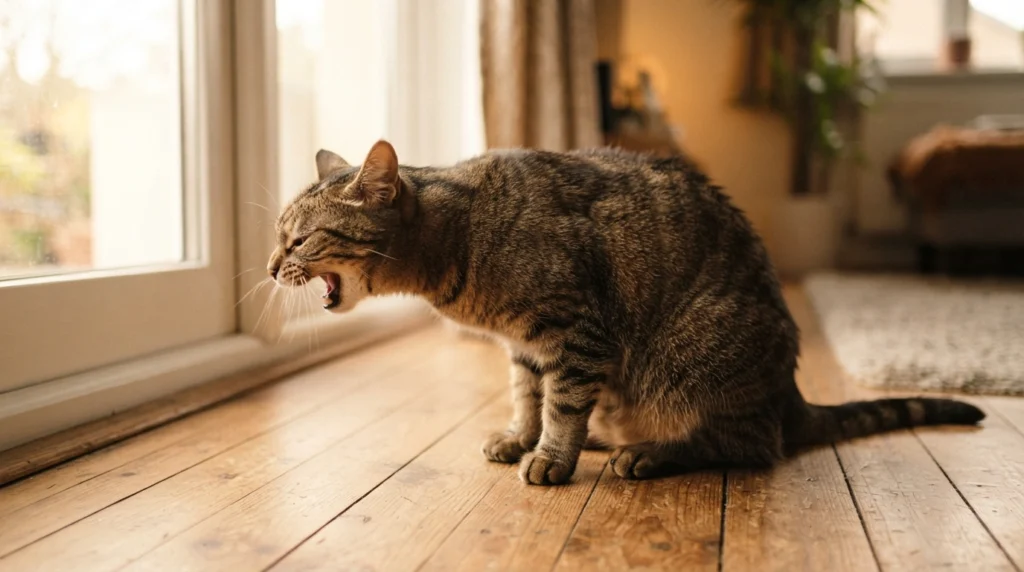
Before jumping into the causes, it helps to understand what coughing actually looks like in cats, since many owners confuse it with other behaviors.
A cat that is coughing will usually:
- Crouch low with its neck stretched forward
- Make a repetitive, hacking or honking sound
- Sometimes produce a small amount of foam or mucus
- Appear startled or uncomfortable right after the episode
This is different from a hairball attempt, where the cat tends to retch more deeply, arch its back, and eventually expel a tube-shaped clump of hair and fluid.
If your cat is going through the coughing motion but nothing comes up, or only a small amount of foam appears, that’s a strong sign you’re dealing with a genuine cough rather than a hairball.
Many owners only start paying closer attention once the episodes become frequent, but it’s worth observing your cat’s breathing pattern even during calm moments.
A healthy cat typically breathes between 20 and 30 times per minute at rest, and any noticeable increase in effort, combined with coughing, is a signal that something deeper may be affecting the airway or lungs rather than just a passing irritation.
Quick Insight: A true cough involves rapid, forceful contractions from the chest, while a hairball or vomiting episode involves the abdomen and stomach muscles instead.
Why Is My Cat Coughing? Common Causes Explained
There isn’t a single answer to why is my cat coughing, since several conditions can trigger the same symptom. Below are the most frequent culprits, ranked from mild to more serious.
Hairballs and Throat Irritation
The most benign explanation is a hairball that hasn’t fully passed. Cats groom themselves constantly, swallowing loose fur that can accumulate in the stomach or throat.
This may trigger a cough-like reflex even before an actual hairball is produced.
Feline Asthma
Feline asthma is one of the leading medical reasons for chronic coughing in cats. It occurs when the airways become inflamed and narrowed, often triggered by allergens like dust, pollen, smoke, or scented candles. Cats with asthma may cough in short bursts, wheeze, or breathe with an open mouth during flare-ups.
Feline Bronchitis
Similar to asthma, feline bronchitis involves long-term inflammation of the bronchial tubes. It can cause a persistent, dry cough that worsens with activity or stress and often requires ongoing management rather than a one-time cure.
Upper Respiratory Infections
why is my cat coughing ? Viral or bacterial infections, such as feline herpesvirus or calicivirus, commonly affect kittens and cats in shelters or multi-cat households. Along with coughing, you may notice sneezing, nasal discharge, and watery eyes.
Heartworm Disease
Even indoor cats can contract heartworm disease through mosquito bites. Unlike in dogs, heartworms in cats often cause respiratory symptoms like coughing and labored breathing rather than classic heart failure signs.
Foreign Objects in the Airway
Occasionally, a blade of grass, small toy piece, or food fragment can become lodged in a cat’s throat or airway, causing sudden, intense coughing or gagging.
Heart Disease
In older cats, an enlarged heart can put pressure on the airway or lead to fluid buildup in the lungs, both of which may present as coughing, especially at night or after activity.
Lungworms and Parasites
Lungworm infections, though less common, can also inflame the respiratory tract and cause chronic coughing, particularly in cats that hunt rodents or birds.
Tumors or Growths in the Chest
In rare cases, particularly in senior cats, a mass or tumor pressing against the airway can cause a slow-developing, persistent cough.
This is less common than the causes above, but it’s one of the reasons vets recommend imaging for chronic, unexplained coughing rather than assuming it will resolve on its own.
How Vets Diagnose the Cause of Cat Coughing
If you bring your cat in with a persistent cough, your veterinarian will typically follow a structured process to identify what’s going on.
Physical Examination and History
Your vet will listen to your cat’s lungs and heart, check for nasal discharge, and ask about the frequency, duration, and triggers of the cough. why is my cat coughing?
Imaging and Lab Tests
Depending on findings, the vet may recommend:
- Chest X-rays to check for fluid, masses, or lung changes
- Bloodwork to rule out infections or heartworm
- Fecal testing to check for parasites like lungworms
- Bronchoscopy in more complex or chronic cases
Response to Treatment
Sometimes, especially with suspected asthma, vets use a trial treatment (like inhaled steroids) to see if symptoms improve, which helps confirm the diagnosis.
When Should You Worry About Your Cat’s Cough?
why is my cat coughing? Not every cough is an emergency, but certain signs mean you shouldn’t wait to see a vet.
Seek veterinary care promptly if your cat shows any of the following alongside coughing:
- Difficulty breathing or open-mouth breathing
- Blue or pale gums
- Lethargy or refusal to eat
- Coughing that lasts more than a week
- Coughing up blood
- Rapid or labored breathing even at rest
- Significant weight loss over time
As veterinary experts often note, a cough that persists for more than a few days without an obvious cause, such as a hairball, should always be evaluated rather than assumed to resolve on its own.
Home Care Tips for a Mildly Coughing Cat
If your cat`s cough is infrequent and mild, with no other worrying symptoms, there are a few things you can do at home while monitoring the situation why is my cat coughing?
- Brush your cat regularly to reduce hairball formation
- Switch to a hairball-control cat food if grooming is frequent
- Avoid scented candles, air fresheners, and cigarette smoke near your cat
- Use a humidifier if the air in your home is very dry
- Keep small objects and strings away from curious cats
- Maintain a regular flea and parasite prevention schedule
These steps won’t replace veterinary care for a genuine medical issue, but they can reduce minor triggers and support your cat’s overall respiratory comfort.
Can Stress Cause a Cat to Cough?
It’s a less-discussed angle, but stress and anxiety can sometimes worsen respiratory symptoms in cats, particularly those already prone to asthma or bronchitis. why is my cat coughing?
A stressful environment, sudden changes in routine, or the introduction of a new pet can trigger flare-ups in sensitive cats. why is my cat coughing? Keeping a calm, predictable environment, along with vertical spaces and hiding spots, can help reduce stress-related symptoms over time.
Cat Coughing vs Sneezing: What’s the Difference?
Owners often mix up coughing and sneezing, but they point to different areas of the respiratory system.
- Coughing originates from the lower airways and lungs, often linked to asthma, bronchitis, or heart-related issues.
- Sneezing originates from the nasal passages and is more commonly tied to upper respiratory infections or environmental irritants like dust.
If your cat is doing both together, it usually points toward a broader respiratory infection rather than an isolated issue. why is my cat coughing?
It also helps to track how symptoms change over the course of a few days. A sneeze that starts alone and later develops into coughing, nasal discharge, or reduced appetite generally signals a spreading upper respiratory infection.
While a cough that appears suddenly with no other symptoms is more likely tied to airway inflammation, a minor irritant, or something briefly lodged in the throat.
Frequently Asked Questions
Is occasional coughing in cats normal?
Yes, occasional coughing, especially tied to hairballs, can be normal. However, frequent or recurring coughing episodes are not typical and should be discussed with a veterinarian. why is my cat coughing?
Why is my cat coughing but acting fine otherwise?
This is common with mild asthma or early bronchitis, where cats can appear energetic and eat normally despite intermittent coughing. It’s still worth a vet visit to catch the issue early.
Can allergies cause my cat to cough?
Yes, environmental allergens like dust, pollen, mold, and certain cleaning products can irritate a cat’s airway and trigger coughing, particularly in cats with asthma or sensitive respiratory systems. why is my cat coughing?
How long is too long for a cat’s cough to last?
If a cough lasts longer than five to seven days, or happens frequently over a few weeks, it’s best to schedule a veterinary examination rather than waiting it out. why is my cat coughing?
Can kittens get coughs too?
Yes, kittens are actually more prone to upper respiratory infections due to their developing immune systems, making coughing alongside sneezing and discharge fairly common in young cats.
Is cat coughing contagious to other pets?
If the cough is due to a viral or bacterial respiratory infection, it can spread to other cats in the household, so isolating a coughing cat until diagnosed is a reasonable precaution. why is my cat coughing?
Conclusion
So, why is my cat coughing? As you’ve seen, the answer can range from a harmless hairball to a more serious condition like feline asthma, bronchitis, heart disease, or even heartworm infection.
The key is paying close attention to how often the coughing happens, what it looks like, and whether any other symptoms accompany it. why is my cat coughing?
When in doubt, a quick veterinary check-up is always the safer choice, since early diagnosis often leads to simpler and more effective treatment. why is my cat coughing?
By staying observant and proactive, you can help your cat breathe easier and live a healthier, more comfortable life.
References
- Cornell Feline Health Center “Feline Asthma,” Cornell University College of Veterinary Medicine
- American Veterinary Medical Association (AVMA) “Respiratory Disease in Cats”
- VCA Animal Hospitals “Coughing in Cats”
- American Association of Feline Practitioners (AAFP) “Feline Respiratory Disease Guidelines”
- American Heartworm Society “Heartworm in Cats”
- Merck Veterinary Manual “Respiratory Diseases of Cats”