What It Means and What to Do Next
You hear it before you see it a rough, hacking sound from across the room, followed by your cat hunched low with its neck stretched out. Naturally, your first thought is “my cat is coughing, what’s wrong with them?” It’s one of the most common reasons pet owners search for answers online, and for good reason: coughing can mean almost anything, from a harmless tickle in the throat to a sign of serious illness.
This guide walks through the most common causes, what different cough sounds usually mean, when it’s safe to watch and wait, and when you need to call your vet right away. my cat is coughing
Why Is My Cat Coughing? Understanding the Basics
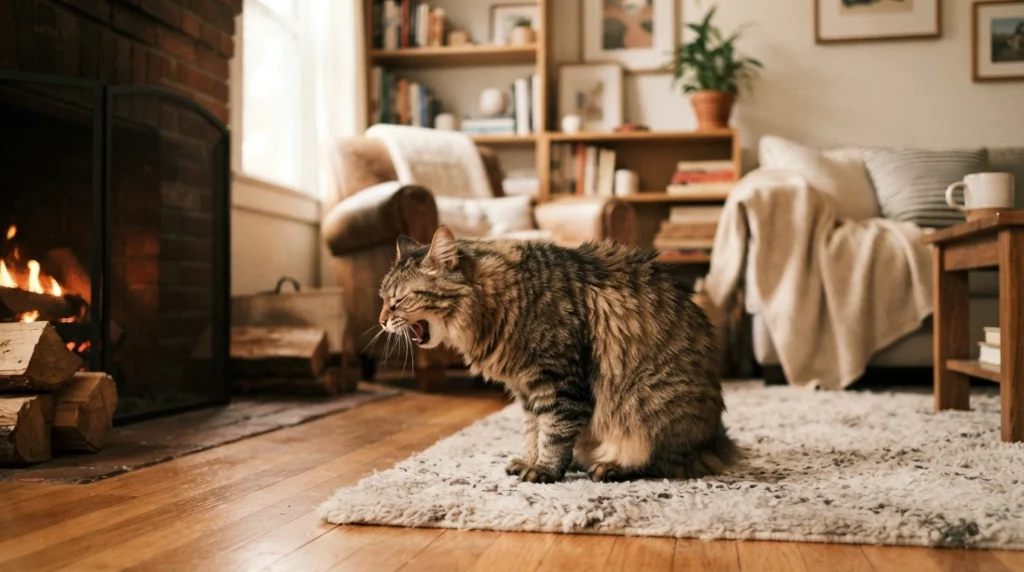
Coughing is a reflex. It’s your cat’s body trying to clear something irritating or blocking the airway whether that’s mucus, dust, a stray piece of food, or inflammation deep in the lungs.
A single, isolated cough usually isn’t a red flag. But if you find yourself repeatedly thinking “my cat is coughing again,” it’s worth paying closer attention to patterns: how often it happens, how long each episode lasts, and whether other symptoms tag along.
Not all coughs sound alike, either. Some cats produce a dry, hacking bark; others make a wet, rattling sound; and some crouch low with an extended neck that can look alarming to anyone seeing it for the first time. The sound and posture alone can offer useful clues before you even step into the vet’s office. My cat is coughing
Common Causes Behind “My Cat Is Coughing”
There’s rarely a single explanation. Veterinarians typically consider a range of possibilities, from mild and manageable to urgent and serious.
- Hairballs – The single most common trigger. Cats groom constantly, and swallowed fur can irritate the throat until it’s coughed up.
- Feline asthma – Inflammation narrows the airways, often triggered by pollen, dust, mold, smoke, or scented household products.
- Respiratory infections – Viral or bacterial infections irritate the throat and lungs, often paired with sneezing, discharge, or fever.
- Allergies – Similar to asthma, allergens cause airway inflammation and repeated coughing spells, especially seasonally.
- Inhaled irritants – Cleaning sprays, essential oils, dust, and smoke can trigger coughing even without a true allergy.
- Heartworm or lungworm disease – Parasites transmitted by mosquitoes or infected prey can settle in the lungs and cause chronic coughing.
- Foreign objects – A blade of grass or small object lodged in the throat can cause sudden, forceful coughing fits.
- Heart disease – Congestive heart failure can lead to fluid buildup around the lungs, producing a cough that mimics a respiratory issue.
Hairballs: The Everyday Culprit
If my cat is coughing only occasionally and the episode ends with a small tube of hair being expelled, it’s almost always a hairball rather than a medical emergency. Long-haired breeds and cats that groom excessively are especially prone to this.
Regular brushing and hairball-control diets can significantly cut down on frequency. my cat is coughing
Feline Asthma and Allergies
Asthma is one of the most frequently diagnosed respiratory conditions in cats, and it’s a leading reason behind chronic coughing. According to Purina, feline asthma can be triggered by pollen, mold, dust mites, smoke, or other airborne allergens, and while it can’t be cured outright, it can usually be managed effectively with inhalers, injections, or oral medication. my cat is coughing
Wheezing, rapid breathing, and occasional vomiting often accompany an asthma-related cough.
Infections and Parasites
Upper respiratory infections are especially common in cats that spend time outdoors or live in multi-cat households, where viruses spread easily. Lungworm and heartworm.
While less familiar to most owners, are transmitted through infected prey or mosquito bites and can quietly damage lung tissue over time, leading to a persistent cough that doesn’t resolve on its own. my cat is coughing
Dry Cough vs. Wet Cough: Does It Matter?
Yes the character of the cough can help narrow down the cause. A dry, hacking cough often points to airway inflammation from asthma, allergies, or irritants. my cat is coughing
A wet or rattling cough suggests fluid or mucus buildup, which can indicate infection, pneumonia, or in more serious cases, heart disease. Neither type should be self-diagnosed at home, but describing the sound accurately to your vet speeds up the diagnostic process considerably.
“Cat coughing is a reflex triggered by irritation in the airways and can range from mild to serious depending on the cause,” according to Chewy’s veterinary-reviewed pet health resources.
Warning Signs That Mean You Shouldn’t Wait
Some coughing episodes call for immediate veterinary attention rather than a wait-and-see approach. Contact your vet urgently if you notice any of the following:
- Coughing that lasts more than 24 hours or worsens over a few days
- Labored or open-mouth breathing
- Bluish, gray, or pale gums and tongue
- Lethargy or noticeable weakness
- Loss of appetite or refusal to eat or drink
- Coughing up blood or blood-tinged mucus
- Wheezing, rapid breathing, or visible distress
- Known trauma, such as a recent fall or chest injury
If my cat is coughing alongside any of these symptoms, it moves from a “monitor at home” situation into an urgent one that deserves same-day veterinary care. my cat is coughing
What to Do at Home While You Assess the Situation
For mild, occasional coughing without emergency symptoms, a few sensible steps can help while you decide on next steps.
- Observe closely. Track how often the coughing happens, how long each episode lasts, and any pattern around specific triggers.
- Remove potential irritants. Scented candles, air fresheners, dusty litter, and aerosol sprays are common offenders worth eliminating first.
- Encourage hydration. Fresh water helps keep mucus thin and easier to clear naturally.
- Brush regularly. Reducing loose fur lowers the chance of hairball-related coughing episodes.
- Avoid restrictive collars. Pressure on the windpipe from an ill-fitting collar can contribute to a chronic cough.
- Keep a simple log. Noting frequency, duration, and any triggers gives your vet a clearer diagnostic picture at the appointment.
These steps support your cat’s comfort, but they’re not a substitute for a professional diagnosis, especially if the coughing continues or intensifies.
How Vets Diagnose the Cause of Coughing

When you tell your vet “my cat is coughing,” they’ll usually start with a physical exam and a detailed history, including when the coughing began and what it sounds like. From there, diagnostics often include: my cat is coughing
Imaging and Testing
Chest X-rays are the standard tool for spotting asthma, pneumonia, fluid buildup, or heart enlargement. Bloodwork can identify infections, parasites, or heartworm exposure. In some cases, a vet may recommend an ultrasound, electrocardiogram, or even a bronchoscopy for a closer look inside the airway. my cat is coughing
Ruling Out Similar-Looking Symptoms
Coughing is sometimes confused with vomiting, retching, or reverse sneezing, all of which look and sound different but can be mistaken for one another.
True coughing typically involves a deep chest effort, while reverse sneezing produces a repetitive snorting sound and vomiting involves visible abdominal contractions with actual expelled contents. my cat is coughing
Treatment Options Based on the Underlying Cause
Once a diagnosis is confirmed, treatment is tailored to the root issue:
- Asthma and allergies are usually managed with inhalers, steroids, or bronchodilators.
- Bacterial infections typically respond well to antibiotics prescribed by a vet.
- Viral infections are managed with supportive care, rest, and fluids.
- Heartworm and lungworm require preventive medication and, in some cases, longer-term management.
- Foreign objects are removed under sedation by a veterinary professional.
- Heart disease is managed with medications that reduce fluid buildup and ease strain on the heart.
Most cats improve significantly once the correct underlying cause is identified and treated appropriately.
Preventing Future Coughing Episodes
While not every cause can be avoided, several habits reduce how often coughing occurs:
- Groom long-haired cats regularly to minimize hairball buildup
- Choose low-dust, unscented cat litter
- Avoid aerosol sprays, candles, and incense in shared living spaces
- Keep vaccinations up to date to guard against respiratory viruses
- Use monthly parasite and heartworm prevention year-round
- Schedule routine wellness exams to catch issues before they progress
- Fit collars properly to avoid pressure on the windpipe
A little consistency here goes a long way toward keeping coughing episodes rare rather than routine.
FAQs About Cat Coughing
Why does my cat keep coughing but nothing comes up?
Dry, unproductive coughing often points to airway inflammation from asthma, allergies, or irritants rather than a physical blockage.
Is occasional coughing in cats normal?
A single, brief episode especially tied to a hairball is usually not a concern. Frequent or worsening coughing warrants a vet visit.
Can stress make my cat cough?
Stress itself rarely causes coughing directly, but it can trigger or worsen asthma flare-ups in cats already prone to airway inflammation.
How can I tell if it’s a hairball or something more serious?
Hairball-related coughing usually ends quickly once the hair is expelled, while asthma or infection-related coughing tends to recur and may include wheezing or labored breathing.
Should indoor cats be checked for heartworm too?
Yes. Mosquitoes can enter homes, so indoor cats are not fully protected and can still develop heartworm-related coughing.
When should I take my cat to the vet for coughing?
Seek care if coughing lasts more than a day, worsens, or comes with breathing difficulty, lethargy, appetite loss, or blue-tinged gums.
Can allergies cause my cat to cough seasonally?
Yes, seasonal allergens like pollen and mold spores commonly trigger airway inflammation and coughing during certain times of year.
Conclusion
If you’ve found yourself thinking “my cat is coughing” more than once this week, it’s worth paying closer attention rather than dismissing it.
Most causes, from hairballs to mild allergies, are manageable once identified, while others, like asthma, infections, or heart disease, need proper veterinary treatment to keep your cat comfortable and safe. my cat is coughing
Watch for warning signs, keep track of patterns, and don’t hesitate to call your vet when something feels off. A little vigilance now can prevent a minor issue from becoming a major one later.
References
- PetMD – “Cat Coughing: Why It Happens and When To Call Your Vet.”
- Purina – “Cat Coughing: Symptoms & When to Take Action.”
- Chewy – “Why Is My Cat Coughing? 10 Common Causes.”
- VEG ER for Pets – “Why is my Cat Coughing?”
- VCA Animal Hospitals – “Coughing in Cats.”
- Cornell University Feline Health Center – Feline Respiratory Health Resources.