Causes, Warning Signs, and What to Do
A cat that coughs once and moves on rarely raises an eyebrow. But when your cat keeps coughing day after day, it’s natural to start worrying about what’s actually going on.
Cats aren’t loud coughers by nature, so repeated episodes almost always mean something is genuinely irritating their airway rather than just clearing their throat out of habit.
This guide breaks down the most common reasons a cat keeps coughing, how to tell mild from serious, and what steps to take next, whether that’s a home adjustment or a same-day vet visit.
Why Does a Cat Keep Coughing in the First Place?
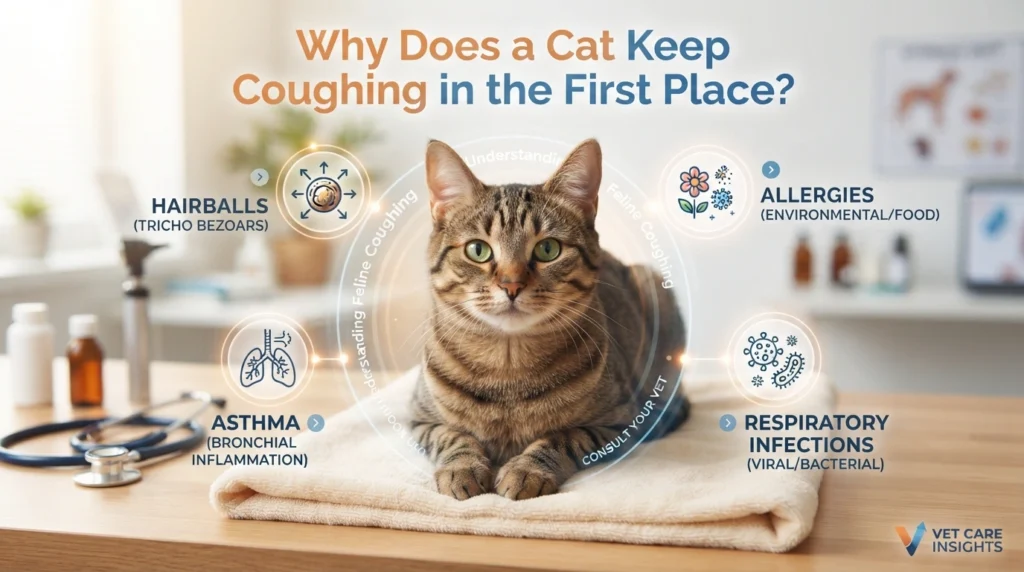
Coughing is a reflex, not a disease on its own. It’s the body’s way of forcing air out sharply to clear irritation, mucus, or a foreign particle from the airway.
According to VCA Animal Hospitals, it’s normal for some cats to cough occasionally, and veterinary attention isn’t always needed if the cat is otherwise healthy and not producing phlegm.
The concern grows when a cat keeps coughing rather than doing it once and returning to normal. Persistent or recurring coughing usually points to ongoing inflammation, infection, or irritation somewhere along the respiratory tract, and that’s the kind of pattern worth tracking closely.
Common Reasons a Cat Keeps Coughing
There’s rarely one single cause. Vets generally consider a range of possibilities, from mild and manageable to serious and urgent.
- Hairballs – Frequent grooming means swallowed fur can irritate the throat, leading to intermittent coughing until it’s expelled.
- Feline asthma – Chronic airway inflammation triggers a recurring, often dry cough, especially in cats exposed to dust or smoke.
- Upper respiratory infections – Viral illnesses like feline herpesvirus or calicivirus irritate the throat and can flare up repeatedly, especially during stress.
- Allergies – Environmental allergens such as pollen, mold, or scented products can cause a cat to cough on and off for weeks.
- Bronchitis – Inflammation of the airway tubes produces a chronic, hacking cough that tends to return in cycles.
- Heartworm disease – Even a small parasite burden in the lungs can cause a cat to cough persistently over time.
- Foreign objects – Something lodged in the throat, like a blade of grass, can trigger sudden and repeated coughing fits.
- Tumors – Though uncommon, growths in the airway or lungs can cause a chronic, progressive cough that worsens gradually.
Hairballs: A Frequent but Often Misunderstood Cause
If a cat keeps coughing only occasionally and the episode ends with a small clump of fur, hairballs are often the explanation. VCA Animal Hospitals notes that coughing is frequently confused with bringing up a hairball, even though true coughing and hairball expulsion are actually different processes. cat keeps coughing
Long-haired breeds and heavy groomers are especially prone to this pattern, and regular brushing typically reduces how often it happens.
Feline Asthma and Chronic Airway Inflammation
Asthma is one of the most common reasons a cat keeps coughing on a recurring basis. Roughly 1% of cats are diagnosed with chronic airway disease, according to Hepper’s veterinary-reviewed resources, and while it can’t be cured outright, it’s usually well managed with inhalers or other prescribed medication once properly diagnosed.
Cats with asthma often show a dry cough alongside occasional wheezing or faster breathing during flare-ups.
Infections That Come and Go
Viral infections like feline herpesvirus and calicivirus can lay dormant in a cat’s system for life, flaring up periodically, particularly during stress or illness.
That’s part of why a cat keeps coughing in cycles rather than constantly the underlying virus reactivates rather than staying continuously active. Vaccination significantly reduces the risk of these recurring flare-ups. cat keeps coughing
Is It Really a Cough, or Something Else?
Owners sometimes mistake hairball retching, vomiting, or reverse sneezing for a true cough. A genuine cough involves a sharp, forceful chest effort, often with the cat crouching low and extending its neck.
Hairball episodes usually end with material actually being expelled, while true coughing fits often stop without producing anything visible. Recording a short video of the episode is one of the most useful things you can bring to a vet appointment, since it helps them distinguish between these look-alike symptoms quickly.
“Recurrent coughing is usually more significant than a single episode,” notes Bottletree Animal Hospital’s veterinary guidance on feline coughing patterns.
Warning Signs That Mean It’s Time to Call the Vet
Occasional, brief coughing in an otherwise healthy cat rarely needs urgent attention. But certain signs shift things from “monitor at home” to “call the vet now.” If your cat keeps coughing and shows any of the following, don’t wait:
- Coughing that persists for more than a few days
- Labored or open-mouth breathing
- Bluish, gray, or pale gums and tongue
- Lethargy or noticeable weakness
- Loss of appetite or reluctance to eat
- Coughing up blood or blood-tinged mucus
- Wheezing or visible breathing difficulty
- Unexplained weight loss over time
What to Do While You Monitor the Pattern
For mild, infrequent coughing without emergency symptoms, a few practical steps can help while you decide whether a vet visit is necessary.
- Track the episodes. Note how often the coughing happens, how long it lasts, and any obvious pattern or trigger.
- Remove common irritants. Scented candles, air fresheners, dusty litter, and aerosol sprays are frequent offenders worth eliminating.
- Encourage hydration. Fresh water helps thin mucus and supports easier breathing.
- Brush regularly. Reducing loose fur lowers the chance of hairball-related coughing.
- Record a video. A short clip of an episode helps your vet quickly distinguish coughing from other look-alike symptoms.
- Note the timing. Coughing during activity versus while resting can offer useful clues for your vet’s evaluation.
These steps support your cat’s comfort but don’t replace a proper veterinary evaluation, especially if the coughing continues or worsens.
How Vets Diagnose Ongoing Coughing
When a cat keeps coughing, a vet typically starts with a full physical exam, paying close attention to the heart and lungs. They may gently press on the trachea to trigger a cough and listen closely to how it sounds. cat keeps coughing
Imaging and Lab Work
Chest X-rays remain the standard first step for identifying asthma, infection, fluid buildup, or an enlarged heart. Bloodwork can rule out heartworm exposure and check for signs of infection or inflammation. cat keeps coughing
In more complex or long-standing cases, a vet may recommend an ultrasound or bronchoscopy for a closer look inside the airway.
Considering the Full Pattern
Vets pay close attention to whether coughing happens during activity or at rest, how long each episode lasts, and whether it’s dry or produces phlegm. This pattern-based approach, combined with a physical exam, often narrows down the likely cause well before advanced diagnostics are needed.
Treatment Options Based on the Underlying Cause
Once a diagnosis is confirmed, treatment is tailored to the specific reason behind the coughing:
- Asthma and allergies are typically managed with inhalers, steroids, or bronchodilators.
- Bacterial infections usually respond well to a course of antibiotics.
- Viral infections are managed with supportive care, rest, and fluids, alongside vaccination to reduce future flare-ups.
- Heartworm disease requires preventive medication and ongoing monitoring.
- Foreign objects are removed under sedation by a veterinary professional.
- Chronic bronchitis is managed long-term through lifestyle adjustments and consistent veterinary follow-up.
Most cats respond well once the correct cause is identified, which is why a proper diagnosis matters more than guessing at home remedies.
Preventing Repeated Coughing Episodes
While not every cause can be avoided, a few consistent habits reduce how often a cat keeps coughing in the long run:
- Groom long-haired cats regularly to reduce hairball frequency
- Choose low-dust, unscented cat litter
- Avoid aerosol sprays, candles, and incense near your cat’s living space
- Keep vaccinations current to guard against recurring viral flare-ups
- Use monthly heartworm prevention year-round, even for indoor cats
- Schedule routine wellness checkups to catch chronic issues early
Consistency here goes a long way toward turning frequent coughing into a rare, well-managed occurrence.
FAQs About Cat Coughing
Is it normal for a cat to cough occasionally?
Yes, an isolated cough is usually not a concern in an otherwise healthy cat. It’s when the cat keeps coughing repeatedly that closer attention is warranted. Cat keeps coughing
Why does my cat keep coughing but nothing comes up?
A dry, unproductive cough often points to airway inflammation from asthma, allergies, or irritants rather than a physical blockage that needs clearing.
Can stress cause a cat to keep coughing?
Stress alone rarely triggers coughing directly, but it can reactivate dormant viral infections or worsen asthma flare-ups in cats already prone to airway inflammation.
How long should I wait before taking my cat to the vet?
If coughing persists for more than a few days, worsens, or comes with breathing difficulty or lethargy, schedule a vet visit rather than continuing to wait.
Can indoor-only cats still get heartworm-related coughing?
Yes. Mosquitoes can enter homes, so indoor cats remain at risk for heartworm despite limited outdoor exposure.
Does a cat that keeps coughing always have a serious illness?
Not necessarily. Many recurring coughs stem from manageable conditions like hairballs, mild allergies, or asthma, but a proper diagnosis is still the safest way to rule out anything more serious.
Why does my cat cough more at certain times of year?
Seasonal allergens like pollen and mold spores commonly trigger airway inflammation, so coughing may increase during specific seasons for cats with underlying sensitivities.
Conclusion
When a cat keeps coughing, the right response depends entirely on the pattern: how often it happens, how long each episode lasts, and what other symptoms show up alongside it.
A single cough tied to a hairball rarely needs concern, but frequent, worsening, or symptom-paired coughing deserves a proper veterinary evaluation rather than a wait-and-see approach at home.
Keep a simple log, record a video if you can, and don’t hesitate to reach out to your vet when something feels off. Identifying the cause early is the best way to keep your cat comfortable and breathing easy.
References
- Pet MD – “Cat Coughing: Why It Happens and When To Call Your Vet.”
- VCA Animal Hospitals – “Coughing in Cats.”
- Hepper Pet Resources – “Why Does My Cat Keep Coughing? 7 Vet-Reviewed Causes & Care Tips”.
- UrgentVet – “Coughing in Cats: Causes & Treatment.”
- Bottletree Animal Hospital – “Cat Coughing: Causes and When to Visit the Vet.”
- Broomfield Veterinary Hospital – “My Cat Keeps Coughing – Should I Call the Vet?”
- Cornell University Feline Health Center – Feline Respiratory Health Resources.