Cat Coughing Up Blood: Causes, Warning Signs & What to Do
Cat coughing up blood is a symptom that should never be casually dismissed. Blood or blood-stained mucus coming from a cat’s respiratory tract can have several possible causes, ranging from irritation or inflammation to infection, trauma, blood-clotting problems, heart disease, or serious lung conditions. Because the appearance of blood alone cannot identify the underlying problem, veterinary assessment is important.
A cat that is cat coughing up blood may also show coughing, rapid breathing, wheezing, weakness, nasal discharge, reduced appetite, or difficulty breathing. Some cats may initially appear relatively normal despite having an important respiratory problem. Veterinary references identify coughing with blood, also called hemoptysis, as a respiratory warning sign that can occur alongside other signs such as labored breathing and rapid breathing.
Quick Take: Blood associated with coughing is not something to treat at home without knowing its cause. If your cat is struggling to breathe, seek emergency veterinary care.
This guide explains why cat coughing up blood can happen, how to recognize potentially dangerous signs, what a veterinarian may investigate, and what you can safely do while arranging professional care.
Is Cat Coughing Up Blood an Emergency?
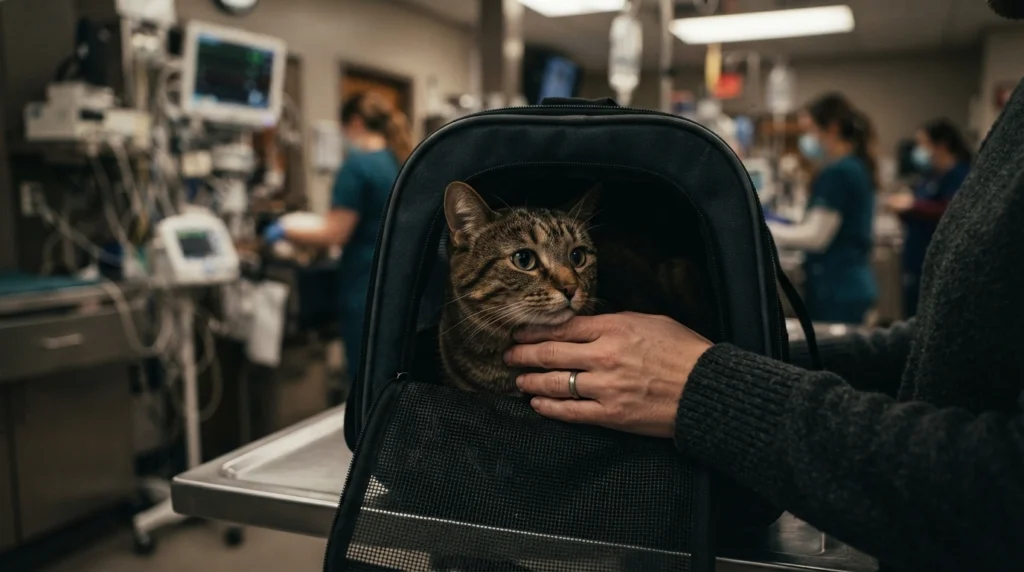
Cat coughing up blood can be an emergency, particularly when the bleeding is accompanied by breathing difficulty, weakness, collapse, blue or pale gums, rapid breathing, or a sudden deterioration.
The urgency depends on the amount of blood, how frequently it occurs, the cat’s breathing, and the underlying disease. A tiny blood streak after significant airway irritation is different from repeated coughing of fresh blood, but neither should automatically be assumed to be harmless.
Merck Veterinary Manual lists coughing that may contain mucus or blood among signs associated with respiratory disorders. It also identifies rapid breathing, labored breathing, shallow breathing, and breathing-associated pain as concerning respiratory signs.
When to Seek Emergency Veterinary Care
Take your cat to an emergency veterinarian immediately if cat coughing up blood occurs with any of these signs:
- Difficulty or obvious effort when breathing
- Open-mouth breathing
- Blue, gray, or unusually pale gums
- Collapse or extreme weakness
- Severe lethargy
- Very rapid or shallow breathing
- Repeated coughing of fresh blood
- Sudden severe respiratory distress
- Signs of shock
- A recent major injury or trauma
- Sudden deterioration
A blood clot affecting the lungs, for example, can cause breathing difficulty, coughing blood, collapse, shock, and potentially sudden death.
Quick Take: If your cat is having trouble getting enough air, breathing difficulty takes priority over trying to determine exactly where the blood came from.
What Does Blood From a Cat’s Cough Look Like?
Blood associated with coughing does not always appear as a large amount of bright-red fluid. It may appear as:
- Small red streaks mixed with mucus
- Pink or reddish foam
- Fresh droplets
- Bloody sputum or respiratory secretions
- Darker or partially dried material
The appearance can provide clues, but it cannot establish a diagnosis.
It is also important to determine whether the blood truly came from the lower respiratory tract. Blood can potentially originate from the nose, mouth, throat, or digestive tract and then be mistaken for blood produced by coughing.
For example, nasal disease can produce bloody nasal discharge, while oral bleeding can become mixed with saliva. Your veterinarian may therefore need to determine whether your cat is actually coughing, gagging, vomiting, sneezing, or experiencing another type of episode.
Why Is My Cat Coughing Up Blood?
There is no single explanation for cat coughing up blood. Veterinarians consider the cat’s age, medical history, environment, recent injuries, respiratory signs, medications, parasite exposure, and physical examination findings.
Potential causes include respiratory inflammation, infection, airway irritation, foreign material, parasites, blood-clotting disorders, tumors, trauma, and vascular or cardiac conditions.
Respiratory Tract Inflammation
Inflammation can irritate the airways and make coughing more likely. In some respiratory disorders, the airway lining can become sufficiently irritated or damaged that blood appears in respiratory secretions.
Inflammatory respiratory conditions can also produce:
- Persistent coughing
- Wheezing
- Rapid breathing
- Nasal discharge
- Reduced activity
- Difficulty breathing
Merck describes coughing as a nonspecific sign that can arise from disease affecting the respiratory tract from the larynx through the lungs.
Respiratory Infections
Infections can affect different parts of a cat’s respiratory system. Feline respiratory disease can involve viral and bacterial organisms and may sometimes progress or become complicated by secondary infection.
Upper respiratory infections commonly cause signs such as sneezing, nasal discharge, conjunctivitis, fever, and oral abnormalities. More serious respiratory involvement can lead to pneumonia and breathing difficulties.
A cat coughing repeatedly because of respiratory inflammation may occasionally develop blood-stained secretions. However, visible blood should not simply be attributed to an ordinary respiratory infection without veterinary evaluation.
Pneumonia and Lower Respiratory Disease
Pneumonia and other diseases affecting the lower respiratory tract can produce coughing and breathing abnormalities.
Depending on the underlying cause, affected cats may also have:
- Fever
- Poor appetite
- Lethargy
- Rapid breathing
- Labored breathing
- Nasal discharge
- Weakness
A veterinarian may use chest radiographs and laboratory testing to investigate suspected lower respiratory disease. Merck notes that chest X-rays are commonly used in cats with lower respiratory signs such as coughing and rapid or labored breathing.
Parasites and Allergic Lung Disease
Parasites and allergic inflammatory conditions can affect the feline respiratory system.
Merck notes that allergic pneumonitis may be associated with parasites, infections, viruses, external antigens, and other factors. Cats may develop chronic coughing, wheezing, rapid or labored breathing, weight loss, and, occasionally, coughing blood.
Depending on the suspected cause, a veterinarian may recommend blood testing, fecal testing, heartworm testing, chest imaging, or specialized respiratory sampling.
Foreign Material or Airway Irritation
A foreign object or significant airway irritation can trigger persistent coughing.
Possible irritants include:
- Dust
- Smoke
- Aerosols
- Strong chemical fumes
- Small inhaled particles
- Foreign material
A sudden onset of coughing after exposure to an object or irritant deserves particular attention.
Do not attempt to force objects deeper into the mouth or throat while investigating the episode. If an airway obstruction is suspected, veterinary care is the safest option.
Trauma
Trauma can damage the chest, airway, lungs, or surrounding tissues. A cat that has recently been hit, fallen, attacked, or suffered another significant injury should be evaluated promptly if respiratory abnormalities develop.
Chest trauma can also be associated with blood accumulating within the chest cavity. Merck identifies trauma, clotting disorders, and certain thoracic tumors among potential causes of hemothorax.
Blood-Clotting Problems
A cat coughing up blood may have a problem involving normal blood clotting or bleeding.
Possible underlying disorders can include conditions affecting platelets or the body’s clotting mechanisms. These problems may cause bleeding in locations other than the respiratory tract as well.
Watch for additional signs such as:
- Nosebleeds
- Blood in urine
- Unusual bruising
- Bleeding from the mouth
- Dark or bloody stool
- Weakness
This type of situation requires professional investigation rather than home treatment.
Blood Clots in the Lungs
Pulmonary thromboembolism occurs when a blood vessel in the lungs becomes blocked by a clot.
It can be associated with serious underlying illnesses, including certain heart diseases and cancers. Clinical signs can include rapid or labored breathing, coughing, blood in respiratory secretions, collapse, and shock.
Because pulmonary thromboembolism can become life-threatening, sudden respiratory deterioration requires immediate veterinary attention.
Tumors or Other Lung Abnormalities
Tumors and other abnormal growths can affect the respiratory tract or lungs. Their signs vary according to location, size, and disease progression.
Possible signs include:
- Persistent coughing
- Weight loss
- Reduced appetite
- Exercise intolerance
- Breathing changes
- Bloody respiratory discharge
The presence of blood does not mean a cat has cancer. However, persistent or unexplained respiratory bleeding may require diagnostic imaging and additional testing to identify the underlying cause.
Fungal or Unusual Infections
Some less common infections can affect the respiratory system and produce coughing, systemic illness, or bloody respiratory discharge.
For example, Merck describes chest involvement in nocardiosis as potentially causing coughing, sometimes with blood, together with difficulty breathing and other systemic signs. Diagnosis can require cultures, blood testing, and imaging.
This is one reason a veterinarian should investigate persistent or unusual respiratory symptoms rather than relying on assumptions.
Cat Coughing Up Blood vs. Vomiting Blood
One of the most important distinctions is whether your cat is coughing or vomiting blood.
A cough generally involves a forceful expulsion of air from the respiratory tract. Vomiting involves gastrointestinal contents and may include retching, abdominal contractions, and stomach material.
Blood from the respiratory system may be associated with mucus or frothy material, while gastrointestinal bleeding can have a different appearance.
If you are uncertain what you witnessed, record a short video of another episode if it can be done safely. Showing the video to your veterinarian may help them understand the event.
Cat Coughing Up Blood: What Other Symptoms Matter?
The surrounding symptoms can help a veterinarian determine how urgently the cat needs treatment.
| Symptom | Why It Matters |
|---|---|
| Difficulty breathing | May indicate significant respiratory compromise |
| Rapid breathing | Can accompany respiratory or cardiovascular disease |
| Blue or pale gums | May indicate inadequate oxygenation or circulation |
| Collapse | Potential emergency |
| Fever | May accompany infection or inflammation |
| Weight loss | Can occur with chronic disease |
| Nasal bleeding | May suggest bleeding elsewhere in the respiratory tract |
| Sudden onset | May raise concern for trauma, obstruction, or vascular disease |
| Persistent cough | Suggests an ongoing respiratory problem |
Merck identifies coughing, rapid breathing, labored breathing, shallow breathing, and respiratory pain among clinical signs that can accompany respiratory disease.
What Should I Do If My Cat Is Coughing Up Blood?
If cat coughing up blood happens, remain calm but take the symptom seriously.
Step 1: Move Your Cat to a Calm Environment
Stress and excessive activity can worsen respiratory distress. Keep your cat somewhere quiet and minimize handling.
Step 2: Observe Breathing
Watch whether your cat is breathing comfortably or working hard to breathe.
Look for:
- Open-mouth breathing
- Strong abdominal movement
- Rapid breathing
- Extended neck
- Unusual posture
- Blue or pale gums
If breathing appears difficult, seek emergency care.
Step 3: Contact a Veterinarian
Tell the veterinary clinic exactly what happened.
Mention:
- How much blood you saw
- Whether it was fresh or mixed with mucus
- How often it occurred
- Whether your cat was coughing or vomiting
- Any recent injury
- Other symptoms
- Existing medical conditions
- Current medications
Step 4: Photograph or Record the Episode
If another episode occurs and your cat can breathe normally, a photograph or video can be useful to the veterinarian.
Do not delay emergency treatment simply to obtain a recording.
Step 5: Avoid Human Medicines
Do not give your cat human cough medicines, painkillers, antibiotics, or other medications unless a veterinarian specifically instructs you to do so.
Different causes of cat coughing up blood require very different treatments, and inappropriate medication can create additional risks.
How Veterinarians Diagnose Cat Coughing Up Blood
The veterinarian will first collect a detailed history and perform a physical examination.
Depending on the situation, diagnostic testing may include:
- Physical examination
- Chest X-rays
- Blood tests
- Oxygen assessment
- Parasite or heartworm testing when appropriate
- Respiratory sampling
- Bronchoscopy or other airway examination
- Echocardiography when heart disease is suspected
- Additional imaging such as CT in selected cases
Merck notes that chest and neck X-rays can help investigate airway obstruction and that chest X-rays are commonly used when cats have lower respiratory signs. Blood-gas analysis or pulse oximetry may help assess oxygenation in cats with severe breathing difficulty.
How Is Cat Coughing Up Blood Treated?
There is no universal treatment for cat coughing up blood because the treatment depends on the underlying cause.
A veterinarian may use different approaches for different diagnoses.
For example:
- Bacterial infections may require appropriate antimicrobial treatment.
- Severe oxygen deficiency may require oxygen therapy.
- Some airway diseases may respond to bronchodilator treatment.
- Certain inflammatory conditions may require anti-inflammatory medication.
- A foreign body may need to be removed.
- Blood-clotting disorders require treatment directed at the underlying problem.
- Some emergency conditions require hospitalization and intensive monitoring.
Merck emphasizes that respiratory disorders should be treated according to the underlying condition, with supportive care and specific therapies selected according to the diagnosis.
Can Cat Coughing Up Blood Be Prevented?
Not every cause can be prevented, but responsible preventive care can reduce some risks.
Helpful measures include:
- Keep vaccinations current as advised by your veterinarian.
- Use appropriate parasite prevention.
- Keep cats away from cigarette smoke and irritating fumes.
- Reduce exposure to dusty environments.
- Provide good ventilation.
- Keep potentially dangerous objects away from curious cats.
- Seek veterinary attention for persistent coughing.
- Schedule routine veterinary examinations.
Environmental management is particularly relevant to respiratory health. Merck notes that dust, poor ventilation, stress, and other environmental factors can influence respiratory disease in groups of cats.
Frequently Asked Questions
Is cat coughing up blood always serious?
Cat coughing up blood should always be taken seriously because blood can occur with several respiratory and systemic conditions. The urgency is particularly high when coughing blood occurs with breathing difficulty, collapse, weakness, or abnormal gum color.
Why is my cat coughing up a small amount of blood?
A small amount of blood can occur when respiratory tissues become irritated or inflamed, but it does not identify the cause. Infection, airway disease, trauma, parasites, clotting problems, and other conditions may need consideration.
3. Should I take my cat to the emergency vet for coughing blood?
If your cat is struggling to breathe, has blue or pale gums, collapses, becomes extremely weak, or repeatedly coughs fresh blood, emergency veterinary care is appropriate. Even when the cat appears stable, contact your veterinarian promptly for advice.
Can a respiratory infection make a cat cough blood?
Respiratory infections can cause inflammation and coughing, and more serious respiratory disease may involve bloody secretions. However, visible blood should not automatically be assumed to be caused by a simple infection.
Can cat asthma cause coughing blood?
Inflammatory airway conditions can cause coughing, wheezing, and respiratory distress. Merck also notes that allergic pneumonitis can occasionally be associated with hemoptysis, or coughing blood.
Can heart disease cause a cat to cough up blood?
Heart and vascular disorders can contribute to serious respiratory problems. Blood clots affecting the lungs can produce coughing blood and breathing difficulty, while some cats with heart-related disease may develop other respiratory complications.
What should I give my cat for coughing blood?
Do not choose a cough medicine or other medication based solely on the symptom. Treatment depends on the cause, and some respiratory conditions require urgent veterinary intervention rather than home medication.
How can I tell whether my cat is coughing or vomiting blood?
Coughing primarily involves forceful expulsion of air from the respiratory tract, whereas vomiting generally involves retching and abdominal contractions and may contain stomach material. If you are unsure, a video of the episode can help your veterinarian distinguish between them.
Can trauma cause a cat to cough blood?
Yes. Significant trauma can injure the chest or respiratory tissues and can be associated with bleeding within or around the thorax. A cat with respiratory changes following trauma should receive prompt veterinary evaluation.
Can a cat recover after coughing up blood?
Recovery depends entirely on the underlying cause. Some respiratory conditions can respond well to appropriate treatment, while severe disorders such as significant pulmonary blood clots or serious trauma can be life-threatening. Early veterinary assessment gives the cat the best opportunity for appropriate treatment.
Conclusion
Cat coughing up blood is a symptom rather than a diagnosis. It can be associated with airway irritation, respiratory infection, inflammatory lung disease, parasites, trauma, clotting disorders, tumors, or potentially life-threatening vascular problems.
The most important thing is to assess your cat’s overall condition. If breathing is difficult, the gums look blue or unusually pale, your cat collapses, or the bleeding is substantial or recurring, seek emergency veterinary care rather than waiting for the symptoms to resolve.
Even when the amount of blood seems small, unexplained respiratory bleeding deserves professional attention. A veterinarian can determine whether the problem originates in the respiratory tract and use appropriate examinations, imaging, laboratory tests, or other diagnostics to identify the cause.
The safest approach to cat coughing up blood is therefore simple: take the symptom seriously, avoid unapproved medications, keep your cat calm, and contact a veterinarian promptly.
References / Sources
- Merck Veterinary Manual — Introduction to Lung and Airway Disorders of Cats.
- Merck Veterinary Manual — Clinical Signs of Respiratory Disease in Animals.
- Merck Veterinary Manual — Pulmonary Thromboembolism in Cats.
- Merck Veterinary Manual — Allergic Pneumonitis in Cats.
- Merck Veterinary Manual — Blood Clots and Aneurysms in Cats.
- Merck Veterinary Manual — Feline Respiratory Disease Complex.
- Merck Veterinary Manual — Causes of Respiratory Disease in Animals.
- Merck Veterinary Manual — Nocardiosis in Cats.