Signs, Causes, and When to See a Vet
When to worry about cat coughing is a question many pet owners ask when they notice their cat making unusual hacking or wheezing sounds. While occasional coughing in cats may simply be the body clearing an irritant from the airway, frequent or persistent coughing can sometimes indicate a serious underlying health problem.
Veterinarians emphasize that coughing in cats is usually a symptom rather than a disease itself, meaning it often points to conditions such as asthma, respiratory infections, parasites, or even heart disease.
Understanding the warning signs and underlying causes can help cat owners decide when monitoring at home is enough and when veterinary care becomes necessary. This guide explains the medical background, statistics, symptoms, and expert insights to help you determine when to worry about cat coughing and how to respond effectively.
Understanding Cat Coughing and Why It Happens
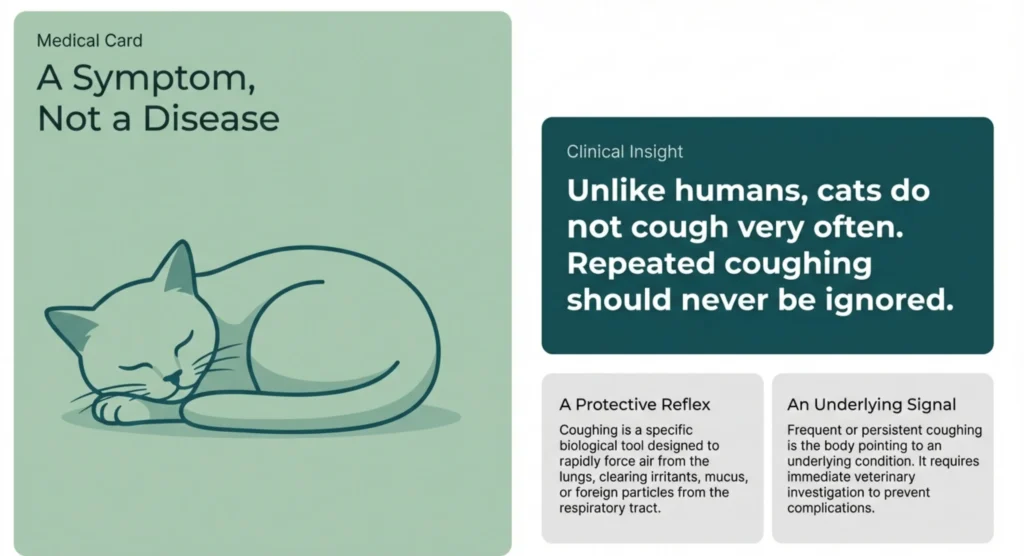
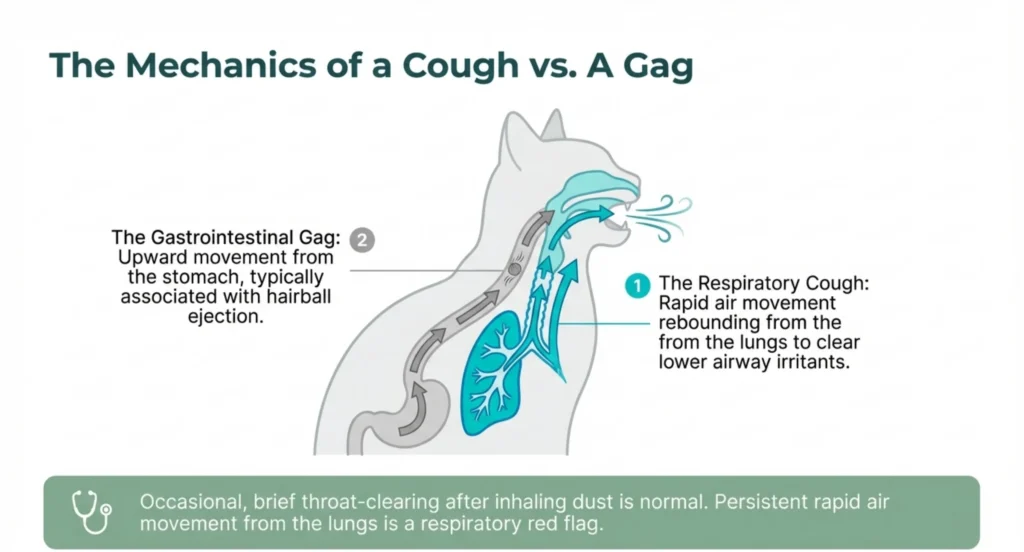
Coughing in cats is a protective reflex designed to remove irritants, mucus, or foreign particles from the respiratory tract. The reflex involves rapid air movement from the lungs through the throat to clear the airway.
However, unlike humans, cats do not cough very often, which means repeated coughing should never be ignored.
Veterinary literature shows that several medical conditions can trigger coughing in cats, including:
- Feline asthma
- Bronchitis
- Upper respiratory infections
- Lung parasites or heartworm
- Allergies and environmental irritants
- Foreign objects stuck in the airway
In some cases, tumors or heart disease can also contribute to persistent coughing.
The challenge for pet owners is distinguishing between normal throat clearing and symptoms that may signal a serious health issue. When to Worry About Cat Coughing
When to Worry About Cat Coughing: Warning Signs
Knowing when to worry about cat coughing is essential for early diagnosis and treatment. Veterinarians generally recommend seeking medical attention if coughing becomes persistent or occurs alongside other symptoms.
Major Warning Signs
You should contact a veterinarian if coughing occurs with any of the following symptoms:
- Difficulty breathing
- Blue or pale gums
- Lethargy or weakness
- Loss of appetite
- Blood in mucus
- Rapid breathing or wheezing
These symptoms may indicate respiratory distress or serious underlying disease and require immediate veterinary evaluation.
Mild Cases That May Not Require Immediate Concern
Occasional coughing may not always be serious. For example:
- A brief cough after inhaling dust
- Hairball-related gagging
- Short coughing episodes without other symptoms
However, if coughing becomes frequent or lasts more than a few days, veterinary consultation is recommended.
Common Medical Causes of Cat Coughing
Understanding the medical causes helps clarify when to worry about cat coughing and when treatment may be necessary.
Feline Asthma
It occurs when allergens trigger inflammation and narrowing of the airways, making breathing difficult.
Common asthma triggers include:
- Dust
- Smoke
- Pollen
- Household chemicals
- Cat litter particles
Asthmatic cats often display wheezing, coughing fits, and a crouched posture during breathing episodes.
Respiratory Infections
Respiratory infections caused by viruses, bacteria, or fungi can also lead to coughing. These infections typically produce additional symptoms such as sneezing, nasal discharge, or fever.
Parasites and Heartworm
Certain parasites like lungworms or heartworms can infect the lungs and airways, causing chronic coughing. These infections may also cause weight loss, fatigue, and breathing difficulties.
Parasite-related coughing requires prompt veterinary diagnosis and medication.
Allergies and Environmental Irritants
Environmental irritants are a common but often overlooked cause of coughing in cats. Substances such as cigarette smoke, perfumes, or cleaning products can inflame the airway lining and trigger coughing episodes.
Improving indoor air quality can significantly reduce coughing related to allergies.
Veterinary Statistics on Cat Coughing Causes
The following table summarizes approximate veterinary data on common respiratory issues associated with coughing in cats.
| Condition | Estimated Prevalence | Key Symptoms |
| Feline Asthma | 1–5% of cats | Chronic coughing, wheezing |
| Respiratory Infections | Common in young cats | Sneezing, nasal discharge |
| Lung Parasites | Less common | Coughing, weight loss |
| Allergies/Irritants | Moderately common | Dry cough, throat irritation |
| Tumors or Cancer | Rare | Persistent cough, breathing difficulty |
Research from veterinary institutions shows that feline asthma alone affects about 1–5% of cats, making it one of the most significant respiratory causes of coughing.
Info graphic: Signs That Require Immediate Vet Care
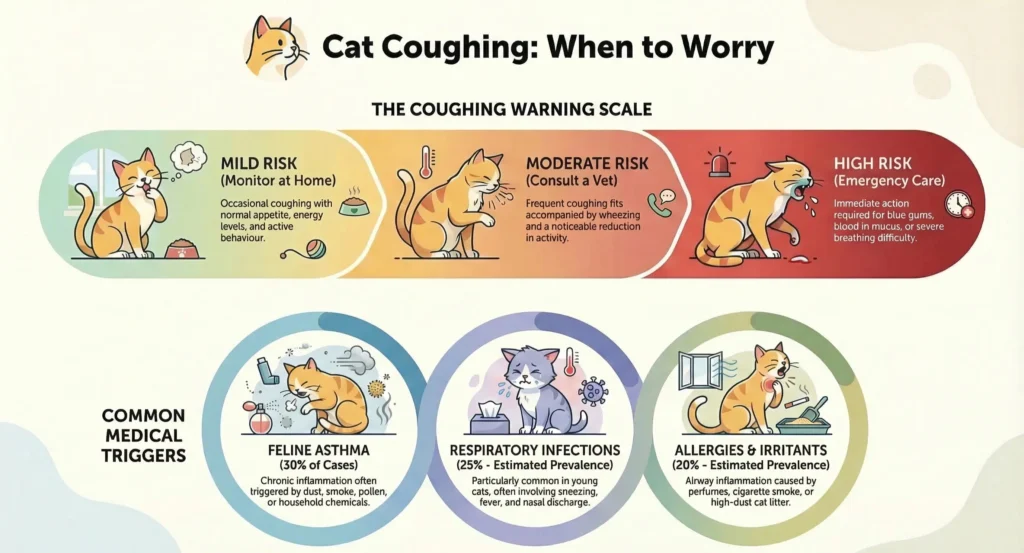
Cat Coughing Warning Scale
Mild Risk
• Occasional cough
• Normal appetite
• Active behavior
Moderate Risk
• Frequent cough
• Wheezing
• Reduced activity
High Risk (Emergency)
• Blue gums
• Severe breathing difficulty
• Blood in mucus
This simple info graphic illustrates how symptoms progress from mild irritation to serious medical emergencies.
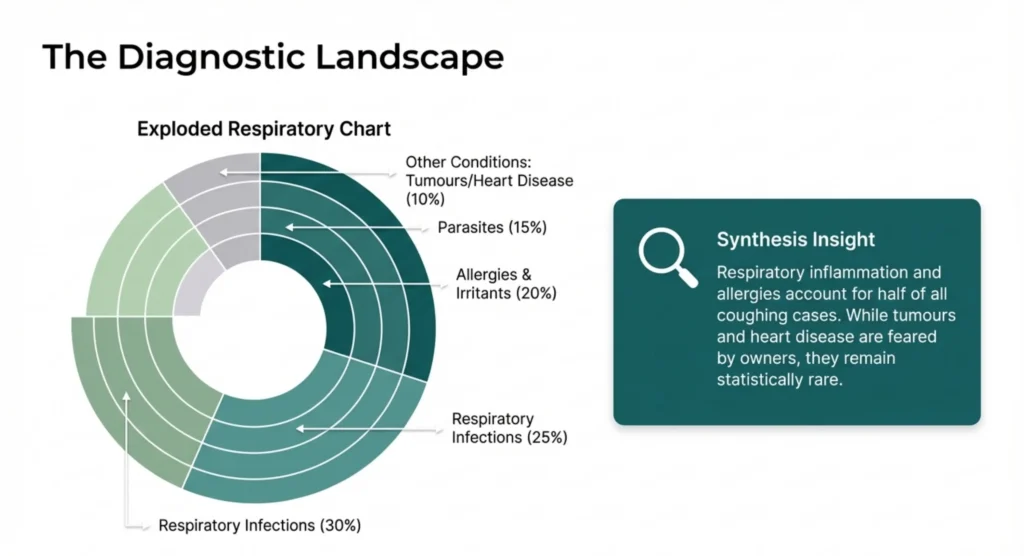
Graph: Estimated Causes of Cat Coughing
Common Causes of Cat Coughing (% estimate)
Asthma █████████████ 30%
Respiratory Infection ██████████ 25%
Allergies/Irritants ████████ 20%
Parasites █████ 15%
Other Conditions ████ 10%
The graph highlights how respiratory inflammation and allergies account for a large proportion of coughing cases in cats.
How Veterinarians Diagnose Cat Coughing
If coughing becomes persistent, veterinarians typically perform several diagnostic tests to determine the cause. These may include:
- Physical examination of the lungs and heart
- Chest X-rays
- Blood tests
- Parasite screening
- Airway fluid analysis
These tests help identify infections, asthma, parasites, or structural abnormalities affecting the respiratory system.
Preventing Cat Coughing Problems
Preventive care plays an important role in reducing respiratory issues in cats. Some practical strategies include:
- Maintaining a clean, dust-free environment
- Avoiding smoke or strong chemical odors
- Using low-dust cat litter
- Scheduling regular veterinary checkups
- Keeping vaccinations up to date
These steps reduce the risk of respiratory irritation and infection.
Conclusion
Understanding when to worry about cat coughing can make a significant difference in protecting your pet’s health. While an occasional cough may simply be the body clearing minor irritants, persistent coughing or coughing accompanied by breathing difficulty, lethargy, or unusual gum color should never be ignored.
Veterinary research shows that conditions like feline asthma, respiratory infections, parasites, and allergies are among the most common causes of coughing in cats. Early recognition of symptoms and timely veterinary care can prevent complications and help your cat maintain a healthy respiratory system. When to Worry About Cat Coughing
If your cat begins coughing frequently or shows signs of distress, consulting a veterinarian is always the safest course of action. Your quick response could make a life-saving difference.