Causes, Emergencies, and What to Do
Editorial note: This article is informational and has been reviewed against current veterinary guidance from established veterinary sources. It does not replace an examination or diagnosis by a veterinarian.
Quick Answer
If your cat is coughing a lot and also has difficulty breathing, open-mouth breathing, blue or gray gums/tongue, severe weakness, collapse, or obvious respiratory distress, seek emergency veterinary care immediately. Cats with serious breathing problems can deteriorate quickly.
If your cat is breathing normally but has repeated coughing, arrange a veterinary appointment, especially if the coughing continues, becomes severe, produces mucus or blood, returns frequently, or occurs with weight loss, poor appetite, lethargy, or other signs of illness.
For now:
- Keep your cat calm and minimize handling.
- Move the cat away from smoke, sprays, dust, fragrances, and other possible airway irritants.
- Do not give human cough medicine or other medication unless specifically prescribed by your veterinarian.
- If poisoning may be involved, remove your cat from the exposure and contact a veterinarian or appropriate animal poison service promptly.
- If breathing is difficult, do not delay veterinary care while trying home remedies.
A repeated cough can have many possible explanations, including airway inflammation, feline asthma or bronchitis, infection, parasites, inhaled foreign material, and less common lung or systemic disorders. The cause cannot be determined safely from the sound of the cough alone.
When Is Cat Coughing a Lot an Emergency?
Not every cough requires an emergency visit. However, repeated coughing becomes more concerning when it is accompanied by breathing abnormalities or other signs of serious illness.
Emergency warning signs
Take your cat to an emergency veterinary hospital if coughing is accompanied by:
- Difficulty breathing or obvious shortness of breath
- Open-mouth breathing
- Blue, gray, or unusually pale gums or tongue
- Severe or rapidly worsening respiratory distress
- Collapse or inability to stand normally
- Extreme weakness or unresponsiveness
- Significant bleeding
- Suspected poisoning with breathing or neurological symptoms
- A suspected airway obstruction
- Severe trauma followed by respiratory symptoms
Open-mouth breathing is particularly important in cats. Unlike dogs, cats generally do not routinely breathe through their mouths when relaxed. Open-mouth breathing can therefore indicate significant respiratory distress. VCA identifies asthma attacks involving open-mouth breathing and bluish or gray mucous membranes as emergencies.
When it may be appropriate to schedule a veterinary appointment
A cat that is otherwise comfortable and breathing normally may not need an emergency hospital for every isolated cough. However, repeated or persistent coughing deserves veterinary attention.
Make an appointment if your cat:
- Has been coughing repeatedly for more than a short period
- Has recurring coughing episodes
- Produces mucus or sputum
- Coughs and then repeatedly gags
- Has wheezing or noisy breathing
- Has nasal or eye discharge
- Has reduced appetite or energy
- Is losing weight
- Has recently been exposed to other cats with respiratory illness
- Has a history of respiratory disease
- Spends time outdoors and may have parasite exposure
VCA advises veterinary assessment when a cough persists, is severe, productive, recurrent, or occurs with breathing difficulty or signs of illness.
What Can Cause Cat Coughing a Lot?
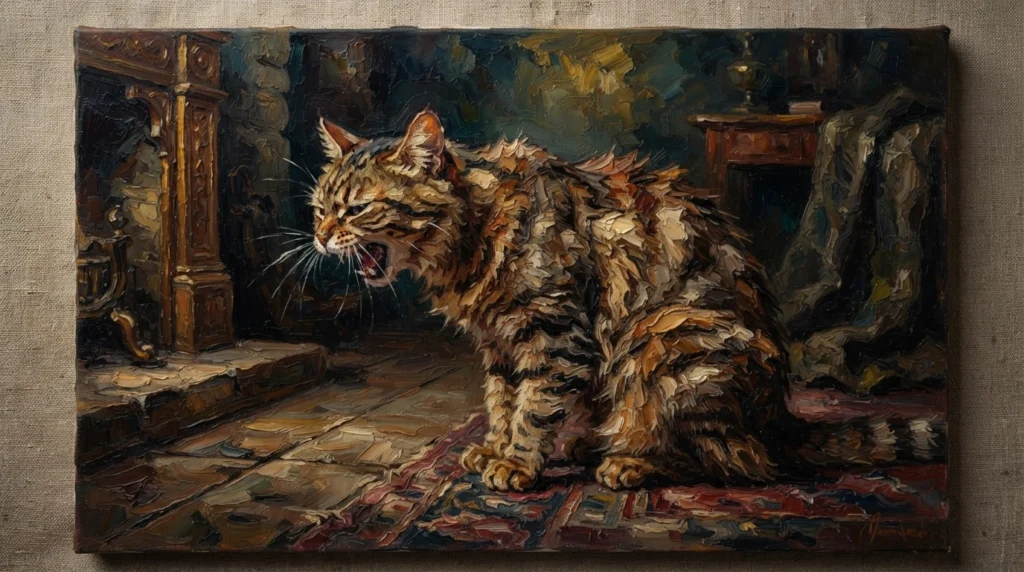
Coughing is a protective reflex. It helps clear material or secretions from the airways. In cats, frequent coughing is often associated with inflammation or irritation involving the trachea, bronchi, or smaller airways.
Possible causes include respiratory disease, infection, parasites, allergies or airway inflammation, foreign material, inhaled irritants, trauma, toxins, and less commonly tumors or other systemic problems.
Feline asthma and bronchitis
Feline asthma and chronic bronchitis can cause repeated coughing. Affected cats may crouch with the neck extended while coughing. Wheezing and respiratory difficulty can also occur.
Airway inflammation can narrow the bronchial passages and make breathing more difficult. Some cats have intermittent episodes, while others develop more persistent respiratory signs.
Importantly, coughing alone does not prove that a cat has asthma. Other diseases can produce similar signs, so veterinary testing may be necessary.
Respiratory infections
Respiratory infections can involve the upper or lower respiratory tract. Cats may develop coughing along with sneezing, nasal discharge, eye discharge, fever, reduced appetite, or lethargy.
Common feline upper respiratory infections can involve viral or bacterial organisms. VCA identifies feline herpesvirus type-1 and feline calicivirus among the common viral causes, with organisms such as Bordetella bronchiseptica and Chlamydophila felis also associated with feline respiratory disease.
When infection spreads into the lower respiratory tract or lungs, more extensive investigation may be needed.
Feline bronchitis
Bronchitis involves inflammation of the bronchi, the larger airways inside the lungs. It can produce persistent or recurring coughing.
The underlying trigger can vary. Infection, allergic or inflammatory disease, and inhaled irritants may all be considered during a veterinary workup.
Parasites
Certain parasites can affect the respiratory system. Lungworms and heartworms are examples that may need consideration depending on the cat’s location, lifestyle, travel history, and preventive care.
Parasite testing can include stool testing and, in appropriate circumstances, blood testing. VCA notes that heartworm testing may be considered for coughing cats when exposure is possible.
Foreign material
A small piece of plant material, food, liquid, or another foreign substance can irritate or obstruct part of the airway.
An inhaled foreign object can sometimes cause sudden coughing. If breathing becomes difficult, this should be treated as an emergency rather than monitored at home.
Smoke, dust, sprays, and other irritants
Environmental irritants can aggravate the airways.
Potential irritants include:
- Cigarette or vaping smoke
- Heavy dust
- Strong cleaning chemicals
- Aerosol sprays
- Strong fragrances
- Some household fumes
- Airborne particles
Merck Veterinary Manual notes that inhaled dust, smoke, irritating gases, and foreign objects can contribute to laryngeal irritation and respiratory signs.
Trauma
Chest or airway trauma can cause respiratory problems and coughing. A cat that develops coughing or breathing difficulty after being hit, falling, fighting, or experiencing another significant injury should be evaluated promptly.
Trauma can involve problems that are not obvious from the outside, so a normal-looking exterior does not necessarily rule out serious injury.
Toxin exposure
Some toxic exposures can cause respiratory irritation, vomiting, neurological abnormalities, or other serious effects.
If you suspect that your cat has inhaled, swallowed, or contacted a potentially toxic substance, remove the cat from further exposure and seek veterinary advice. If the animal is unconscious, having difficulty breathing, bleeding, or having seizures, the ASPCA advises immediate veterinary care.
Do not induce vomiting or administer household remedies unless a veterinarian or veterinary poison professional specifically tells you to do so.
Lung or airway tumors
Tumors involving the lungs or airways are less common explanations for coughing, but they can occur.
Persistent coughing, weight loss, reduced energy, or other chronic changes may lead a veterinarian to consider imaging or additional diagnostic testing.
Heart and systemic disorders
Heart disease is not among the most common explanations for coughing in cats, but cardiac and systemic disorders can sometimes contribute to respiratory signs. VCA notes that fluid accumulation in or around the lungs may require investigation for cardiac disease or other causes.
This is one reason it is unsafe to assume that every repeated cough is asthma, a hairball, or an infection.
Is It Coughing or Vomiting?
One of the most confusing situations for cat owners is determining whether the cat is actually coughing or attempting to vomit.
Cats may crouch down, extend their neck, and make forceful respiratory movements during a cough. A severe coughing episode can end with gagging or even bring up a small amount of stomach material, which can make the episode look like vomiting.
A video recorded during an episode can be extremely useful for your veterinarian.
Coughing versus vomiting
| Feature | More consistent with coughing | More consistent with vomiting |
|---|---|---|
| Body position | Often crouched with neck extended | Often abdominal contractions |
| Main action | Forceful expulsion of air | Forceful abdominal retching |
| Sound | Harsh, dry, hacking, or wheezing | Retching/gagging |
| Material | May produce mucus or sputum | May produce food, bile, or stomach contents |
| Possible trigger | Airway irritation or respiratory disease | Gastrointestinal or systemic disease |
| What to do | Veterinary assessment if persistent/repeated | Veterinary assessment if repeated, severe, or associated with blood/illness |
These observations are only clues. They cannot establish a diagnosis.
Blood: Is Your Cat Coughing It Up or Vomiting It?
Blood can be especially alarming. It is important to distinguish hemoptysis, which refers to blood originating from the respiratory tract, from hematemesis, which means vomiting blood from the gastrointestinal tract.
Blood from the respiratory tract may appear mixed with mucus or saliva and can be bright red or frothy. Vomited blood may be mixed with food, stomach contents, or altered blood that can appear darker.
However, appearance alone cannot reliably identify the source.
| What you notice | Possible source | Why veterinary evaluation matters |
|---|---|---|
| Bright-red blood with coughing | Respiratory tract | Could reflect airway irritation, inflammation, injury, or another disorder |
| Blood mixed with mucus | Respiratory tract | May occur with airway inflammation or bleeding |
| Dark or altered material after vomiting | Gastrointestinal tract | Could indicate digested blood or upper GI bleeding |
| Blood with repeated retching | GI tract possible | The source needs professional assessment |
| Blood plus breathing difficulty | Respiratory emergency possible | Immediate veterinary evaluation is warranted |
Any significant or unexplained blood from the mouth, respiratory tract, or gastrointestinal tract deserves veterinary attention, particularly when coughing or breathing problems are present.
Do not assume that blood is simply from a scratched throat or swallowed hair.
What Should You Do If Your Cat Is Coughing a Lot Right Now?
If your cat is currently experiencing repeated coughing, start by observing breathing rather than trying to stop the cough yourself.
Step 1: Check breathing
Look for obvious effort, open-mouth breathing, unusual chest or abdominal movement, blue or gray gums, or severe weakness.
If these signs are present, seek emergency veterinary care immediately.
Step 2: Keep your cat calm
Excitement and unnecessary handling can make respiratory distress harder to manage.
Place your cat somewhere quiet and avoid forcing it to walk around.
Step 3: Remove obvious irritants
If smoke, aerosol sprays, strong fragrances, dust, or fumes are present, move your cat away from the exposure.
Do not spray products near the cat to test whether the cough improves.
Step 4: Do not give human medication
Human cough medicines, pain medicines, decongestants, and other drugs can be dangerous for cats.
Only give medication that has been specifically prescribed or recommended for your cat by a veterinarian.
Step 5: Record useful information
If the cat is stable, note:
- When the coughing started
- How often episodes occur
- How long each episode lasts
- Whether the cat produces mucus or blood
- Whether the cat is eating and drinking
- Whether breathing appears normal between episodes
- Recent environmental changes
- Contact with other animals
- Outdoor access
- Possible toxin exposure
- Recent procedures or medications
A short video can also help a veterinarian distinguish coughing from vomiting or gagging.
What Happens During a Veterinary Examination?
A veterinary visit usually begins with a history and physical examination.
Your veterinarian may ask when the cough began, whether it is becoming more frequent, whether other cats are affected, and whether there have been environmental changes or possible exposures.
The veterinarian may listen to the heart and lungs, examine the mouth and throat, and assess the cat’s general condition.
Depending on the findings, additional testing may be recommended.
Possible diagnostic tests
These may include:
- Complete blood count
- Blood chemistry testing
- Urinalysis
- Parasite testing
- Heartworm testing where appropriate
- Chest X-rays
- Respiratory samples
- Culture and sensitivity testing
- Bronchoscopy
- Bronchoalveolar lavage
- Additional imaging
- Cardiac testing when indicated
VCA explains that chest X-rays may help identify abnormalities involving the lungs, fluid accumulation, tumors, or other structural changes. More advanced testing may be recommended when initial tests do not explain persistent coughing.
Merck Veterinary Manual also describes evaluation of respiratory fluid, pleural fluid, and other samples when specific lung or airway diseases are suspected.
The exact workup should be tailored to the individual cat rather than automatically applying every available test.
How Is Cat Coughing a Lot Treated?
Treatment depends entirely on the underlying cause.
There is no single cough medicine that is appropriate for every coughing cat.
For example, a veterinarian may consider different treatment strategies for asthma, bacterial infection, parasites, airway inflammation, foreign material, or fluid accumulation.
Potential veterinary treatments can include:
- Medications that reduce airway inflammation
- Bronchodilators for appropriate airway disease
- Antibiotics when a bacterial infection is diagnosed or strongly suspected
- Parasite treatment when parasites are identified or considered likely
- Oxygen support for cats with inadequate oxygenation
- Removal of a foreign object when necessary
- Treatment of underlying cardiac or systemic disease
- Environmental changes to reduce respiratory irritants
Merck notes that bronchodilators may be used for certain airway conditions and that oxygen can be administered by veterinarians when respiratory illness causes inadequate blood oxygenation.
The appropriate medication, dose, duration, and combination should be determined by a veterinarian.
Prevention and Monitoring
Not every cause of coughing can be prevented, but several practical measures can reduce avoidable respiratory risks.
Reduce airway irritants
Keep your cat away from cigarette smoke, vaping aerosols, heavy dust, and strong chemical fumes.
Avoid using strongly scented products directly around your cat.
Keep veterinary care current
Routine veterinary examinations allow health problems to be identified before they become more advanced.
Discuss parasite prevention with your veterinarian based on your cat’s lifestyle and geographic exposure.
Monitor changes
If your cat has previously experienced respiratory disease, watch for changes in:
- Cough frequency
- Breathing effort
- Appetite
- Activity
- Weight
- Nasal discharge
- Eye discharge
- Wheezing
- Sleep and resting behavior
A simple written log can help identify whether episodes are becoming more frequent.
Separate sick cats when appropriate
Respiratory infections can spread between cats. If one cat develops respiratory signs, ask your veterinarian about appropriate separation and hygiene measures, particularly in multi-cat households.
Emergency Care vs. Scheduled Veterinary Care
The following framework can help you decide how urgently to seek care.
| Situation | Suggested response |
|---|---|
| Open-mouth breathing | Emergency veterinary care |
| Blue or gray gums/tongue | Emergency veterinary care |
| Severe breathing difficulty | Emergency veterinary care |
| Collapse or extreme weakness | Emergency veterinary care |
| Suspected serious poisoning | Immediate veterinary guidance |
| Significant coughing with blood | Prompt veterinary evaluation; emergency if breathing is affected |
| Repeated cough but normal breathing | Schedule veterinary assessment |
| Persistent cough without severe distress | Veterinary appointment |
| Occasional isolated cough with normal behavior | Monitor closely and discuss with veterinarian if it recurs |
This is a general safety guide, not a diagnostic tool. When you are uncertain whether your cat is experiencing respiratory distress, contacting a veterinary professional is safer than waiting for the condition to become obvious.
Frequently Asked Questions
Why is my cat coughing a lot but acting normal?
A cat can appear normal between coughing episodes even when an underlying airway or respiratory problem is present. Feline asthma, bronchitis, mild respiratory disease, airway irritation, and some parasites can cause intermittent coughing. If the episodes continue or recur, arrange a veterinary examination rather than assuming the problem is harmless.
Can a hairball make a cat cough?
Hairballs and coughing are often confused. Cats may cough while crouching and extending the neck, which can look like an attempt to bring up a hairball. VCA specifically notes that coughing is frequently mistaken for hairball production when no hairball is actually produced.
When should I worry about cat coughing a lot?
Be especially concerned if repeated coughing occurs with difficulty breathing, open-mouth breathing, blue or gray gums, severe weakness, collapse, significant blood, or suspected poisoning. Those signs warrant urgent or emergency veterinary attention.
Can cat asthma cause frequent coughing?
Yes. Feline asthma and bronchitis can cause repeated coughing, wheezing, and respiratory distress. However, similar signs can occur with infections, parasites, foreign material, and other diseases, so veterinary testing may be needed before asthma is diagnosed.
What does coughing blood mean in a cat?
Coughing blood may indicate bleeding somewhere in the respiratory tract, although blood around the mouth can also originate from another source. Blood associated with vomiting may instead involve the gastrointestinal tract. Because the source can be difficult to determine at home, unexplained blood should be discussed with a veterinarian promptly.
Should I give my cat cough medicine?
Do not give human cough medicine or other medication unless a veterinarian has specifically advised you to use it for your cat. Treatment depends on the cause of coughing, and inappropriate medication can be harmful or delay appropriate care.
Can allergies cause a cat to cough?
Airway inflammation associated with allergic or hypersensitivity responses can contribute to coughing and asthma-like disease. Environmental irritants can also aggravate the respiratory tract. A veterinarian must distinguish these possibilities from infection, parasites, foreign material, and other causes.
What tests might a veterinarian perform for a coughing cat?
Depending on the cat’s signs, the veterinarian may recommend a physical examination, blood tests, parasite testing, chest X-rays, respiratory sampling, heartworm testing, or more advanced procedures such as bronchoscopy. The appropriate tests depend on the individual case.
Conclusion
Cat coughing a lot should not automatically be dismissed as a hairball, especially when the episodes are repeated, severe, or accompanied by other changes. Cats can cough because of airway inflammation, asthma or bronchitis, respiratory infection, parasites, inhaled foreign material, environmental irritation, trauma, toxins, and less common diseases.
The most important distinction is whether the cat is experiencing respiratory distress. Open-mouth breathing, blue or gray gums, severe breathing difficulty, collapse, or rapidly worsening symptoms should be treated as an emergency.
If breathing is normal but the coughing continues or returns, arrange a veterinary examination. Keep a record of the episodes, avoid respiratory irritants, and record a video when possible. A veterinarian can combine the history, physical examination, and appropriate diagnostic tests to determine the underlying cause and choose treatment safely.
External Reference
When publishing this article, external references should point to established veterinary authorities rather than commercial blogs or unverified pet-health websites.
Recommended reference destinations include:
- Merck Veterinary Manual — respiratory disorders, coughing, airway disease, and diagnostic considerations.
- VCA Animal Hospitals — feline coughing, diagnostic testing, asthma, bronchitis, and respiratory infections.
- VCA Animal Hospitals — diagnostic testing for coughing pets.
- VCA Animal Hospitals — feline asthma and bronchitis.
- ASPCA Animal Poison Control — guidance for suspected pet poisoning.
- Cornell Feline Health Center — an appropriate authoritative source to use for additional feline respiratory-health information where relevant.