Meanings, Warning Signs, and What They Tell You
Editorial note: This article is intended for general educational purposes and is reviewed against current guidance from established veterinary and animal-welfare authorities. It does not diagnose illness or replace advice from a veterinarian.
Quick Answer
Catsounds are a form of feline communication, and their meaning depends on the sound, situation, body language, age, and health of the cat. Meows may communicate hunger, greeting, attention, or a request, while purring can occur during relaxation but may also accompany stress or discomfort. Hissing and growling commonly signal fear, defensiveness, or a desire for distance.
Most ordinary vocalizations are not emergencies. However, a sudden or unusual change in your cat’s sounds can be medically important when it occurs with difficulty breathing, collapse, severe weakness, obvious pain, repeated vomiting, bleeding, poisoning, or another major change in behavior.
If your cat is struggling to breathe, breathing with its mouth open, collapsing, or showing severe distress, seek emergency veterinary care rather than trying to interpret the sound at home.
If the cat is stable, record the sound if possible and note what happens immediately before and after it. A veterinarian can use that information alongside a physical examination to determine whether the vocalization is behavioral, environmental, or related to an underlying medical problem.
What Are Catsounds?
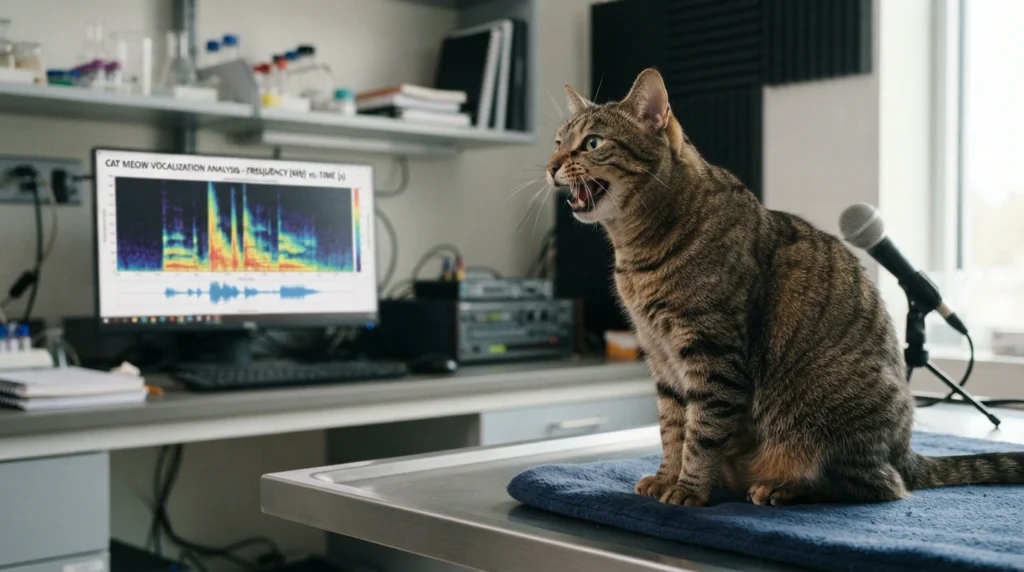
Cats communicate through a broad range of vocalizations and body signals. Their sounds include meows, purrs, trills, chirps, hisses, growls, yowls, caterwauls, and other variations.
A sound rarely has only one universal meaning.
For example, a meow might occur when a cat wants food, welcomes its owner, asks for attention, or wants a door opened. The same cat may use a different tone in another situation. ASPCA notes that cats commonly meow to communicate with people, while VCA describes the meow as an important part of cat-human communication.
This means the best way to understand catsounds is to consider three things together:
- The sound itself
- The situation in which it occurs
- The cat’s body language and physical condition
A loud vocalization from a healthy cat waiting for dinner is very different from a new cry accompanied by hiding, weakness, or signs of pain.
Common Catsounds and Their Possible Meanings
Meowing
Meowing is probably the sound most people associate with cats.
Adult cats commonly use meows when communicating with humans. A cat may meow when it wants:
- Food or water
- Attention
- Play
- Access to another room
- To be let inside or outside
- Social interaction
- Something changed in its environment
ASPCA explains that cats may meow to greet people, request attention, ask for food, or communicate that they want access to a particular area.
The tone also matters.
A short, soft meow may be a simple greeting. Repeated loud meowing may indicate a persistent request. A sudden change from a normally quiet cat to frequent vocalization deserves more attention.
Purring
Purring is often associated with relaxation.
A cat comfortably resting beside you may purr while being stroked or while settling down for sleep. However, purring should not automatically be interpreted as proof that a cat feels happy.
VCA notes that purring can occur in relaxed cats but may also be associated with stress or pain, making body language and the surrounding circumstances important.
For example, a purring cat that is relaxed, eating normally, and interacting normally is very different from a cat that is purring while hiding, refusing food, or reacting painfully to touch.
Hissing
Hissing is usually a warning signal.
A cat may hiss when it feels:
- Frightened
- Threatened
- Cornered
- Overwhelmed
- Defensive
- Uncomfortable with handling
A hissing cat is generally communicating that it wants more distance.
Do not punish a cat for hissing. Instead, identify what is causing the fear or discomfort and give the cat space.
If hissing suddenly develops in a cat that normally accepts handling, pain or illness should also be considered. Cats may become defensive when touching a painful body area.
Growling
Growling is another warning vocalization.
A cat may growl when it feels threatened, frightened, territorial, or defensive. Growling may occur alongside flattened ears, an arched body, a rapidly moving tail, dilated pupils, or other defensive signals.
Avoid forcing interaction with a growling cat.
If the behavior is new and occurs when you touch or move the cat, veterinary assessment may be appropriate because pain can alter behavior. VCA identifies increased vocalization, growling, and hissing among behavioral changes that may accompany pain in cats.
Chirping and Chattering
Some cats produce short chirps, trills, or chatter-like sounds when watching birds or other potential prey.
These sounds can occur during excitement or intense visual attention.
A cat may sit at a window, watch a bird, and produce rapid clicking or chattering sounds. This does not necessarily indicate illness.
Context is particularly useful here. A cat making these sounds while alert and focused on something outside is generally communicating very differently from a cat making unusual sounds while showing weakness or distress.
Trilling
Trilling is usually a softer, rolling vocalization.
Some cats use trills when greeting people or encouraging interaction. Mother cats may also use distinctive vocal communication with kittens.
The exact meaning varies between individual cats, so learning your own cat’s normal vocal patterns can be more useful than trying to assign one fixed translation to every sound.
Yowling or Caterwauling
Yowling is generally louder, longer, and more intense than an ordinary meow.
Cats may yowl because of:
- Reproductive behavior
- Attention-seeking
- Stress
- Environmental changes
- Frustration
- Confusion
- Pain or illness
VCA describes caterwauling as a persistent, drawn-out vocalization that can communicate different needs or emotional states.
A sudden increase in yowling, especially in an older cat, deserves attention rather than being automatically dismissed as a behavioral problem.
ASPCA also advises veterinary evaluation for cats that meow excessively because medical conditions can contribute to increased vocalization.
When Catsounds Could Signal an Emergency
Most vocalizations are not emergencies. The concern comes when an unusual sound occurs with physical signs of serious illness.
Seek emergency veterinary care if vocalization occurs with:
- Open-mouth breathing
- Severe difficulty breathing
- Blue, gray, or very pale gums
- Collapse
- Unresponsiveness
- Seizures
- Severe weakness
- Major trauma
- Suspected poisoning
- A possible airway obstruction
- Severe or uncontrolled bleeding
- Sudden inability to stand or walk normally
A vocalization accompanied by obvious respiratory distress is more important than the sound itself and should be treated as a potential emergency.
Do not spend time trying to identify whether the noise is a meow, cry, growl, or another sound if your cat is struggling to breathe.
Move the cat as calmly as possible and contact an emergency veterinary service.
When a Change in Catsounds Needs a Veterinary Appointment
A cat does not have to be visibly collapsing to benefit from veterinary assessment.
Arrange a veterinary appointment if you notice:
- A persistent increase in meowing
- New nighttime vocalization
- Repeated yowling
- Vocalization while using the litter box
- Crying when touched
- New growling or hissing during normal handling
- A change in the voice itself
- Vocalization combined with reduced appetite
- Vocalization combined with weight loss
- Increased thirst or urination
- Hiding or reduced activity
- Repeated restless behavior
- A significant change in an older cat’s behavior
ASPCA recommends having cats with excessive or unusual meowing checked by a veterinarian because medical conditions can contribute to the behavior.
Catsounds and Pain
Cats are often subtle when they are uncomfortable.
A cat experiencing pain may not necessarily scream or cry continuously. Instead, you may notice a collection of smaller changes.
Possible signs include:
- More vocalization than usual
- Growling or hissing when approached
- Hiding
- Reduced movement
- Changes in grooming
- Reduced appetite
- Restlessness
- Difficulty getting comfortable
- Avoiding touch
- Changes in sleeping behavior
VCA notes that increased vocalization, unusual purring, growling, and hissing can be among behavioral changes associated with pain.
A new sound should be evaluated in context rather than judged by volume alone.
A very loud cat may be perfectly healthy, while a normally quiet cat suddenly crying may deserve veterinary attention.
Older Cats and Unusual Vocalization
Changes in vocal behavior become particularly important as cats age.
Older cats can develop medical and behavioral conditions that affect their activity, sleep, orientation, hearing, and interaction with people.
Cornell Feline Health Center notes that cognitive dysfunction in older cats can include disorientation, altered sleep-wake cycles, and episodes of loud vocalization, including at night.
Other age-related medical problems can also contribute to behavioral changes.
For this reason, a new pattern of nighttime yowling should not automatically be labeled as “just old age.”
A veterinarian may need to check the cat for underlying medical conditions, sensory changes, pain, or cognitive problems.
Respiratory Catsounds: When the Noise Is Coming From Breathing
Not every unusual cat sound is a vocalization.
Sometimes owners describe a breathing noise as a “cat sound” when the actual problem involves the respiratory tract.
Potentially concerning sounds can include:
- Wheezing
- Harsh breathing
- Repeated coughing
- Noisy inhalation
- Gurgling
- Labored breathing
- Snorting accompanied by distress
The distinction matters.
A normal meow is produced for communication. A wheeze or harsh breathing noise may indicate an airway problem.
If unusual breathing sounds occur together with increased breathing effort, open-mouth breathing, weakness, or abnormal gum color, seek emergency veterinary care.
Could Catsounds Be Related to Gastrointestinal Problems?
Some cats vocalize when they feel nauseated or uncomfortable.
For example, a cat experiencing repeated vomiting may become restless or vocal before an episode. However, the sound itself does not identify the underlying cause.
If vomiting occurs with blood, the blood may originate from the gastrointestinal tract. This is sometimes called hematemesis, meaning vomiting blood.
A different situation is hemoptysis, which refers to coughing up blood from the respiratory tract.
These conditions should not be confused simply because blood is present.
Coughing blood versus vomiting blood
| Observation | Possible source | What it may indicate |
|---|---|---|
| Blood associated with coughing | Respiratory tract | Airway or lung problem may be present |
| Blood mixed with vomited material | Gastrointestinal tract | GI irritation or bleeding may be involved |
| Bright-red blood | Fresh blood | Source still needs professional assessment |
| Dark or coffee-ground-like material after vomiting | Altered blood | May indicate upper GI bleeding |
| Blood plus breathing difficulty | Potential respiratory emergency | Immediate veterinary assessment |
| Blood plus repeated vomiting | Possible GI emergency | Prompt veterinary assessment |
The appearance of blood cannot reliably establish its source at home.
Any unexplained bleeding should be discussed with a veterinarian, especially if it is repeated, substantial, or accompanied by weakness or breathing problems.
What Should You Do When You Hear an Unusual Cat Sound?
If your cat suddenly makes an unusual sound, start with observation rather than punishment.
Check the environment
Ask whether something changed.
For example:
- A new person entered the home.
- Another animal is nearby.
- Furniture was moved.
- A loud appliance is operating.
- A strange animal is visible through a window.
- Feeding time has changed.
- The litter box is unavailable.
Environmental triggers can produce temporary vocalization.
Check basic needs
Make sure your cat has access to:
- Fresh water
- Appropriate food
- A clean litter box
- A safe resting place
- A comfortable temperature
- A quiet area
ASPCA recommends checking that a cat’s basic needs are met before assuming excessive meowing is simply demanding behavior.
Observe body language
Look at:
- Ears
- Tail position
- Eyes
- Body posture
- Movement
- Appetite
- Breathing
- Interaction with people
The sound alone rarely tells the complete story.
Record the sound
If the cat is stable, use your phone to record a short video.
Try to capture:
- The sound
- The cat’s posture
- Breathing
- What happens immediately before the sound
- What happens afterward
This can provide useful information during a veterinary appointment.
Do not punish vocalization
Scolding or hitting a cat does not address the underlying reason for the sound and may increase fear.
ASPCA specifically advises against scolding or hitting cats for excessive meowing.
How a Veterinarian May Investigate Unusual Vocalization
A veterinary examination usually starts with history and physical examination.
Your veterinarian may ask:
- When did the change begin?
- Is the sound new?
- How often does it happen?
- Does it occur at night?
- Does it happen around food?
- Does it happen in the litter box?
- Is the cat eating normally?
- Has the cat lost weight?
- Is the cat drinking more?
- Has the environment changed?
- Is there another animal in the home?
- Does touching the cat trigger the sound?
The veterinarian may examine the mouth, ears, eyes, heart, lungs, abdomen, and musculoskeletal system.
Depending on the findings, additional tests may be considered.
These could include:
- Blood testing
- Urinalysis
- Imaging
- Blood pressure measurement
- Ear examination
- Dental assessment
- Neurological examination
- Other disease-specific tests
The appropriate workup depends on the cat’s age, history, physical findings, and the nature of the vocalization.
Treatment Depends on the Cause
There is no universal treatment for unusual vocalization.
A cat that meows because it wants attention does not require the same approach as a cat vocalizing because of pain.
Likewise, an older cat with nighttime vocalization may require a different medical evaluation from a young cat yowling during a reproductive cycle.
Treatment may involve addressing:
- Pain
- Dental disease
- Respiratory illness
- Gastrointestinal disease
- Urinary problems
- Endocrine disease
- Anxiety or environmental stress
- Reproductive behavior
- Age-related cognitive changes
- Hearing or sensory problems
Medication should only be given under veterinary direction.
Human pain medicines and other household drugs can be dangerous to cats.
How to Understand Your Cat’s Normal Vocal Vocabulary
One of the most useful things an owner can do is learn what is normal for their individual cat.
Create a simple observation log.
Record:
| What to record | Example |
|---|---|
| Sound | Short meow |
| Time | Morning |
| Situation | Feeding |
| Body language | Relaxed |
| Response | Stopped after breakfast |
| Frequency | Occasional |
| Other signs | None |
After several days or weeks, patterns may become obvious.
You may discover that a particular sound always occurs before meals, while another occurs during play or greeting.
This baseline becomes valuable because a change from your cat’s normal behavior can be more meaningful than the sound itself.
Prevention and Long-Term Monitoring
You cannot prevent every unusual vocalization, but you can support good feline health and notice changes early.
Maintain routine veterinary care
Regular examinations allow your veterinarian to assess overall health and investigate changes before they become more advanced.
Keep the environment predictable
Cats often benefit from consistent access to food, water, litter boxes, resting places, hiding spaces, and familiar routines.
Reduce avoidable stress
Provide safe spaces where your cat can retreat from unfamiliar people, animals, or loud activity.
Monitor older cats closely
Older cats deserve particular attention when new vocalization appears.
A change in nighttime behavior, confusion, or repeated loud vocalization can have several possible explanations, including medical and cognitive conditions.
Pay attention to combinations of signs
A single meow is rarely concerning.
A new vocalization plus weight loss, appetite changes, vomiting, altered urination, pain, weakness, or breathing abnormalities deserves more attention.
Emergency Care vs. Routine Veterinary Care
| Situation | Recommended response |
|---|---|
| Normal meowing during feeding | Usually routine behavior |
| Purring while relaxed | Usually normal |
| Hissing when frightened | Give space and reduce the trigger |
| Occasional chirping at birds | Usually normal |
| New persistent nighttime yowling | Schedule veterinary assessment |
| Vocalizing during urination | Prompt veterinary assessment |
| Crying when touched | Veterinary assessment |
| Vocalization with severe pain | Urgent veterinary care |
| Vocalization with open-mouth breathing | Emergency care |
| Vocalization with collapse | Emergency care |
| Vocalization after major trauma | Emergency assessment |
| Vocalization with suspected poisoning | Immediate veterinary guidance |
This table is a general guide rather than a diagnostic tool. If your cat appears seriously ill, contact a veterinary professional immediately.
Frequently Asked Questions About Catsounds
What are catsounds trying to tell me?
Cats use vocalizations to communicate needs, emotions, social information, and responses to their environment. A meow may request food or attention, while a hiss can indicate fear or a desire for distance. The meaning depends on context and body language.
Why does my cat meow so much?
Cats may meow frequently because they want food, attention, access to a room, social interaction, or other resources. Excessive or newly increased meowing can also occur with medical problems, particularly in older cats, so a persistent change should be discussed with a veterinarian.
Why is my cat making strange noises at night?
Nighttime vocalization can have behavioral, environmental, reproductive, or medical causes. In older cats, cognitive changes and other health problems may contribute to loud nighttime vocalization. A new or persistent pattern deserves veterinary evaluation.
Does purring always mean my cat is happy?
No. Purring commonly occurs when a cat is relaxed, but it can also occur during stress or discomfort. Look at the cat’s posture, facial expression, appetite, activity, and other behavior before interpreting the sound.
Why does my cat hiss at me suddenly?
A sudden hiss can mean that the cat feels frightened, threatened, overstimulated, or uncomfortable. If hissing occurs when you touch a particular area or appears alongside other changes, pain or illness should be considered and veterinary advice may be appropriate.
Why is my cat making a crying or yowling sound?
Yowling can occur during reproductive behavior, stress, frustration, attention-seeking, or medical problems. If the behavior is new, persistent, or accompanied by other changes, a veterinary examination can help determine the cause.
Can unusual catsounds indicate pain?
Yes. Cats experiencing pain may show changes in vocalization, including increased meowing, growling, hissing, or unusual purring. Vocalization should be considered together with behavior, posture, appetite, movement, and other physical signs.
When should a cat sound be considered an emergency?
The sound itself is not usually the emergency. The accompanying physical signs matter most. Open-mouth breathing, severe breathing difficulty, collapse, unresponsiveness, severe weakness, major trauma, seizures, or suspected poisoning require immediate veterinary attention.
Why does my cat make a chattering sound?
Cats sometimes chatter or make rapid vocal sounds while watching birds, insects, or other potential prey. This can occur during intense visual attention or excitement and is not necessarily a sign of illness.
Conclusion
Catsounds are best understood by looking at the sound, the situation, and the cat’s body language together. A meow may simply be a request for food or attention, while a purr may occur during relaxation or, in some situations, discomfort. Hissing and growling generally communicate that a cat feels threatened, frightened, or uncomfortable.
The most important health lesson is to recognize a change from your cat’s normal pattern. Persistent new vocalization, crying during handling or litter-box use, nighttime yowling, or vocalization combined with appetite, weight, movement, or behavior changes should prompt veterinary assessment.
Emergency care is appropriate when unusual vocalization occurs alongside severe breathing difficulty, open-mouth breathing, collapse, unresponsiveness, seizures, major trauma, serious bleeding, or suspected poisoning.
Learning your cat’s normal vocabulary can therefore do more than improve communication. It can also help you notice meaningful changes in health early.
Authoritative References
Recommended external references should come from established veterinary or animal-welfare organizations.
- ASPCA — Meowing and Yowling: Useful for common reasons cats vocalize and guidance concerning excessive meowing.
- VCA Animal Hospitals — Why Do Cats Meow?: Useful background on feline vocal communication.
- VCA Animal Hospitals — Meaning of Cat Sounds: Useful for meowing, purring, and other common vocalizations.
- VCA Animal Hospitals — Signs of Pain in Cats: Useful for changes in vocalization that may accompany pain.
- Cornell Feline Health Center — Cognitive Dysfunction: Useful for unusual vocalization and behavioral changes in older cats.
- Merck Veterinary Manual — Behavior Problems of Cats: Useful veterinary reference concerning behavioral and age-related changes in cats.
- Cornell Feline Health Center — Feline Ear Disorders: Useful background when unusual behavior may involve hearing or ear problems.