If you’re wondering “why is my cat dry coughing” you are certainly not alone in facing this concern. A dry, hacking cough in cats can sound alarming and often signals an underlying issue that ranges from mild irritation to serious respiratory disease. Understanding the causes, symptoms, and solutions is essential for protecting your cat’s health.
This comprehensive, SEO-friendly guide explores why my cat dry is coughing, backed by veterinary literature, statistical insights, and practical advice.
What Does Dry Coughing in Cats Mean?
Before diving deeper into why is my cat dry coughing, it’s important to understand what a dry cough actually is.
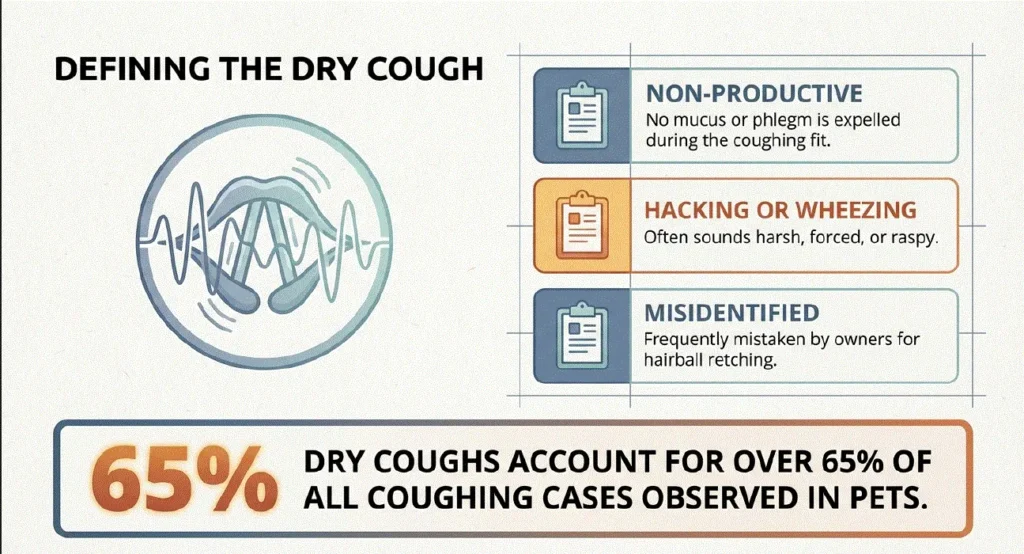
A dry cough in cats is: Non-productive (no mucus or phlegm), Often described as hacking or wheezing
Sometimes mistaken for hairball retching.
Veterinary research shows that dry coughs account for over 65% of coughing cases in pets, making them the most common type observed in cats.
Why Is My Cat Dry Coughing? (Top Causes Explained)
There are several medically recognized reasons behind why is my cat dry coughing. Below are the most common causes supported by veterinary sources.
Feline Asthma (Leading Cause of Dry Cough)
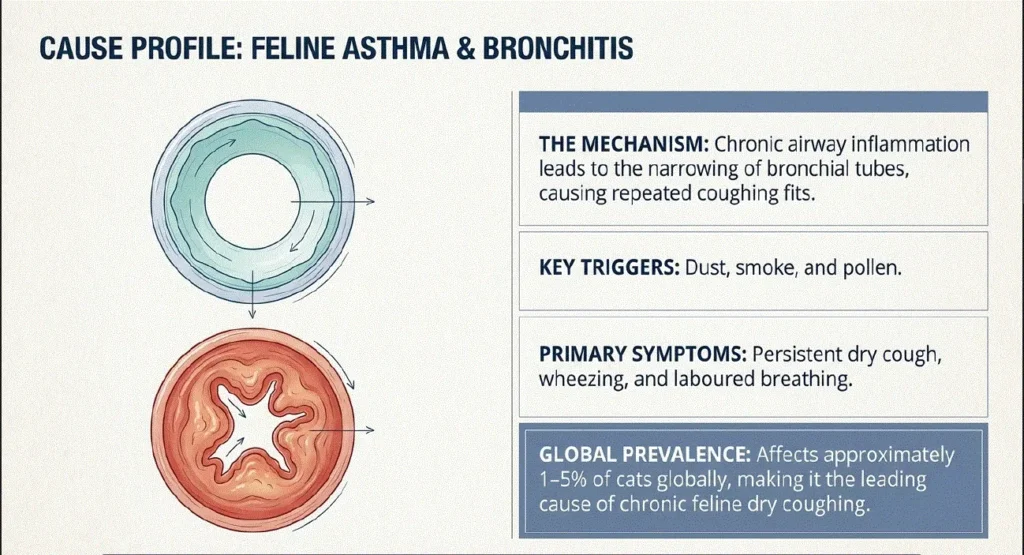
One of the primary answers to why is my cat dry coughing is feline asthma.
Affects approximately 1-5% of cats globally
Caused by airway inflammation and narrowing
Triggered by dust, smoke, or pollen
Cats with asthma often show:
Persistent dry cough
Wheezing
Labored breathing
Asthma leads to chronic airway inflammation, causing repeated coughing fits over time.
Bronchitis and Airway Inflammation
Another key reason behind why is my cat dry coughing is bronchitis.
Inflammation of bronchial tubes
Causes a dry, hacking cough
Often chronic if untreated
According to veterinary sources, bronchitis directly irritates airways, leading to repeated coughing episodes.
Respiratory Infections (Very Common)
If you’re wondering why is my cat dry coughing, infections are a major factor.
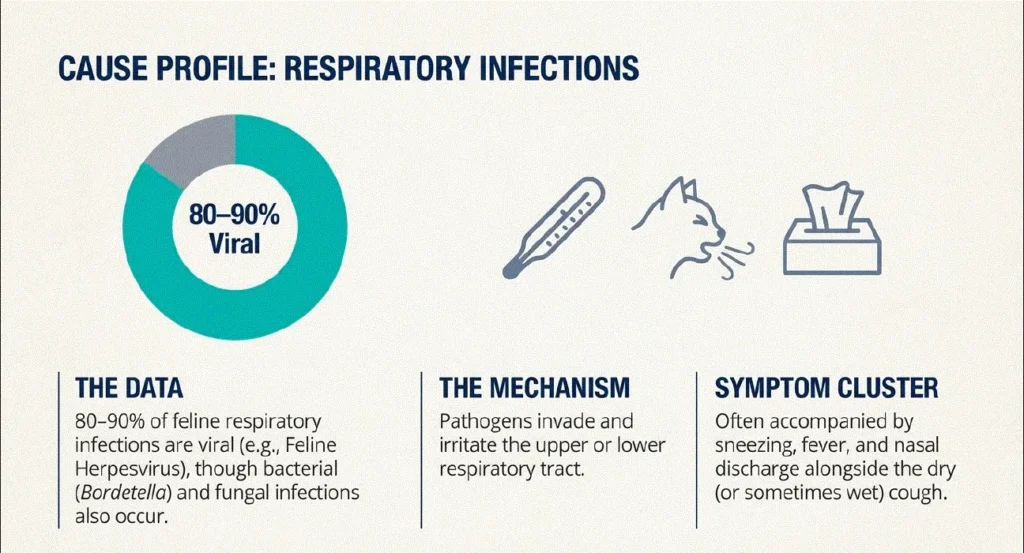
Types include: Viral (e.g., feline herpesvirus), Bacterial (e.g., Bordetella), Fungal infections
Statistical insight:
80-90% of respiratory infections in cats are viral
Symptoms may include:
Sneezing, Fever, Nasal discharge, Dry or wet cough.
Allergies and Environmental Irritants
Environmental triggers are a frequent answer to why is my cat dry coughing.
Common irritants: Smoke, Perfumes, Dusty litter, cleaning chemicals
These substances inflame the airways, leading to dry coughing fits.
Parasites (Heartworms & Lungworms)
Parasites can also explain why my cat dry is coughing:
Heartworms affect lungs and heart
Lungworms irritate respiratory tissue
Symptoms: Dry cough, Weight loss, Lethargy
These infections cause inflammation, triggering coughing.
Hairballs (Often Misinterpreted)
Many owners confuse hairball retching with dry coughing.
Cats ingest fur while grooming
Attempt to expel it causes coughing-like sounds
However:
True dry cough = no hairball produced
Frequent episodes may indicate another issue
Foreign Objects in Airways
A sudden answer to why is my cat dry coughing could be a foreign object.
Examples: Grass, Food particles, Small debris
These irritate the throat or lungs, causing coughing until expelled.
Heart Disease or Lung Disorders
Serious conditions can also explain why is my cat dry coughing:
Heart disease (fluid in lungs)
Pneumonia
Tumors (rare but possible)
These conditions often require urgent veterinary care.
Statistical Overview of Cat Dry Coughing Causes
| Cause | Estimated Frequency | Severity Level |
| Asthma | 1–5% of cats | Moderate–Chronic |
| Respiratory Infections | 80–90% viral cases | Mild–Moderate |
| Dry Cough Cases Overall | 65% of cough types | Varies |
| Parasites | Low–Moderate | Moderate–Severe |
| Allergies/Irritants | Common | Mild–Moderate |
Insight: Dry coughing is the most common type of cough in cats, but its cause varies widely—from harmless irritants to life-threatening diseases.
Infographic: Why Is My Cat Dry Coughing?
CAT DRY COUGHING FLOW
↓
┌─────────────────────────┐
│ Dry, hacking cough? │
└──────────┬──────────────┘
↓
┌─────────────────────────┐
│ Occasional only? │
└───────┬─────────────────┘
↓
YES → Hairball or irritation
NO → Persistent cough
↓
┌─────────────────────────────┐
│ Check additional symptoms │
└──────────┬──────────────────┘
↓
Wheezing → Asthma
Sneezing → Infection
Sudden onset → Foreign object
Unexplained weight loss may indicate a parasitic infection.
Symptoms That Require Immediate Attention
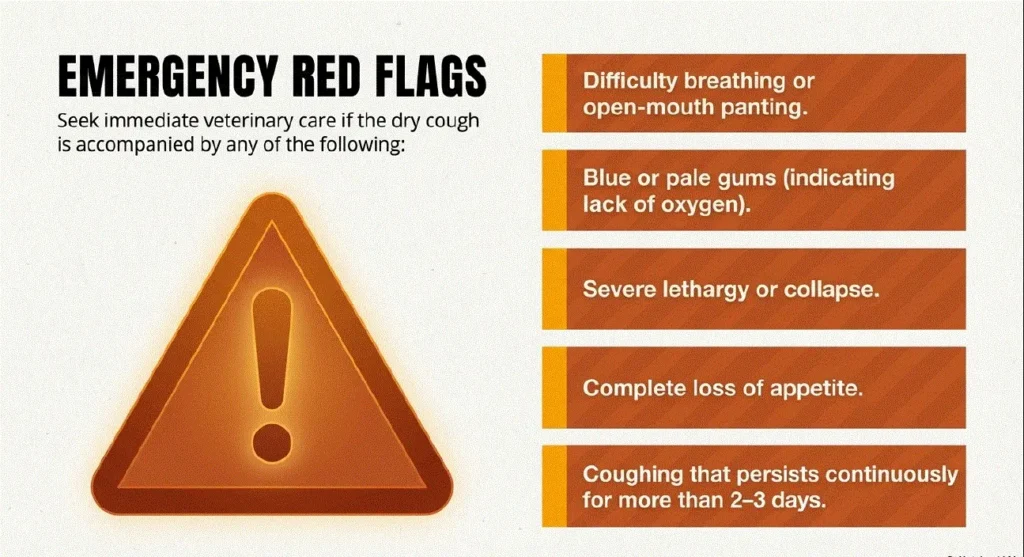
If you’re still asking why is my cat dry coughing, watch for these warning signs:
Difficulty breathing, Blue or pale gums, Lethargy, Loss of appetite, Cough lasting more than a few days
Veterinary guidance recommends immediate care if breathing becomes abnormal or severe.
How Veterinarians Diagnose Dry Cough in Cats
To properly answer why is my cat dry coughing, vets may perform:
Physical examination, Chest X-rays, Blood tests, Fecal tests (for parasites), Airway sampling
Diagnosis focuses on identifying the root cause rather than treating the symptom alone.
Treatment Options Based on Cause
Treatment depends entirely on why is my cat dry coughing:
| Cause | Treatment |
| Asthma Steroids, | inhalers |
| Infections | Antibiotics or antivirals |
| Allergies | Remove triggers |
| Parasites | Deworming medication |
| Foreign object | Removal procedure |
| Heart disease | Specialized cardiac care |
Prevention Tips for Cat Dry Coughing
To reduce the chances of asking why is my cat dry coughing in the future:
Keep your home dust-free
Avoid smoking indoors
Use unscented cleaning products
Regular vet checkups
Maintain parasite prevention
Conclusion
Understanding why is my cat dry coughing is essential for every cat owner. While occasional coughing may be harmless, persistent dry coughing often signals underlying health issues such as asthma, infections, or environmental irritants.
Frequently Asked Questions (FAQs)
Why is my cat dry coughing but acting normal?
It may be mild irritation, allergies, or early asthma. Keep a close eye on the symptoms and seek veterinary advice if they continue.
Why is my cat dry coughing at night?
Night coughing can be linked to asthma or environmental triggers like dust or cold air.
Why is my cat dry coughing without hairballs?
This often indicates respiratory issues like asthma, infections, or parasites.
Can dry coughing go away on its own?
Mild irritation may resolve, but persistent coughing usually requires veterinary diagnosis.
When should I worry about dry coughing?
If it lasts more than 2–3 days or includes breathing difficulty, seek immediate veterinary care.