If you’ve ever found yourself worrying about the coughing cat in your home, you’re certainly not alone. Many cat owners become anxious when their feline companion starts making unusual hacking or wheezing sounds.
Unlike humans, cats don’t cough frequently, so when it happens, it often raises concern. While some cases of the coughing cat may be harmless such as occasional hairballs others can signal serious underlying health conditions like asthma, infections, or even heart disease. Understanding the difference is essential for every responsible pet owner.
In this comprehensive guide, we’ll explore the causes, symptoms, diagnosis, treatment, prevention, and research-backed statistics related to the coughing cat.
Understanding the Coughing Cat
Coughing in cats is a reflex action that helps clear the airways of irritants, mucus, or foreign particles. However, because cats are naturally quiet and subtle animals, coughing is not something they do often.
What Does The Coughing Cat Look Like?
A cat experiencing coughing may:
Lower its body close to the ground
Extend its neck forward
Produce dry, hacking sounds
Sometimes appear to gag or retch
This behavior is often mistaken for vomiting, especially when hairballs are involved.
Why Does The Coughing Cat Happen?
There are multiple causes behind the coughing cat, ranging from mild irritations to serious diseases. Let’s explore them in detail.
Respiratory Infections
Types: Viral infections (Feline Calicivirus, herpesvirus), Bacterial infections (Bordetella bronchiseptica)
Research Insight:
Studies show that respiratory infections affect approximately 10–20% of domestic cats, particularly in crowded environments like shelters.
These infections inflame the airways, leading to coughing, sneezing, and nasal discharge.
Asthma and the Coughing Cat
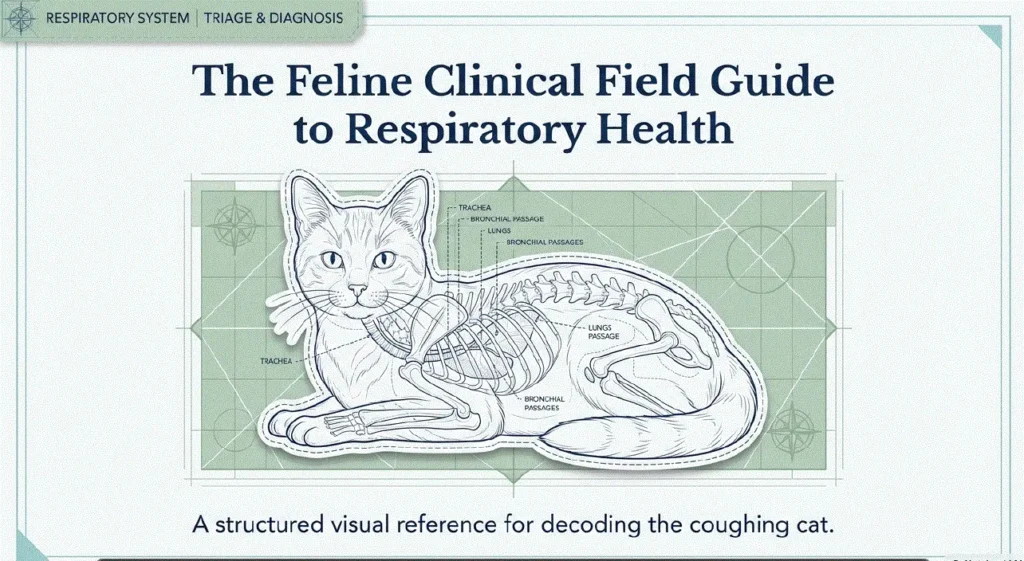
Symptoms include: Persistent coughing, Wheezing, Rapid or labored breathing.
Veterinary Data:
Around 1-5% of cats worldwide are diagnosed with asthma, making it a significant contributor to chronic coughing.
Common Triggers: Dust and litter particles, Cigarette smoke, Strong perfumes or sprays.
Hairballs vs The Coughing Cat
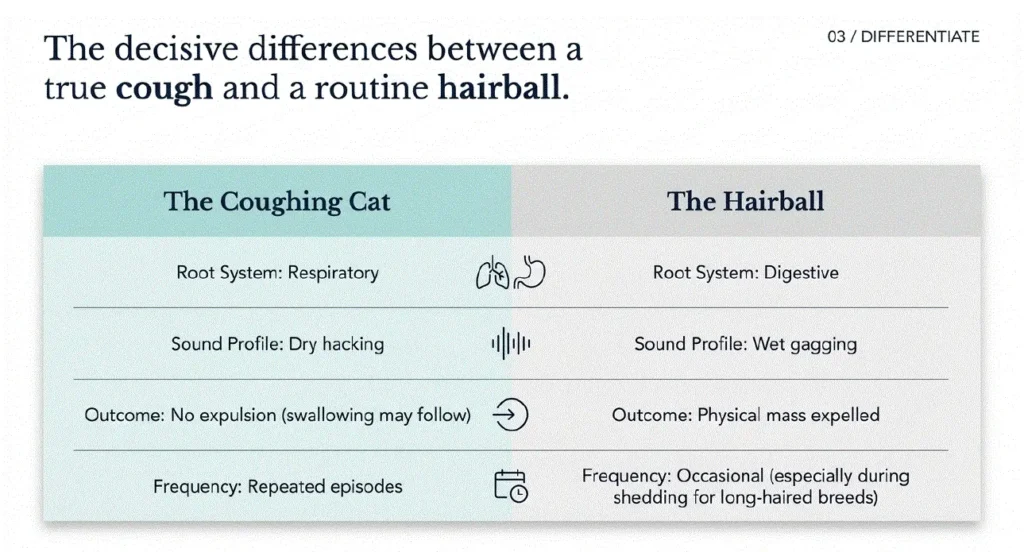
Hairballs are often confused with coughing.
Key Differences:
Hairballs involve gagging and vomiting
Coughing is dry and repetitive without expulsion
Long-haired breeds are more prone to hairballs, especially during shedding seasons.
Allergies
Common Allergens: Pollen, Mold spores, cleaning chemicals.
Allergic reactions may lead to airway irritation, resulting in coughing episodes.
Parasites and the Coughing Cat
Parasites such as lungworms and heartworms can affect the respiratory system.
Stat Insight:
Though less common, parasitic infections are often underdiagnosed in cats, especially in outdoor environments.
These parasites damage lung tissues, leading to chronic coughing.
Foreign Objects and Airway Irritation
Sometimes, the coughing cat may result from inhaled foreign particles like:
Grass blades
Dust
Small debris
These irritants trigger coughing as the body attempts to remove them.
Serious Conditions behind the Coughing Cat
In rare but critical cases, coughing may indicate:
Lung tumors
Heart disease
Chronic bronchitis
Clinical Observation:
Less than 2% of coughing cases are linked to tumors, but they are more common in older cats.
Statistical Overview of the Coughing Cat
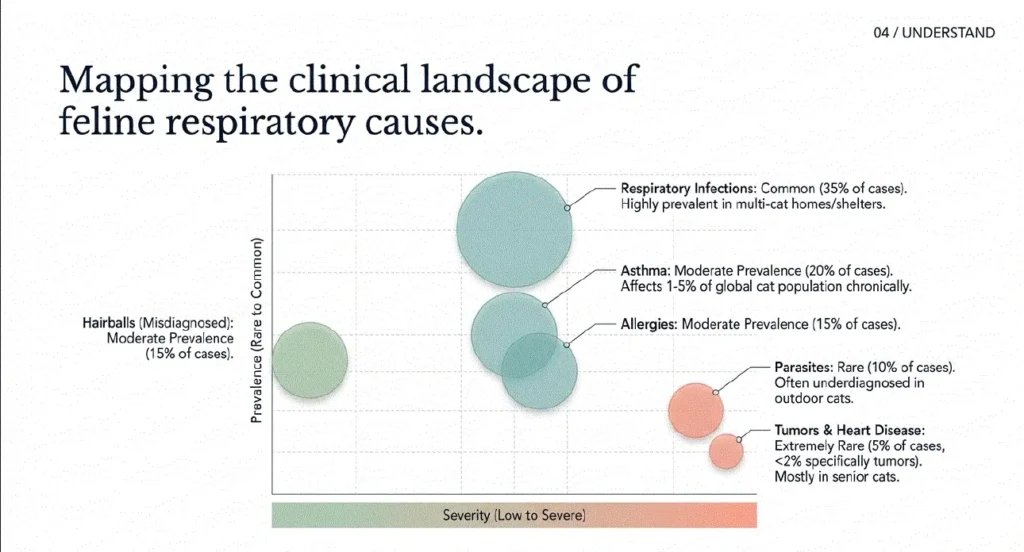
Below is a data-driven table summarizing causes based on veterinary literature:
| Respiratory infections 10–20% | Moderate | Common in multi-cat homes |
| Asthma | 1-5% Moderate | Chronic condition |
| Hairballs | 15-25% Low | Often mistaken for coughing |
| Allergies | 10-15% Moderate | Environmental triggers |
| Parasites | <5% High | Underdiagnosed |
| Tumors | <2% Severe | Mostly in senior cats |
Infographic: Causes of the Coughing Cat
Respiratory Infections ████████████████ 35%
Asthma ████████ 20%
Hairballs ██████ 15%
Allergies ██████ 15%
Parasites ████ 10%
Other Causes ██ 5%
Symptoms to Watch in the Coughing Cat
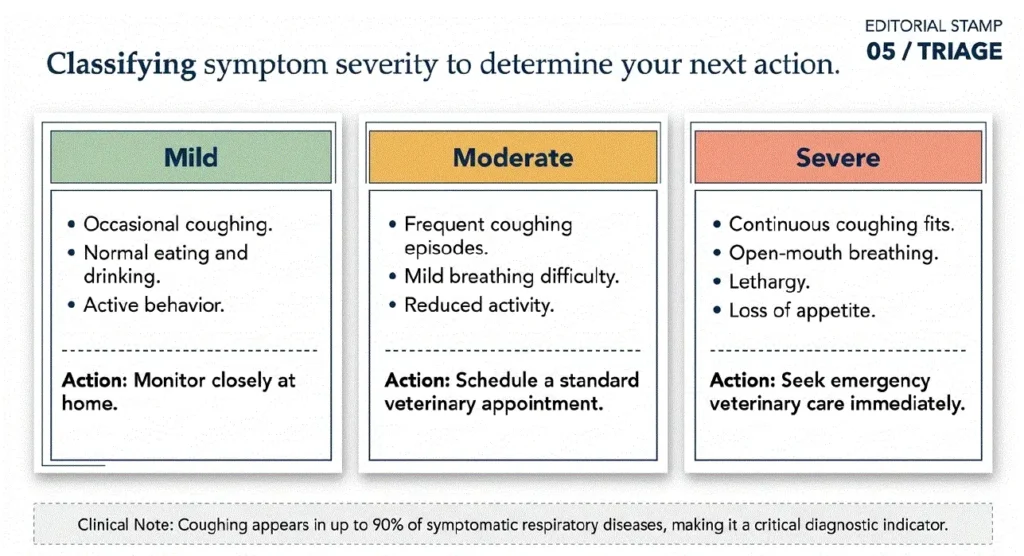
Not all coughing is equal. Understanding symptoms can help you determine severity.
Mild Symptoms
Occasional coughing
Normal eating and drinking
Active behavior
Moderate Symptoms
Frequent coughing
Mild breathing difficulty
Reduced activity
Severe Symptoms
Continuous coughing fits
Open-mouth breathing
Lethargy
Loss of appetite
Research Insight:
In respiratory diseases, coughing appears in up to 90% of symptomatic cats, making it a key diagnostic indicator.
When Should You Worry
Seek veterinary attention if:
Coughing lasts more than 3-5 days
Your cat shows breathing difficulty
There is fever or nasal discharge
The cough becomes more frequent or severe
Early intervention can prevent complications.
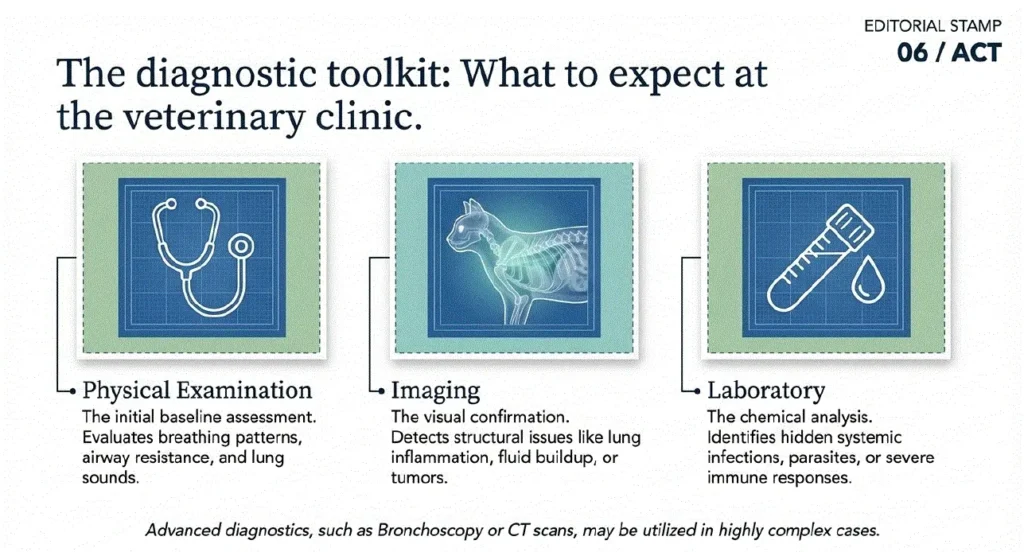
Diagnosing the Coughing Cat
Veterinarians use several diagnostic tools:
Physical Examination
Initial assessment of breathing patterns and lung sounds.
X-rays
Helps detect:
Lung inflammation
Tumors
Fluid buildup
Blood Tests
Used to identify infections or immune responses.
Advanced Tests
Bronchoscopy
CT scans (in complex cases)
Treatment Options for the Coughing Cat
Treatment depends entirely on the cause.
Medications
Antibiotics for bacterial infections
Steroids for asthma
Antiparasitic drugs
Environmental Control
Remove dust and smoke
Use air purifiers
Choose low-dust litter
Supportive Care
Ensure hydration
Provide a stress-free environment
Maintain proper nutrition
Home Care Tips
Managing the coughing cat at home can significantly improve recovery.
Practical Tips:
Groom your cat regularly
Keep living spaces clean
Avoid aerosol sprays
Monitor coughing frequency
Preventing the Coughing Cat
Prevention is the best strategy.
Key Preventive Measures
Vaccinate regularly
Schedule routine vet checkups
Maintain hygiene
Control parasites
The Coughing Cat vs Hairballs: Quick Comparison
Feature the Coughing Cat Hairball:
| Sound | Dry hacking | Gagging |
| Outcome | No expulsion | Hairball expelled |
| Frequency | Repeated | Occasional |
| Cause | Respiratory | Digestive |
Long-Term Outlook for the Coughing Cat
The prognosis varies:
Asthma: Lifelong but manageable
Infections: Usually treatable
Parasites: Curable with medication
Tumors: Depends on stage and treatment
Early detection leads to better outcomes.
Final Thoughts on the Coughing Cat
Dealing with coughing cat can feel overwhelming, but knowledge is your best tool. While some causes are mild and temporary, others require immediate medical attention.
Research shows that respiratory infections and asthma are among the leading causes, but environmental factors also play a major role. By maintaining a clean, stress-free environment and staying alert to symptoms, you can significantly reduce risks.
Always remember: when in doubt, consult a veterinarian. Your cat’s health is worth it.
FAQs about the Coughing Cat
What could be causing my cat to cough even though it seems perfectly fine otherwise?
It could be due to hairballs or mild irritation. Monitor for worsening symptoms.
Is coughing in cats dangerous?
Not always, but persistent coughing should never be ignored.
Can indoor cats become the coughing cat?
Yes, even cats that live indoors can still develop asthma, allergies, or infections.
How long should coughing last before concern?
More than 3-5 days requires veterinary attention.
What triggers asthma in the coughing cat?
Dust, smoke, and strong odors are frequent triggers.
Can parasites cause coughing in cats?
Yes, lungworms and heartworms can lead to chronic coughing.
What steps can I take to prevent my cat from coughing?
Vaccination, hygiene, and regular vet visits are essential.
Is coughing contagious between cats?
Certain infections can spread easily, particularly in homes with multiple cats.