A cat coughing but no hairball is a situation that many cat owners find confusing and concerning. Most people expect that when a cat coughs or makes gagging sounds, a hairball will appear soon after.
However, sometimes the coughing continues, and nothing comes out. When this happens repeatedly, it may indicate that something else is affecting your cat’s respiratory system or overall health.
Cats are generally quiet animals, so any unusual sound, like persistent coughing, can quickly grab your attention. Understanding why your cat may be coughing without producing a hairball is important.
Because it can help you identify potential health problems early and ensure your pet receives the proper care.
Why Your Cat Coughing But No Hairball Appears?
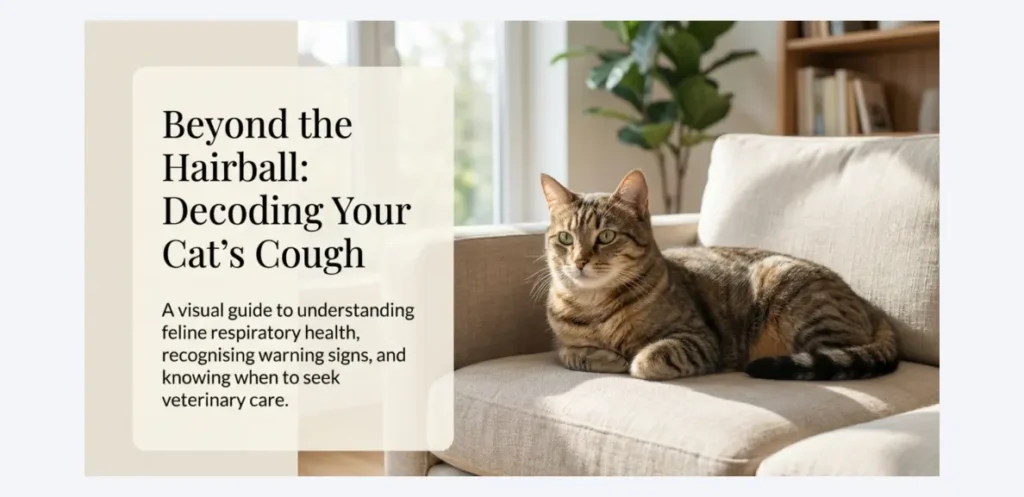
Many pet owners assume coughing automatically means a hairball is coming. In reality, coughing and hairball hacking are two different things. Hairballs usually involve retching or gagging followed by the expulsion of a clump of fur from the stomach.
Coughing, however, often comes from irritation in the lungs or airways.If your cat continues coughing without producing a hairball, it may be experiencing respiratory irritation or an underlying medical condition.
Some cats cough occasionally due to mild throat irritation, while others may have chronic issues that require veterinary attention.
Recognizing the difference between these two behaviors is an important first step in protecting your cat’s health.
Common Causes of Cat Coughing But No Hairball
There are several reasons a cat might cough even when there is no hairball involved. Some of these causes are minor and temporary, while others may require medical treatment.
Feline Asthma
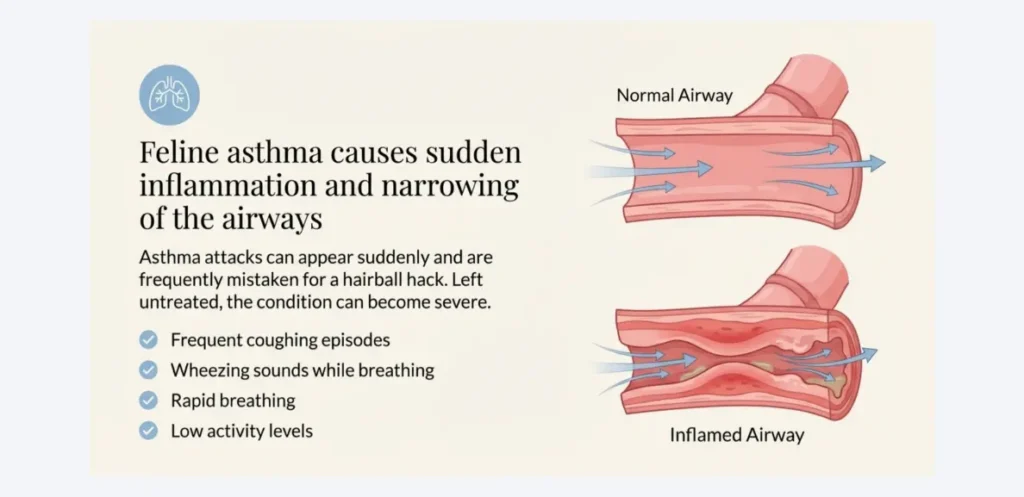
One of the most frequent causes of coughing in cats is feline asthma. This condition occurs when the airways become inflamed and narrow, making it difficult for the cat to breathe comfortably.
Cats with asthma may show symptoms such as:
Frequent coughing episodes, Wheezing sounds while breathing, Rapid breathing, Low activity levels
Asthma attacks may appear suddenly and can sometimes be mistaken for a hairball hacking. If left untreated, the condition can become more serious.
Respiratory Infections
Viral or bacterial infections can affect a cat’s respiratory system. These infections may cause coughing, sneezing, and nasal discharge.
Some signs of respiratory infection include: Sneezing, Runny nose, Fever, Loss of appetite, Lethargy
Early veterinary treatment can help prevent the infection from spreading or becoming severe. Cat coughing, but no hairball
Allergies and Environmental Irritants
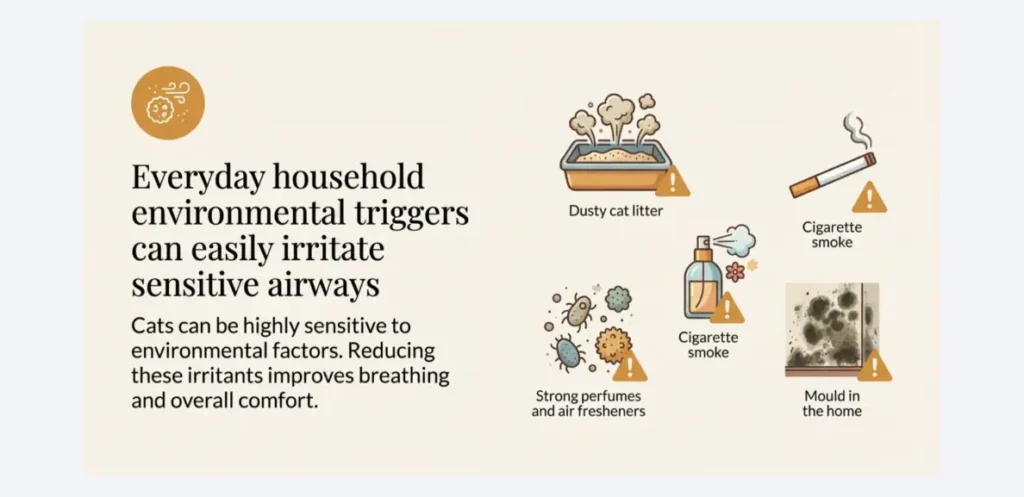
Cats can be sensitive to environmental triggers just like humans. Dust, smoke, pollen, and chemical cleaners can irritate the airways and cause coughing.
Common household irritants include:
Cigarette smoke
Strong perfumes
Air fresheners
Dusty cat litter
Mold in the home
Reducing these irritants can help improve your cat’s breathing and overall comfort.
Heartworm Disease
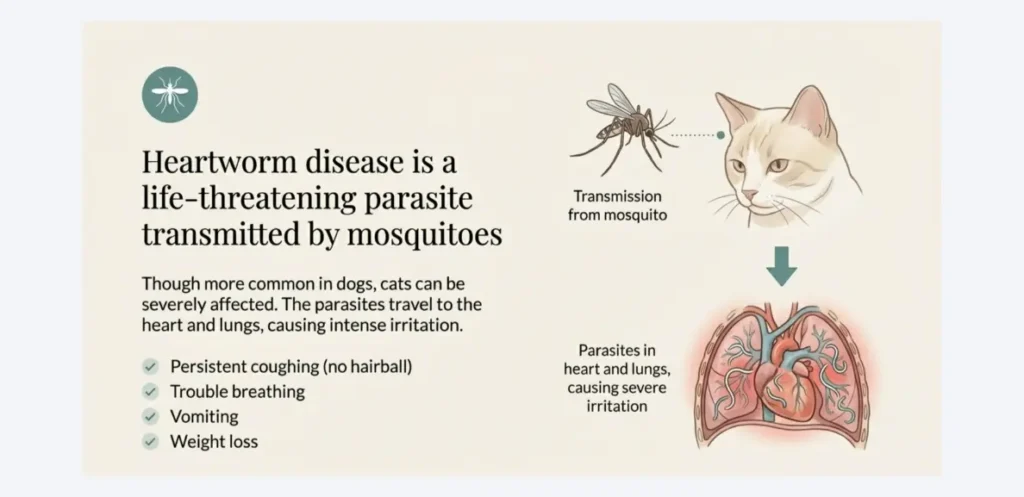
Heartworm Disease can also be a reason behind coughing in cats, even though it is more commonly seen in dogs. Cats can become infected when a mosquito carrying heartworm larvae bites them. Cat coughing, but no hairball
Once inside the body, the parasites can travel to the heart and lungs, where they may cause irritation and inflammation in the respiratory system.
This can lead to coughing and noticeable breathing difficulties. In many cases, pet owners may observe persistent coughing that does not produce a hairball, along with other symptoms such as vomiting, weight loss, and trouble breathing.
Because heartworm disease can be serious and sometimes life-threatening in cats, it is important to seek veterinary evaluation if these symptoms appear so the condition can be properly diagnosed and managed.
Signs of a Cat Coughing But No Hairball That Should Not Be Ignored
Occasional coughing in cats does not always mean there is a serious health problem. Sometimes a cat may cough briefly due to minor throat irritation or a temporary environmental trigger. However, repeated or frequent coughing should never be ignored.
If you notice that your cat continues coughing without producing a hairball, it may indicate an underlying health issue that needs attention.
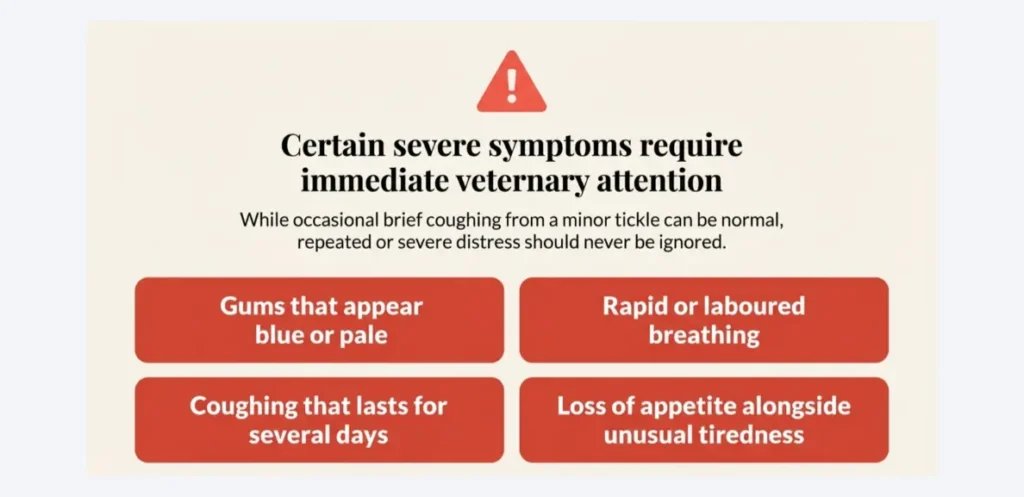
Pet owners should carefully watch for warning signs such as coughing that lasts for several days, rapid or labored breathing, loss of appetite, unusual tiredness, or gums that appear blue or pale. Cat coughing, but no hairball
These symptoms can suggest that your cat is experiencing respiratory distress or another medical condition. If any of these signs appear, it is important to seek veterinary care as soon as possible to ensure your cat receives the proper diagnosis and treatment.
How Veterinarians Diagnose Cat Coughing But No Hairball
When you take your cat to the veterinarian for coughing issues, the vet will usually begin with a physical examination. They may listen to your cat’s lungs and heart to detect abnormal sounds.
Depending on the symptoms, the veterinarian might recommend additional tests such as:
Chest X-rays
Blood tests
Heartworm testing
Airway examination
These diagnostic tools help identify the underlying cause of the coughing and allow the vet to create an effective treatment plan.
Treatment Options for Coughing Cats
The treatment for coughing in cats usually depends on the underlying cause of the problem. Once a veterinarian carefully examines your cat and determines the reason behind the coughing, they will recommend the most suitable treatment plan.
In some cases, medications may be prescribed to help manage the condition. For example, antibiotics are commonly used if a bacterial infection is present, while anti-inflammatory medicines can help reduce irritation and swelling in the airways.
If a cat is diagnosed with asthma, the veterinarian may recommend inhalers or bronchodilator medications to help keep the airways open and improve breathing.
When allergies are responsible for the coughing, controlling the environment and reducing exposure to triggers such as dust, smoke, or strong chemicals can greatly improve symptoms. In addition to medical treatment, supportive care also plays an important role in recovery.
Ensuring your cat stays well hydrated, receives proper nutrition, and lives in a calm and clean environment can help support overall health and make the healing process smoother. Cat coughing, but no hairball
Preventing Cat Coughing Issues
Although not all health problems can be prevented, there are several steps you can take to reduce the risk of respiratory issues in cats.
Helpful prevention tips include:
Keeping your home clean and free of dust, Using low-dust or natural cat litter, Avoiding cigarette smoke around pets, Grooming your cat regularly to reduce loose fur, Scheduling routine veterinary checkups
Maintaining a healthy living environment can significantly reduce respiratory irritation and improve your cat’s quality of life. Cat coughing, but no hairball
Monitoring Your Cat at Home
If your cat coughs occasionally but otherwise seems healthy and active, it is still important to observe their behavior closely. Monitoring your cat carefully can help you notice any changes that might indicate a developing health issue.
Keeping track of how often the coughing occurs can be very helpful, especially if you need to discuss the problem with your veterinarian later.
Pet owners should also pay attention to the nature of the cough, such as whether it sounds dry or wet, as this detail can provide useful clues about the possible cause.
In addition, changes in appetite, reduced activity levels, or unusual breathing patterns should not be overlooked. These small signs can sometimes indicate that something is affecting your cat’s health.
If the coughing starts happening more frequently or becomes more severe over time, it is always best to seek veterinary advice to ensure your cat receives proper care and attention. Cat coughing, but no hairball
Conclusion
When pet owners notice cat coughing but no hairball, it can feel confusing and worrying. While hairballs are common in cats, coughing without producing one may indicate respiratory irritation, asthma, infections, allergies, or other health conditions.
Observing your cat’s behavior and recognizing unusual symptoms is essential for early detection of potential health problems. If the coughing continues or worsens, consulting a veterinarian is the safest step.
By providing proper care, maintaining a clean environment, and scheduling regular veterinary visits, you can help keep your feline companion healthy and comfortable for many years to come. Cat coughing, but no hairball