Causes, Symptoms, and When to See a Vet
Cat coughing up mucus can be alarming, especially when you notice phlegm, foam, or liquid coming from your cat’s mouth after a coughing episode. While a small amount of clear respiratory secretion may occur with some illnesses, mucus-producing coughing can indicate irritation, inflammation, infection, or disease affecting the respiratory tract.
The key is to look at the entire picture. Is your cat breathing normally? Is the mucus clear, white, yellow, green, or bloody? Is your cat eating and drinking? How frequently is the coughing happening? Are there other symptoms such as sneezing, nasal discharge, wheezing, lethargy, or weight loss?
These details help distinguish a mild respiratory problem from a condition requiring prompt veterinary care.
Quick Take: Mucus accompanying a cough can occur with respiratory inflammation or infection. Persistent coughing, abnormal breathing, blood, severe lethargy, or a declining appetite should not be ignored.
This guide explains what mucus may mean, common causes of productive coughing in cats, what different mucus colors can suggest, how veterinarians diagnose respiratory disease, and what you can safely do while arranging appropriate care.
What Does It Mean When a Cat Coughs Up Mucus?
When a cat coughs up mucus, secretions are being expelled from the respiratory tract or throat. Mucus is produced naturally to protect and lubricate airway surfaces, but respiratory disease can increase its production or change its consistency.
A cough is a protective reflex that helps move irritating material and secretions out of the airways. Veterinary references distinguish coughing from sneezing: coughing primarily involves the lower respiratory tract, while sneezing generally originates in the nasal passages and upper respiratory tract.
Mucus may appear as:
- Clear liquid
- White or foamy material
- Thick yellow mucus
- Greenish mucus
- Stringy respiratory secretions
- Mucus mixed with saliva
- Occasionally blood-streaked material
However, the appearance of mucus alone cannot diagnose the underlying disease.
For example, colored discharge does not automatically prove that a bacterial infection is present. Your veterinarian may need to consider your cat’s history, physical examination, breathing pattern, and possibly diagnostic testing.
Common Causes of a Cat Coughing Up Mucus
Several conditions can cause mucus production and coughing. Some affect the upper respiratory tract, while others involve the bronchi, lungs, or deeper airways.
Feline Respiratory Infection
Respiratory infections are a common cause of coughing, sneezing, nasal discharge, eye discharge, congestion, and other respiratory signs in cats.
Feline herpesvirus and feline calicivirus are important causes of feline respiratory disease. Bacterial organisms can also contribute to respiratory infections or occur alongside viral disease.
A respiratory infection may cause inflammation and increased secretions. Depending on where the disease is located, a cat may sneeze, cough, or show both.
Other possible signs include:
- Runny nose
- Watery eyes
- Nasal congestion
- Reduced appetite
- Fever
- Lethargy
- Mouth ulcers in some infections
- Noisy breathing
Cats with congestion may also eat less because their sense of smell is impaired.
Feline Asthma
Feline asthma is an inflammatory airway disorder that can produce recurrent coughing and breathing abnormalities.
Some cats with asthma may cough without producing visible mucus, while airway inflammation and secretions can contribute to respiratory signs.
Possible signs include:
- Recurrent coughing
- Wheezing
- Rapid breathing
- Increased breathing effort
- Difficulty breathing
- Crouching with the neck extended
- Exercise intolerance
Asthma can resemble other respiratory conditions, so a veterinarian may use chest imaging and other diagnostic information to distinguish it from infections, pneumonia, parasites, and other disorders.
Quick Take: A recurring cough—especially with wheezing or breathing difficulty—should not automatically be blamed on hairballs. Lower-airway disease can produce very similar-looking episodes.
Bronchitis and Airway Inflammation
Inflammation of the bronchi can increase respiratory secretions and trigger coughing.
Bronchial inflammation may be associated with infections, inhaled irritants, allergic or inflammatory processes, or other respiratory conditions.
A cat with airway inflammation may experience repeated coughing episodes, sometimes accompanied by gagging or the production of respiratory secretions.
Veterinary assessment becomes especially important when coughing persists or repeatedly returns.
Pneumonia
Pneumonia involves inflammation and infection within the lungs and can be considerably more serious than an uncomplicated upper respiratory infection.
A cat with pneumonia may develop:
- Coughing
- Rapid breathing
- Labored breathing
- Fever
- Weakness
- Reduced appetite
- Nasal discharge
- Abnormal lung sounds
Some cats with significant lower respiratory disease may deteriorate quickly.
If your cat is struggling to breathe, do not attempt to manage the problem solely at home. Respiratory distress warrants urgent veterinary attention.
Environmental Irritants
Cats can be exposed to substances that irritate their respiratory tract.
Potential irritants include:
- Cigarette smoke
- Dust
- Aerosol sprays
- Strong perfumes
- Cleaning-product fumes
- Excessively dusty litter
- Poor indoor air quality
- Other airborne particles
If coughing begins after a noticeable environmental change, consider whether the cat has been exposed to an irritant.
Removing unnecessary airborne irritants can reduce respiratory stress, but persistent coughing still deserves veterinary evaluation.
Foreign Material
An inhaled or lodged foreign object can irritate the respiratory tract and cause sudden coughing.
Foreign material can sometimes produce symptoms that are difficult to distinguish from infection or airway inflammation.
A sudden onset of severe coughing, repeated gagging, breathing difficulty, or symptoms following outdoor activity should be discussed promptly with a veterinarian.
Chronic Nasal or Respiratory Disease
Long-lasting respiratory symptoms may have causes other than an acute infection.
Chronic nasal disease, inflammatory airway disease, fungal disease, structural abnormalities, or other disorders may cause recurring respiratory signs.
A cat whose symptoms repeatedly return after apparently recovering may require a more detailed diagnostic investigation.
What Does the Color of Cat Mucus Mean?
Mucus color can provide useful information, but it should never be interpreted as a diagnosis by itself.
| Mucus appearance | What it may indicate | What to do |
|---|---|---|
| Clear | Mild irritation or respiratory secretions | Monitor if symptoms are mild |
| White/foamy | Airway secretions or saliva mixed with mucus | Consider the overall symptoms |
| Yellow | Inflammatory or infectious respiratory discharge may be present | Veterinary advice is appropriate if persistent |
| Green | More substantial inflammatory discharge may occur | Arrange veterinary assessment |
| Pink/red | Possible blood mixed with respiratory secretions | Contact a veterinarian promptly |
| Large amounts of mucus | Significant respiratory secretion production | Veterinary evaluation is recommended |
A yellow or green discharge does not automatically mean your cat needs antibiotics. Treatment should be based on the suspected cause and veterinary assessment.
Likewise, blood can have different causes and should not be dismissed as harmless.
Is Cat Coughing Up Mucus an Emergency?
Not every episode is an emergency, but some symptoms require immediate veterinary attention.
Seek emergency veterinary care if your cat has:
- Open-mouth breathing
- Severe difficulty breathing
- Blue, gray, or unusually pale gums
- Collapse
- Extreme weakness
- Rapidly worsening breathing
- Severe respiratory distress
- Inability to settle because of breathing difficulty
Cats normally breathe through their noses. Open-mouth breathing can indicate serious respiratory compromise and should be treated as an emergency.
Emergency Quick Take: If your cat is struggling to breathe, prioritize emergency veterinary care over home remedies, observation, or attempts to diagnose the mucus.
When Should I Take My Cat to the Vet?
Arrange a veterinary examination if coughing or mucus production:
- Continues or repeatedly returns
- Becomes more frequent
- Is accompanied by wheezing
- Occurs with nasal or eye discharge
- Causes reduced appetite
- Is associated with lethargy
- Is accompanied by weight loss
- Produces blood
- Occurs with abnormal breathing
- Does not appear to be improving
Kittens, older cats, and cats with other health concerns may need particularly careful monitoring.
If you’re unsure whether the episode is coughing, gagging, or vomiting, recording a video can be extremely helpful. The video may allow the veterinarian to identify the type of respiratory or gastrointestinal episode more accurately.
Cat Coughing Up Mucus vs. Vomiting
One of the most confusing situations for cat owners is determining whether their cat is coughing or vomiting.
Coughing
A cough generally:
- Begins with irritation in the respiratory tract
- Involves forceful expiration
- May involve the chest and abdominal muscles
- Can be repetitive
- May end with gagging
- May produce mucus
Vomiting
Vomiting generally:
- Involves nausea or gastrointestinal activity
- May include repeated retching
- Often involves abdominal contractions
- Can produce food, fluid, bile, or other stomach contents
A coughing cat can appear as though it is trying to vomit, which is why video evidence can be so useful.
Cat Coughing Up Mucus vs. a Hairball
Hairballs are another common source of confusion.
A cat attempting to bring up a hairball may gag, retch, or make repeated abdominal movements. A respiratory cough, however, originates in the airways.
If a cat repeatedly performs “hairball” motions without producing a hairball, especially when the episodes involve crouching, neck extension, wheezing, or repeated coughing, a respiratory problem should be considered.
Do not assume every coughing episode is a hairball.
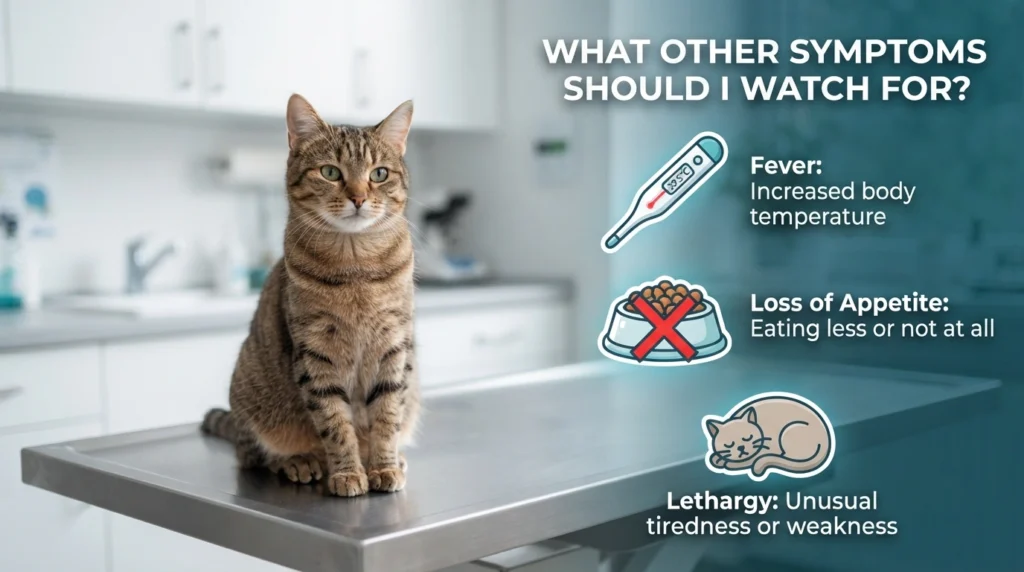
What Other Symptoms Should I Watch For?
The accompanying symptoms can be more informative than mucus alone.
Respiratory symptoms
Watch for:
- Sneezing
- Nasal congestion
- Runny nose
- Eye discharge
- Wheezing
- Rapid breathing
- Labored breathing
- Noisy breathing
General illness signs
Also monitor:
- Loss of appetite
- Reduced water intake
- Lethargy
- Hiding
- Weight loss
- Fever
- Reduced activity
The combination of symptoms helps your veterinarian determine whether the problem is likely to involve the upper airway, lower airway, lungs, or another system.
How Veterinarians Diagnose a Cat Coughing Up Mucus
Diagnosis begins with a history and physical examination.
Your veterinarian may ask:
- When did the cough begin?
- How frequently does it occur?
- What does the mucus look like?
- Is your cat sneezing?
- Is there nasal or eye discharge?
- Has your cat’s appetite changed?
- Is breathing normal between episodes?
- Has your cat been exposed to other cats?
- Has anything changed in the home environment?
- Does your cat spend time outdoors?
- Is the cat vaccinated according to veterinary recommendations?
- Has the problem happened previously?
Depending on the examination, diagnostic testing may include:
- Chest X-rays
- Blood tests
- Respiratory pathogen testing
- Airway sampling
- Cytology
- Bacterial culture
- Additional imaging
- Bronchoscopy or other specialized examinations
The appropriate tests depend on the individual cat and suspected disease.
How Is Mucus-Producing Coughing Treated?
There is no single treatment for a cat coughing up mucus because coughing is a symptom rather than a specific disease.
Treatment may involve addressing the underlying cause.
Depending on the diagnosis, a veterinarian may recommend:
- Supportive care
- Treatment for a respiratory infection
- Anti-inflammatory therapy
- Bronchodilator therapy for appropriate airway conditions
- Treatment for pneumonia
- Treatment for fungal disease
- Removal of foreign material
- Oxygen support in severe cases
- Other disease-specific medication
Do not give your cat human cough medicine or cold medication unless specifically directed by a veterinarian.
Some human medications can be dangerous to cats, and even a medication that sounds appropriate may be unsuitable for the particular cause of coughing.
Safe Supportive Care at Home
If your cat has mild symptoms and your veterinarian has advised home monitoring, several supportive measures may help.
Keep the environment free from irritants
Avoid:
- Tobacco smoke
- Strong perfumes
- Aerosol sprays
- Excessive dust
- Harsh cleaning fumes
Encourage hydration
Keep clean, fresh water available.
Good hydration is important for overall health and may help maintain normal respiratory secretions.
Make food easy to access
A congested cat may have difficulty smelling food.
Offer appropriate, appealing food and monitor appetite carefully.
If your cat refuses food, contact your veterinarian rather than allowing prolonged appetite loss to continue unchecked.
Provide a quiet resting area
Stress reduction can be useful when a cat is ill.
Give your cat a comfortable area away from excessive noise, household activity, and other pets if necessary.
Use humidity carefully
Humidified air may help some cats with congested respiratory secretions. However, humidity should be considered supportive care rather than a treatment for the underlying disease.
Do not use essential oils or heavily scented products around a cat with respiratory symptoms without veterinary guidance.
Should I Give Antibiotics for Mucus?
Not automatically.
Mucus can occur with viral infections, inflammatory conditions, airway disease, irritation, and other problems. Antibiotics work against certain bacterial infections but do not treat viruses.
Using leftover antibiotics or medication prescribed for another animal can cause problems, including inappropriate treatment and medication-related adverse effects.
A veterinarian can determine whether antimicrobial treatment is appropriate.
Can a Cat Recover From Coughing Up Mucus?
Many respiratory conditions can be managed successfully, particularly when the underlying problem is identified and treated appropriately.
The outlook depends on:
- The underlying cause
- How severe the respiratory disease is
- How quickly treatment begins
- The cat’s age
- Overall health
- Whether complications are present
- Whether the condition is acute or chronic
A mild respiratory infection may resolve with appropriate supportive care, while chronic airway disease or pneumonia may require more extensive treatment and monitoring.
How Can Respiratory Problems Be Prevented?
You cannot prevent every cause of coughing, but you can reduce some risks.
Helpful habits include:
- Keep vaccinations current according to veterinary advice.
- Avoid exposure to sick cats when possible.
- Reduce household smoke and airborne irritants.
- Maintain reasonable ventilation.
- Keep living areas clean.
- Avoid excessive litter dust.
- Reduce unnecessary stress.
- Follow appropriate hygiene practices in multi-cat homes.
- Arrange veterinary care for persistent respiratory symptoms.
In multi-cat households, infectious respiratory illnesses can spread through respiratory secretions and contaminated objects. Good hygiene and appropriate separation can help reduce transmission when infection is suspected.
A Simple Monitoring Checklist
If your cat is stable and your veterinarian has recommended monitoring, keep track of:
| What to monitor | Why it matters |
|---|---|
| Cough frequency | Shows whether symptoms are improving or worsening |
| Mucus color/amount | Helps document changes |
| Appetite | Reduced appetite can accompany illness |
| Water intake | Helps identify possible dehydration concerns |
| Breathing | Abnormal breathing can indicate serious disease |
| Energy level | Lethargy may indicate worsening illness |
| Sneezing/nasal discharge | Provides additional respiratory clues |
| Weight | Ongoing weight loss needs attention |
Writing down these changes can make a veterinary appointment more productive.
FAQs About Cat Coughing Up Mucus
Why is my cat coughing up mucus?
A cat may cough up mucus because of respiratory infection, airway inflammation, asthma, bronchitis, pneumonia, irritation, or another respiratory condition. The mucus itself does not identify the cause, so persistent coughing should be evaluated by a veterinarian.
Is yellow mucus from a cat always a bacterial infection?
No. Yellow mucus can occur with inflammation or infection, but its color alone cannot determine whether bacteria are responsible. A veterinarian should assess the cat and decide whether testing or treatment is appropriate.
What does green mucus from a cat mean?
Green respiratory mucus can occur with significant inflammation or infection, but color alone is not diagnostic. If green discharge is persistent or accompanied by coughing, poor appetite, lethargy, or abnormal breathing, arrange veterinary evaluation.
Why is my cat coughing up clear mucus?
Clear mucus may occur with airway irritation or respiratory disease. If your cat repeatedly coughs, develops other symptoms, or has breathing changes, veterinary assessment is appropriate even if the mucus remains clear.
Can a respiratory infection make a cat cough up mucus?
Yes. Feline respiratory disease can cause increased respiratory secretions and coughing, although the exact symptoms vary depending on which parts of the respiratory tract are affected and what organism or condition is responsible.
How do I know whether my cat is coughing or having a hairball?
Coughing originates from the respiratory tract and can involve repeated forceful contractions, while hairball episodes generally involve retching or gagging associated with attempting to bring up gastrointestinal contents. A video of the episode can help a veterinarian distinguish them.
Should I give my cat cough medicine?
Do not give human cough medicine unless your veterinarian specifically recommends a particular medication and dose. Some human medicines are unsafe for cats, and treatment should target the underlying cause.
When is a cat coughing up mucus an emergency?
Emergency care is warranted when coughing or mucus is accompanied by difficulty breathing, open-mouth breathing, blue or gray gums, collapse, severe weakness, or rapidly worsening respiratory distress.
Can I treat a mucus-producing cough at home?
Mild respiratory symptoms may sometimes be managed with supportive care under veterinary guidance, such as reducing airborne irritants and ensuring access to water and food. Persistent or worsening coughing requires professional assessment.
Should I be concerned if my cat keeps coughing but acts normal?
Yes, persistent coughing deserves attention even if your cat appears comfortable between episodes. Cats can hide signs of illness, and recurring coughing may indicate an underlying airway or respiratory condition.
Conclusion
Cat coughing up mucus is a symptom worth paying attention to rather than something that should automatically be attributed to a hairball or simple cold. Respiratory infections, airway inflammation, asthma, pneumonia, irritants, foreign material, and other conditions can produce coughing and respiratory secretions.
The color or amount of mucus can provide useful clues, but it cannot establish a diagnosis on its own. What matters most is the complete pattern: how often your cat coughs, how it is breathing, whether appetite and energy have changed, and whether other respiratory symptoms are present.
For a cat with mild symptoms, reducing smoke, dust, fragrances, and other airborne irritants while maintaining hydration and comfort may be useful supportive care. But if coughing persists, returns frequently, or is accompanied by lethargy, appetite loss, wheezing, blood, or abnormal breathing, veterinary assessment is the safer choice.
Most importantly, cat coughing up mucus with breathing difficulty is not a wait-and-see situation. Recognizing that warning sign early can make the difference between routine veterinary care and an emergency response.
References / Sources
- Merck Veterinary Manual – Introduction to Lung and Airway Disorders of Cats
- Merck Veterinary Manual – Feline Respiratory Disease Complex
- Merck Veterinary Manual – Clinical Signs of Respiratory Disease in Animals
- VCA Animal Hospitals – Feline Upper Respiratory Infection
- VCA Animal Hospitals – Runny Nose, Coughing or Sneezing
- Cornell University College of Veterinary Medicine – Respiratory Infections