A Complete Guide for Concerned Cat Owners
Cat coughing what to do is a common question many pet owners search online when they notice their cat making hacking, wheezing, or choking sounds. While occasional coughing can sometimes be harmless such as when a cat is trying to expel a hairball persistent coughing may indicate a respiratory issue that requires attention.
Understanding the causes, symptoms, and appropriate responses can help you protect your cat’s health and prevent complications.
In this comprehensive guide, we will explore why cats cough, what steps you should take, when to visit a veterinarian, and how to prevent future coughing episodes. This article is supported by veterinary research and clinical studies to ensure credibility and reliability.
Understanding Cat Coughing: Why It Happens
Cats rarely cough compared to humans or dogs. Therefore, frequent coughing can indicate an underlying respiratory condition. Veterinary research shows that coughing in cats often occurs due to airway inflammation, infection, or irritation.
Cornell University College of Veterinary Medicine reports that respiratory diseases such as feline asthma can cause coughing, wheezing, and breathing difficulty in affected cats. One of the most common respiratory diseases in cats is feline asthma, which affects approximately 1–5% of the global cat population.
When a cat inhales allergens like dust, smoke, or pollen, the immune system may trigger inflammation in the airways. This causes narrowing of the respiratory passages and mucus buildup, leading to coughing or wheezing.
In many cases, coughing may look like a cat trying to vomit a hairball, which can confuse owners and delay proper treatment.
Cat Coughing What to Do When You Notice Symptoms
If you notice your cat coughing, the first step is to observe the symptoms carefully. Not every cough indicates a severe condition, but monitoring the situation can help you determine the best course of action.
Start by checking whether the coughing is occasional or persistent. Occasional coughing associated with hairballs may not require immediate concern. However, repeated coughing episodes accompanied by breathing difficulty, lethargy, or appetite loss should be evaluated by a veterinarian.
You should also observe your cat’s body posture during coughing. Cats with respiratory conditions often crouch low to the ground and extend their neck forward while coughing.
Immediate Steps to Take
When considering cat coughing what to do, follow these practical steps:
- Observe the cough pattern – frequency, duration, and triggers.
- Remove environmental irritants such as smoke, strong perfumes, or dusty litter.
- Check for hairballs or vomiting attempts.
- Ensure proper ventilation in your home.
- Contact a veterinarian if coughing continues for more than 24 to 48 hours.
Common Causes of Cat Coughing
Understanding the underlying cause of coughing helps determine the appropriate treatment.
Mild Causes
These causes are generally not life-threatening but should still be monitored.
- Hairballs
- Mild allergies
- Dust or environmental irritants
- Temporary throat irritation
Moderate Causes
Moderate causes may require veterinary treatment.
- Respiratory infections
- Bronchitis
- Parasites such as lungworms
- Upper respiratory infections
Severe Causes
Serious causes of coughing should be treated immediately.
- Feline asthma
- Pneumonia
- Lung tumors
- Chronic bronchial disease
A veterinary study analyzing respiratory diseases in cats found that lower airway diseases such as asthma or chronic bronchitis accounted for a significant portion of respiratory cases in affected cats.
Statistical Overview of Cat Coughing Causes
The following table summarizes research findings regarding respiratory conditions associated with coughing in cats.
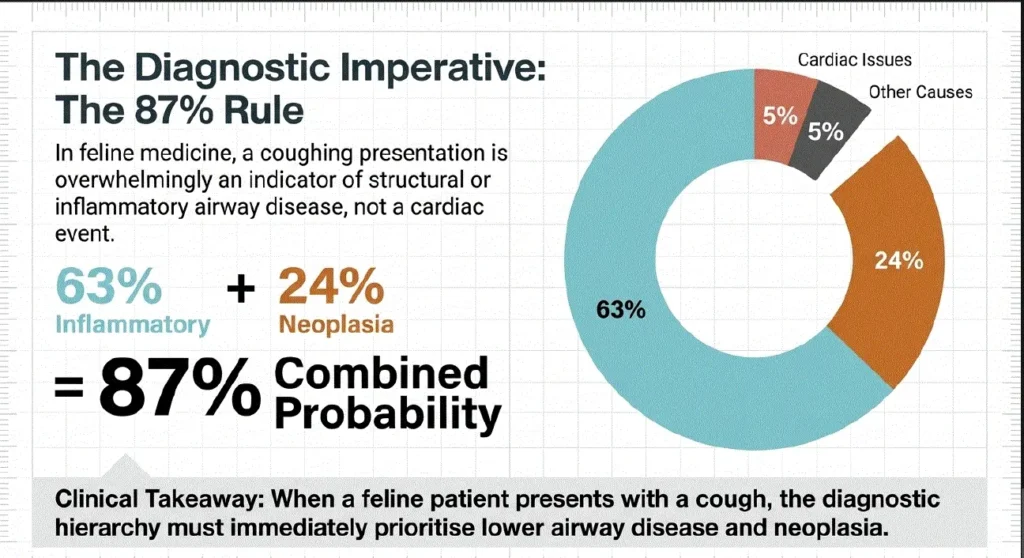
Source: Veterinary respiratory research studies.
Info graphic: Cat Coughing Causes Distribution
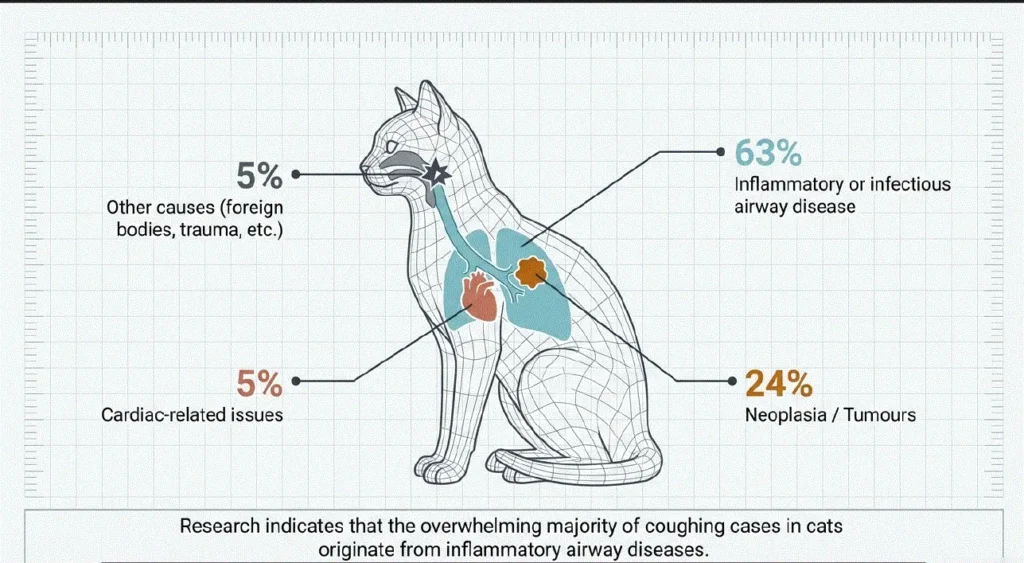
This infog graphic shows that most coughing cases in cats originate from inflammatory airway diseases.
Cat Coughing What to Do at Home before Visiting the Vet
When dealing with cat coughing what to do, there are several safe home strategies that may help reduce mild coughing episodes.
First, maintain a clean indoor environment. Dust, smoke, and chemical sprays can irritate your cat’s respiratory system. Avoid using scented candles or aerosol cleaners around your pet.
Second, consider changing cat litter if it produces excessive dust. Dusty litter can trigger respiratory irritation.
Third, maintain proper humidity levels in your home. Dry air can worsen coughing and respiratory discomfort.
Fourth, ensure your cat is properly hydrated and receives a balanced diet that supports immune health.
However, home remedies should never replace veterinary care if coughing persists or worsens.
Graph: Frequency of Reported Coughing Symptoms
Common Symptoms in Cats with Chronic Cough
Harsh/Loud Cough ███████████████ 56%
Wheezing ██████████ 50%
Swallowing After Cough ███████ 35%
Open-mouth breathing ████ 17%
Fluid expelled ██ 5%
These symptoms were reported by owners in a clinical survey of cats with chronic respiratory disease.
When Cat Coughing Becomes an Emergency
Some coughing symptoms require immediate veterinary attention.
Seek emergency care if your cat shows:
- Open-mouth breathing
- Blue or pale gums
- Severe lethargy
- Continuous coughing fits
- Rapid breathing
These signs may indicate severe respiratory distress or airway obstruction.
Veterinary Diagnosis and Treatment Options
If coughing persists, veterinarians may perform several diagnostic tests to determine the cause.
Common Diagnostic Methods
- Physical examination
- Chest X-rays
- Blood tests
- Bronchoscopy
- Airway fluid analysis
Treatment depends on the underlying condition. For example, feline asthma is often treated with corticosteroids and bronchodilators to reduce airway inflammation and improve breathing.
Environmental control is also an important part of treatment. Avoiding allergens such as cigarette smoke, dust, and mold can significantly reduce asthma flare-ups.
Preventing Cat Coughing in the Future
Preventive care is essential for maintaining your cat’s respiratory health.
Key prevention strategies include:
- Regular veterinary checkups
- Maintaining a dust-free home environment
- Avoiding exposure to smoke or chemicals
- Using high-quality cat litter
- Keeping vaccinations up to date
Cats that are prone to respiratory issues should be monitored closely, especially if they live in environments with allergens or pollutants.
Final Thoughts on Cat Coughing What to Do
Cat coughing what to do is an important question that every cat owner should understand. While occasional coughing may simply be related to hairballs or mild irritation, persistent coughing can signal underlying respiratory disease.
By carefully observing your cat’s symptoms, maintaining a clean environment, and seeking veterinary care when necessary, you can ensure that your feline companion remains healthy and comfortable.
If coughing continues or worsens, never delay professional medical advice. Early diagnosis and treatment can significantly improve your cat’s quality of life and prevent serious respiratory complications.