If you’ve ever wondered, “my cat is coughing should I be concerned?”, you’re certainly not the only one. While occasional coughing may seem harmless, persistent or unusual coughing in cats can signal underlying health issues that require attention. Unlike humans, cats don’t cough often, so when they do, it’s worth investigating.
This comprehensive, SEO-friendly guide explores everything you need to know about my cat is coughing, including causes, symptoms, treatments, statistical insights, and expert-backed advice from veterinary literature.
Understanding Why My Cat Is Coughing
Coughing is a reflex that helps clear irritants, mucus, or foreign particles from the respiratory tract. However, in cats, it is less common than in dogs or humans, making it more significant when it occurs.
Scientific studies show that coughing is one of the most reported clinical signs in feline respiratory disease. In one veterinary study, coughing was observed in up to 76% of cats with lower respiratory tract infections.
Common Causes of My Cat Is Coughing
Feline Asthma
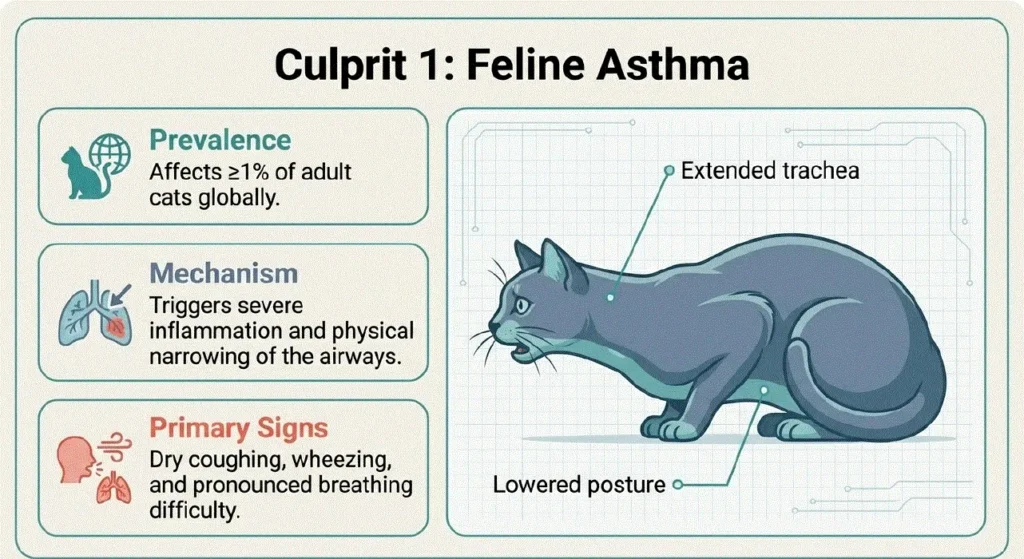
One of the most common reasons behind my cat is coughing is asthma.
Affects at least 1% of adult cats globally
Causes inflammation and narrowing of airways
Leads to coughing, wheezing, and breathing difficulty
Cats with asthma may crouch low to the ground and extend their neck while coughing.
Respiratory Infections
Viral and bacterial infections are major contributors.
Key infections include:
Feline herpesvirus (causes ~50% of respiratory diseases)
Feline Calicivirus (prevalence ~17.1% in Pakistan)
Symptoms: Sneezing, Nasal discharge, Fever, Coughing.
A study of 740 cats found 27.6% showed coughing as part of respiratory disease symptoms .
Allergies and Environmental Irritants
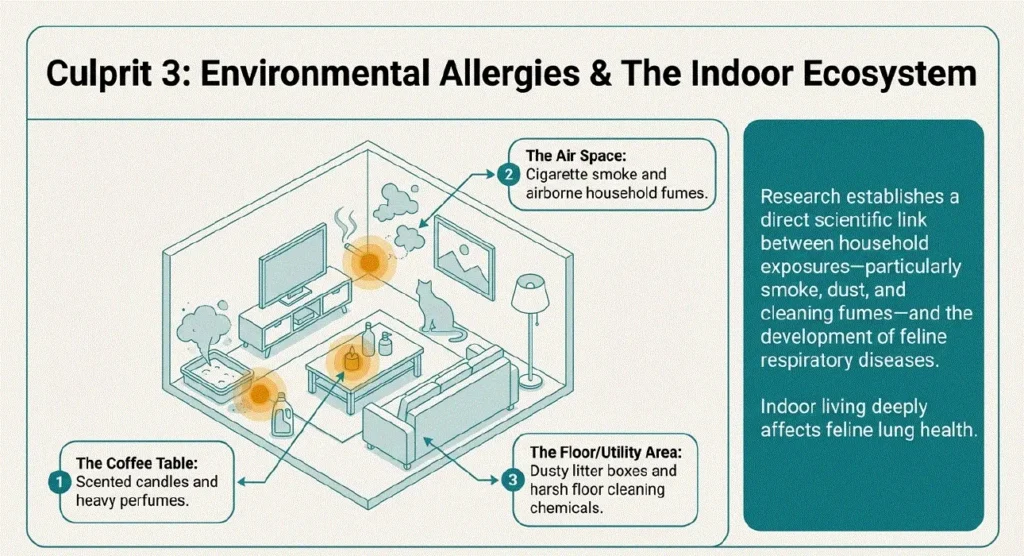
Indoor pollution plays a significant role.
Common triggers: Smoke, Dust, Perfumes, Cleaning chemicals.
Research shows household exposures like smoke and fumes are linked to feline respiratory diseases .
Parasites (Lungworms)
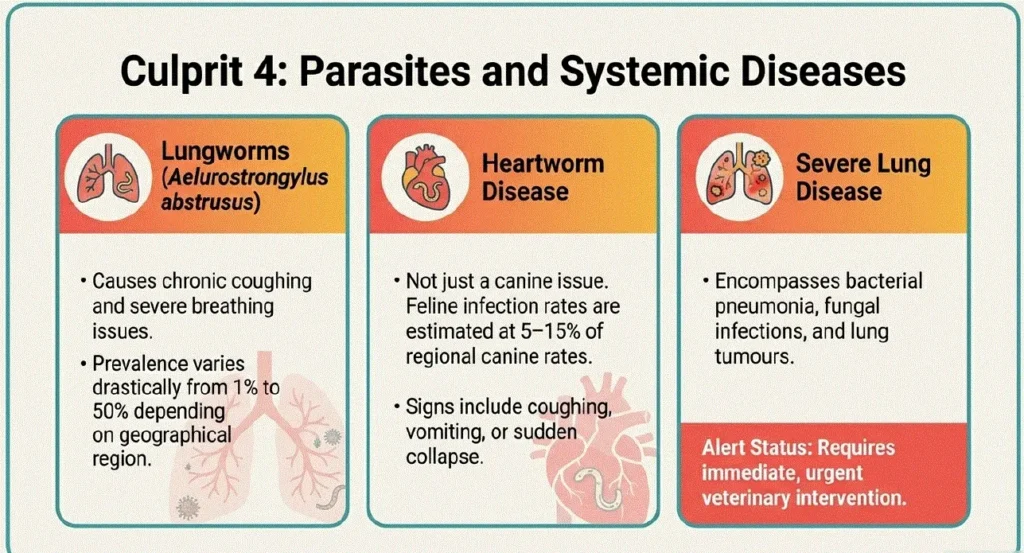
Parasites like Aelurostrongylus abstrusus can infect the lungs.
Prevalence varies from 1% to 50% depending on region
Causes chronic coughing and breathing issues
Heartworm Disease
Though less common than in dogs, it still occurs.
Estimated at 5–15% of canine infection rates
May cause coughing, vomiting, or sudden collapse
Pneumonia or Severe Lung Disease
More serious causes include: Bacterial pneumonia
Fungal infections
Lung tumors
These conditions often require urgent veterinary care.
Signs That Accompany “My Cat Is Coughing”
Coughing rarely occurs alone. Watch for these symptoms:
Wheezing, Open-mouth breathing, Lethargy, Loss of appetite, Fever
In severe viral infections, coughing may occur in up to 96.5% of affected felines.
Types of Coughing in Cats
Understanding the type of cough can help identify the cause:
| Type of Cough | Description | Possible Cause |
| Dry hacking cough | No mucus | Asthma, allergies |
| Wet cough | With phlegm | Infection, pneumonia |
| Gagging cough | Looks like vomiting | Hairballs or airway irritation |
| Wheezing cough | Whistling sound | Asthma or obstruction |
Statistical Overview of My Cat Is Coughing
Prevalence of Respiratory Issues in Cats
| Condition | Prevalence (%) | Source |
| Upper respiratory disease | 38% | Literature survey |
| Feline Calicivirus | 17.1% | Pakistan study |
| Asthma | ≥1% | Global estimate |
| Lungworm infection | 1-50% | Regional studies |
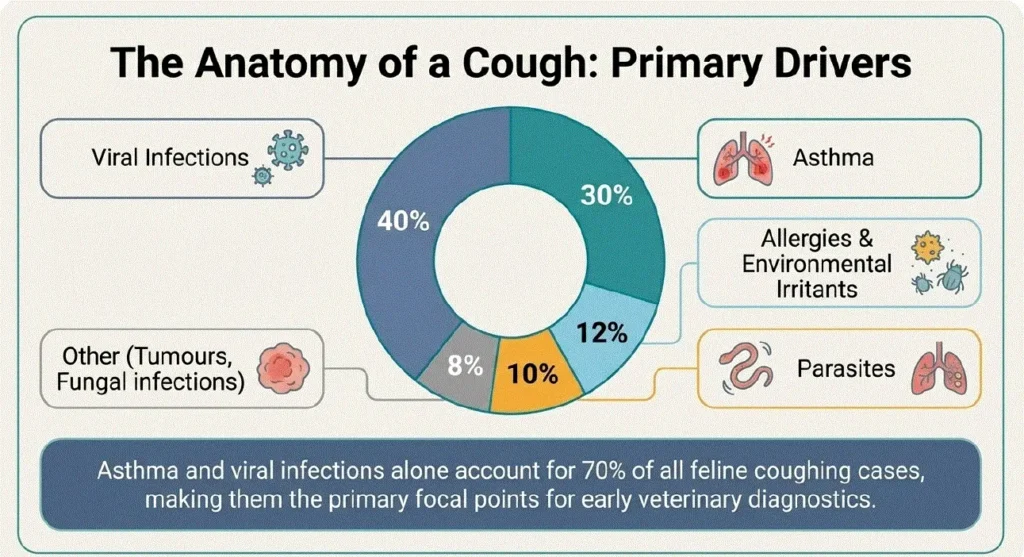
Infogram: Main Causes of My Cat Is Coughing
Respiratory Causes Breakdown (Estimated)
Asthma ██████████ 30%
Viral Infections ███████████████ 40%
Parasites ██████ 10%
Allergies/Irritants ███████ 12%
Other (tumors etc.) ███ 8%
When Is It Time to Be Concerned about my Cat is coughing?
You should contact a veterinarian immediately if:
Coughing lasts more than 2-3 days
Your cat has difficulty breathing
There is blue or pale gum color
Your cat becomes lethargic or stops eating
Important: Cats are experts at hiding illness, so even mild coughing can indicate serious disease.
Diagnosis of My Cat Is Coughing
Veterinarians may use:
Physical examination
Chest X-rays
Blood tests
Bronchoscopy
Fecal tests (for parasites)
Early diagnosis significantly improves outcomes.
Treatment Options for My Cat Is Coughing
Medications
Depending on the cause:
Bronchodilators (for asthma)
Antibiotics (for bacterial infections)
Antiparasitic drugs
Anti-inflammatory medications
Environmental Changes
Avoid smoke exposure
Use air purifiers
Reduce dust and allergens
Supportive Care
Hydration
Nutritional support
Warm, stress-free environment
Emergency Care
Severe cases may require:
Oxygen therapy
Hospitalization
Home Care Tips if My Cat Is Coughing
While veterinary care is essential, you can help at home:
Keep your cat indoors
Maintain clean litter areas
Avoid strong fragrances
Monitor frequency of coughing
Preventing My Cat Is Coughing
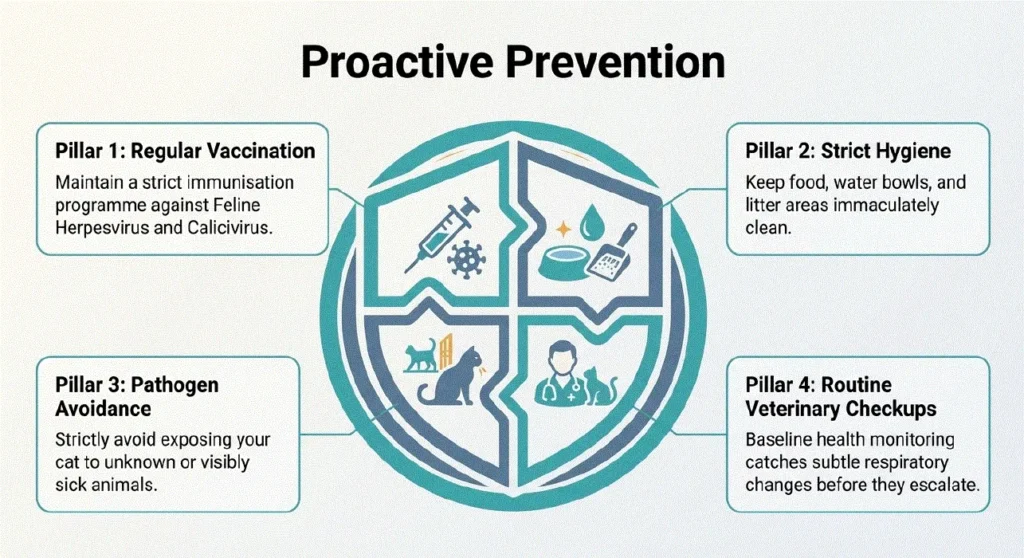
Prevention is always better than cure:
Vaccinate regularly
Avoid exposure to sick animals
Maintain hygiene
Schedule routine vet checkups
Final Thoughts on My Cat Is Coughing
When it comes to my cat is coughing, the key is awareness and timely action. While occasional coughing might not be alarming, persistent or severe coughing is often a sign of underlying health issues such as asthma, infections, or parasites.
Veterinary literature consistently shows that respiratory diseases are common in cats, with significant percentages affected globally. From viral infections responsible for nearly half of respiratory cases to asthma affecting a measurable portion of adult cats, coughing is rarely something to ignore.
The most important takeaway is this: your cat depends on you to recognize subtle signs of illness. Early intervention not only improves recovery but can also save your cat’s life in serious cases.
FAQs about My Cat Is Coughing
Why is my cat coughing even though it seems perfectly fine?
Mild coughing with normal behavior could indicate hairballs or minor irritation, but persistent coughing should still be checked by a vet.
Is coughing in cats an emergency?
Not always, but it becomes urgent if accompanied by breathing difficulty, lethargy, or loss of appetite.
Can hairballs cause coughing?
Yes, but true coughing and hairball gagging are different. Frequent episodes should be evaluated.
How can I tell if my cat has asthma?
Look for wheezing, crouched posture, and repeated coughing episodes. A vet diagnosis is required.
Can indoor cats develop respiratory problems?
Yes. Indoor pollutants like smoke and dust are common triggers.
How long is too long for a cat to cough?
Anything beyond 2-3 days or recurring episodes should be investigated.