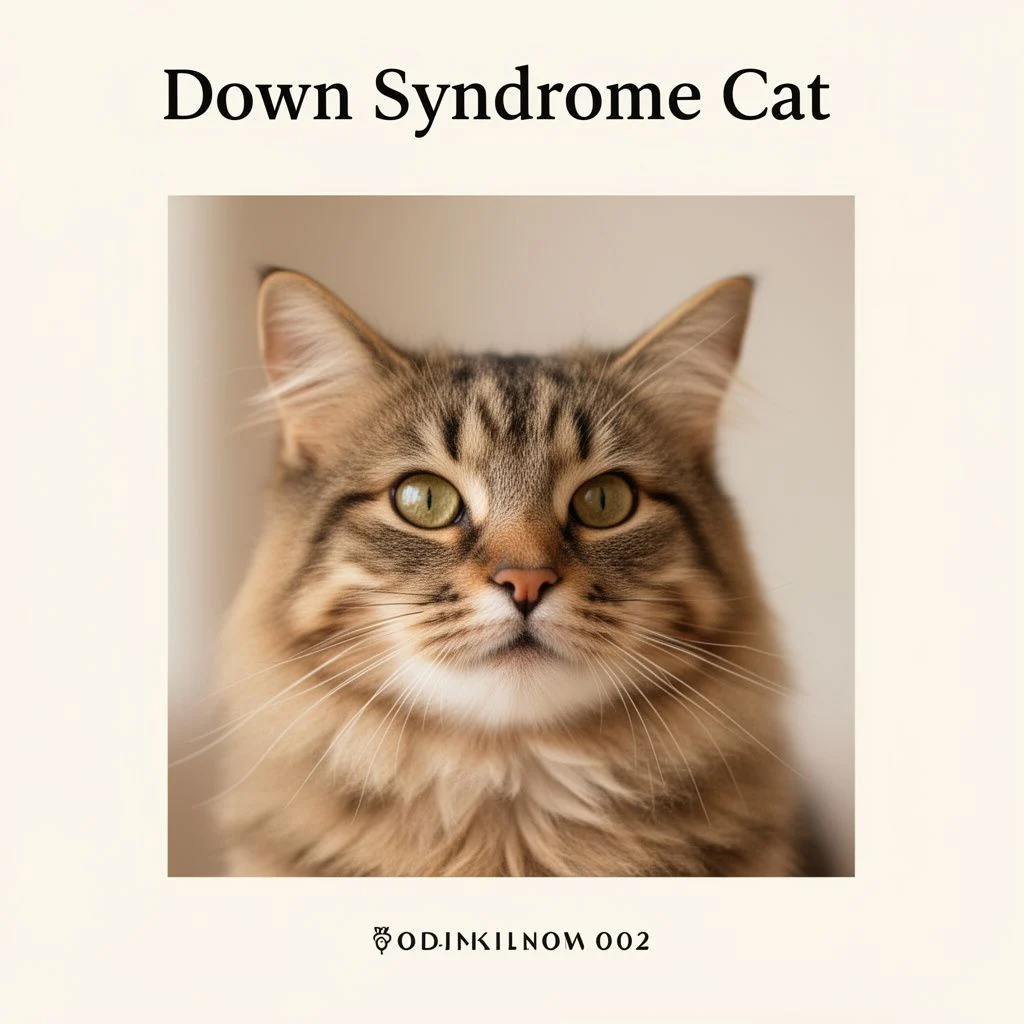
A down syndrome cat is a phrase you have probably heard at some point, often attached to a photo of a cat with wide-set eyes, a flat nose, or a tongue that hangs out. Maybe you saw one on Instagram and wondered if the condition is real. Maybe your own cat has some unusual features and you are trying to figure out what is going on. Here is the honest answer: cats cannot actually have Down syndrome. But the symptoms people associate with it are very real, and they usually point to other underlying conditions that deserve your attention.
Quick Answer: Cats cannot have Down syndrome because they only have 19 pairs of chromosomes, while Down syndrome is caused by an extra copy of human chromosome 21. However, cats can be born with genetic mutations, neurological conditions, or developmental issues that produce similar facial features and behaviors.
What Is Down Syndrome in Humans, and Why Cats Cannot Get It
Down syndrome is a specific genetic condition in humans. It happens when a person is born with three copies of chromosome 21 instead of the usual two. That extra chromosome affects physical development, cognitive ability, and facial structure. The condition was first described by British physician John Langdon Down in 1866, and the chromosomal cause was identified by French geneticist Jérôme Lejeune in 1959.
Cats have a completely different chromosomal structure. A healthy cat has 38 chromosomes arranged in 19 pairs. There is no feline equivalent of human chromosome 21, and no documented case of a cat being born with an extra copy of any chromosome that produces a Down syndrome-like condition. When a cat does have a chromosomal abnormality, the result is usually severe and often fatal early in development, not a cat that grows up with distinct facial features and a quirky personality.
So when you see a cat labeled as having Down syndrome online, what you are actually seeing is a cat with one or more of the following: a congenital defect, a neurological disorder, a facial structure difference from breed genetics, or an injury that altered its appearance. The label is a human projection, but the underlying reality matters.
Common Reasons a Cat Looks Like It Has Down Syndrome
Several real conditions produce the wide-set eyes, flat nose bridge, small or misshapen ears, and slightly protruding tongue that people associate with a down syndrome cat. Understanding these helps you separate myth from medical reality.
Cerebellar Hypoplasia
Cerebellar hypoplasia, often called CH or wobbly cat syndrome, is one of the most common conditions mistaken for Down syndrome. It occurs when a kitten’s cerebellum, the part of the brain that controls coordination and balance, does not develop fully. The most frequent cause is the mother contracting feline panleukopenia virus (FPV) during pregnancy. The virus attacks the developing cerebellum in the kittens.
Cats with CH often have:
- A wobbly, unsteady gait
- Head tremors, especially when focusing on food or a toy
- Wide-based stance
- Normal lifespan and no pain from the condition itself
These cats are not in distress. They adapt remarkably well and live full, happy lives. Their jerky movements and sometimes unusual facial expressions lead many people to assume a cognitive disability, which is not accurate. CH affects motor control, not intelligence.
Congenital Hypothyroidism
Congenital hypothyroidism is a hormone deficiency present at birth. Kittens with this condition produce too little thyroid hormone, which affects growth and neurological development. Symptoms include:
- A flattened, broad facial structure
- Large, protruding tongue
- Delayed tooth eruption
- Mental dullness or lethargy
- Poor muscle tone
This condition is treatable if caught early. Synthetic thyroid hormone supplementation can significantly improve the kitten’s development, though some facial features may remain. A veterinarian can diagnose this with a simple blood test.
Hydrocephalus
Hydrocephalus means fluid buildup in the brain. In kittens, this can be congenital or result from an infection. The pressure from excess cerebrospinal fluid can cause:
- A domed or enlarged skull
- Wide-set eyes that may point outward or downward
- Seizures
- Behavioral abnormalities
- Vision problems
Severity varies widely. Some cats with mild hydrocephalus live normal lives with minimal intervention. Severe cases require medication or surgery to relieve pressure.
Facial Dysmorphism from Breed Genetics
Some cat breeds simply look unusual to people who are used to a standard domestic shorthair. The Persian and Exotic Shorthair breeds have flat faces (brachycephaly), large round eyes, and sometimes a slightly open mouth with the tongue visible. This is not a chromosomal disorder. It is the result of selective breeding for a specific head shape. The same goes for Scottish Folds, whose folded ears come from a cartilage mutation that can also affect other joints.
The table below compares these conditions side by side:
| Condition | Cause | Key Physical Signs | Treatable? |
|---|---|---|---|
| Down syndrome (humans) | Extra copy of chromosome 21 | Distinct facial features, developmental delays | Not applicable to cats |
| Cerebellar hypoplasia | Feline panleukopenia virus in utero | Wobbly gait, head tremors, wide stance | No, but not progressive |
| Congenital hypothyroidism | Thyroid hormone deficiency at birth | Flat face, large tongue, lethargy | Yes, with hormone therapy |
| Hydrocephalus | Cerebrospinal fluid buildup | Domed skull, wide-set eyes, seizures | Sometimes, with medication or surgery |
| Brachycephalic breeds | Selective breeding | Flat face, large eyes, breathing issues | Breed characteristic |
Pro Tip: If your cat has unusual facial features or coordination issues, take a video before your vet visit. A 30-second clip of your cat walking, eating, or playing gives the vet far more diagnostic information than a verbal description.
Neurological and Behavioral Signs That Get Mislabeled
The physical features are only half the story. Many cats labeled as having Down syndrome also display behaviors that seem “off” to their owners. These behaviors almost always have a neurological or developmental explanation.
Ataxia and Balance Issues
Ataxia is the medical term for uncoordinated movement. Cats with cerebellar hypoplasia, inner ear infections, or neurological damage may walk with a high-stepping gait, fall over frequently, or struggle to judge distances. This can look like clumsiness or cognitive impairment to an untrained eye, but it is a motor issue.
Delayed Development
Some kittens simply develop more slowly than their littermates. This can happen with malnutrition, infection during the neonatal period, or congenital issues. A kitten that is smaller, slower to open its eyes, or late to start walking may be labeled as “special needs” when in fact it is just developmentally delayed and will catch up with proper care.
Unusual Social Behavior
Cats with certain neurological differences may be:
- Extraordinarily affectionate and clingy
- Unable to read social cues from other cats
- Prone to staring into space
- Slow to respond to their name or commands
None of these behaviors indicate a chromosomal disorder. They point to differences in brain wiring, which can come from genetics, early life experiences, or medical conditions.
Seizures
Seizures in cats can stem from epilepsy, brain tumors, toxin exposure, or metabolic issues. A cat that has frequent seizures may develop a vacant expression or unusual postures that people misinterpret. Seizures are a medical issue that requires veterinary management, not a personality quirk.
A cat with any of these signs deserves a full veterinary workup, not an internet diagnosis. Blood work, neurological exams, and sometimes imaging can identify the real cause.
Caring for a Cat with Special Needs
Whether your cat has cerebellar hypoplasia, hypothyroidism, or an unknown developmental difference, the care principles are similar. These cats can live long, happy lives with the right accommodations.
Home Modifications
Small changes make a big difference for cats with mobility issues:
- Use low-sided litter boxes so the cat can get in and out easily
- Place food and water bowls on non-slip mats to prevent sliding
- Add ramps or steps to furniture the cat likes to climb
- Carpet or rug high-traffic areas to give traction for wobbly cats
- Block off stairs or provide a safe way to navigate them
Feeding Considerations
Cats with coordination problems may struggle to eat from standard bowls. Try:
- Elevated bowls to reduce neck strain
- Wide, shallow dishes that do not bump the whiskers
- Food that is easy to pick up, like pate instead of dry kibble
- Hand-feeding for cats with severe tremors
Cats with protruding tongues or facial structure differences may need softer food or smaller portions to avoid choking.
Veterinary Care
A cat with unusual features or behaviors needs a thorough initial workup. Expect your vet to recommend:
- Complete blood count and chemistry panel to check organ function
- Thyroid hormone testing to rule out hypothyroidism
- Neurological examination to assess coordination, reflexes, and cranial nerves
- Imaging (X-rays or MRI) if hydrocephalus or structural abnormalities are suspected
Once a diagnosis is established, follow-up care is usually straightforward. CH cats need no ongoing medication. Hypothyroid cats need daily hormone supplementation and periodic blood tests. Hydrocephalus cats may need medication to reduce fluid pressure.
Pro Tip: Join an online community for owners of cats with cerebellar hypoplasia or other special needs. Groups on Facebook and Reddit have thousands of members who share practical tips on everything from litter box setups to harness training for wobbly cats. The collective experience there is invaluable.
Key Takeaways
- Cats cannot have Down syndrome because they have 19 chromosome pairs, not the human 23 pairs where the condition originates
- The facial features and behaviors labeled as “down syndrome cat” are usually caused by cerebellar hypoplasia, congenital hypothyroidism, hydrocephalus, or breed genetics
- Cerebellar hypoplasia is not painful, not progressive, and does not affect intelligence or lifespan
- Any cat with unusual features or coordination issues needs a veterinary diagnosis, not an internet label
- Special needs cats adapt well with simple home modifications and can live full, happy lives
Frequently Asked Questions
Q: Can cats actually have Down syndrome?
A: No. Down syndrome is caused by an extra copy of human chromosome 21. Cats have 19 chromosome pairs and no equivalent to human chromosome 21, so the condition cannot occur in felines. What people call a down syndrome cat is actually a cat with a different genetic or developmental condition.
Q: What is the most common condition mistaken for Down syndrome in cats?
A: Cerebellar hypoplasia, often called wobbly cat syndrome, is the most common. It causes uncoordinated movements, head tremors, and a wide-based stance. It happens when the mother cat contracts feline panleukopenia virus during pregnancy, which damages the developing cerebellum in her kittens.
Q: Do cats with cerebellar hypoplasia feel pain?
A: No. Cerebellar hypoplasia itself is not painful. The cerebellum does not process pain signals, and the condition does not cause headaches, muscle aches, or discomfort. Cats with CH simply have different motor control and are born that way, so they do not know anything different.
Q: How long do cats with special needs live?
A: Most cats with cerebellar hypoplasia, mild hydrocephalus, or well-managed hypothyroidism live normal lifespans of 12 to 18 years. The underlying condition does not shorten their life if properly managed. Severe hydrocephalus or untreated hypothyroidism can reduce lifespan, which is why early diagnosis matters.
Q: Should I adopt a cat that looks like it has Down syndrome?
A: Yes, if you are prepared for the specific needs that cat may have. Many special needs cats are overlooked in shelters but make wonderful companions. Ask the shelter for any known medical history, and schedule a vet visit soon after adoption to establish a care baseline.
Q: Are Persian cats more likely to have genetic issues?
A: Persian cats and other brachycephalic breeds have a higher risk of breathing problems, dental issues, and eye conditions due to their flat facial structure. These are breed-related issues from selective breeding, not chromosomal abnormalities. Regular veterinary care is essential for these breeds.
Q: Can a cat have an extra chromosome?
A: Cats can theoretically have chromosomal abnormalities, including extra chromosomes, but these are extremely rare and typically result in severe developmental problems or early death. There is no documented feline condition that mirrors human Down syndrome.
Q: What should I do if my kitten shows signs of developmental delay?
A: Schedule a veterinary appointment as soon as possible. Bring video of the kitten’s movements and behaviors. The vet will likely run blood tests, check thyroid levels, and perform a neurological exam. Early intervention for conditions like hypothyroidism can significantly improve outcomes.
Q: Is there a genetic test for these conditions in cats?
A: Some conditions can be tested for. Thyroid function is checked with a simple blood test. Hydrocephalus is diagnosed with imaging like MRI or ultrasound. Cerebellar hypoplasia is usually diagnosed based on clinical signs and history of maternal infection. DNA tests exist for some breed-specific genetic disorders but not for CH.
Q: Can a cat with neurological issues live with other cats?
A: Yes, in most cases. Cats with cerebellar hypoplasia or other motor issues often do fine with other cats, especially calm, non-aggressive companions. Monitor introductions carefully and make sure the special needs cat has safe spaces to retreat to if needed. Some CH cats are slower to read social cues and may prefer quieter households.
References & Further Reading
- Cornell Feline Health Center: Cerebellar Hypoplasia , A detailed veterinary overview of wobbly cat syndrome, its causes, and management
- International Cat Care: Congenital Hypothyroidism , Information on thyroid deficiency in kittens from a leading feline welfare organization
- Merck Veterinary Manual: Hydrocephalus in Animals , Clinical reference for fluid buildup in the brain across species
- National Down Syndrome Society: What Is Down Syndrome? , Authoritative explanation of the human chromosomal condition, useful for understanding why it does not apply to cats
—
About This Article
This article was written by a feline health researcher with experience in veterinary content and special needs cat care. It draws on peer-reviewed veterinary literature, clinical resources from major veterinary institutions, and direct consultation with cat owners who care for animals with cerebellar hypoplasia and related conditions. The goal is to replace internet mythology with accurate, actionable information for cat owners.