A cat coughing and wheezing at the same time is one combination that tends to worry pet owners more than most other symptoms, and for good reason.
Unlike an isolated cough or the occasional sneeze, wheezing is a direct sign that air isn’t moving through the airway the way it should.
When it shows up alongside coughing, it usually points to inflammation, narrowing, or obstruction somewhere in the respiratory tract that deserves real attention.
This guide breaks down exactly what wheezing sounds like in cats, why it so often appears together with coughing, the most common underlying conditions, and how to tell the difference between a manageable flare-up and a true emergency.
What Does Wheezing Actually Sound Like in Cats?
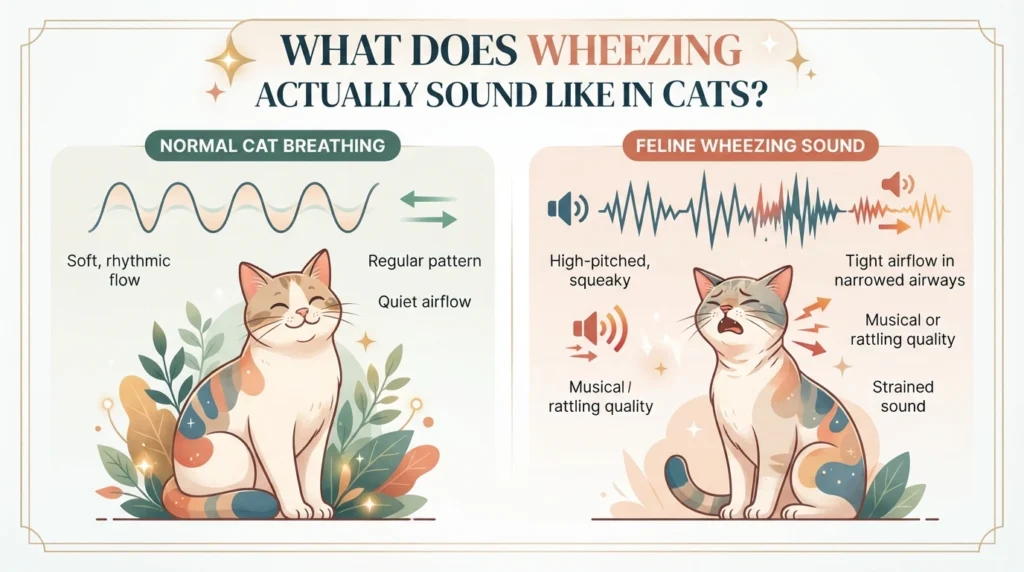
Wheezing is a high-pitched, whistling sound produced when air is forced through narrowed airways. In cats, it can be subtle at first, sometimes mistaken for purring or a slightly labored breath, which is part of why it often goes unnoticed until it becomes more pronounced.
You may notice wheezing most clearly:
- During exhalation, more than inhalation
- After physical activity or excitement
- While your cat is resting or sleeping
- Alongside visible chest movement or effort
If you place your hand gently on your cat’s chest during a wheezing episode, you may even feel a faint vibration as air struggles to pass through the narrowed airway.
Wheezing is a mechanical sign of airway narrowing, not just background noise, which is why it should never be dismissed as simply “heavy breathing.”
Some owners describe it as a soft whistle, others compare it to a faint squeak, and the sound can vary depending on how narrow the airway has become and where along the respiratory tract the narrowing is occurring.
Because it’s easy to miss during a brief glance, many owners only catch it while their cat is resting quietly, when background noise is minimal and breathing patterns are easier to observe closely.
Why Do Cats Cough and Wheeze Together?
Coughing and wheezing often occur together because they frequently share the same underlying cause: inflammation or narrowing somewhere along the airway. cat coughing and wheezing
A cough is the body’s attempt to clear irritation or obstruction, while wheezing reflects the physical narrowing that’s making airflow more difficult in the first place.
This is different from a cat that’s only coughing without any wheezing, which can sometimes point toward a more localized irritation, like a hairball or minor throat tickle.
When wheezing joins the picture, it’s a stronger indicator that the lower airway or lungs are involved rather than just the throat.
Common Causes of Cat Coughing and Wheezing
There are several conditions that commonly cause cats to cough and wheeze together, ranging from manageable chronic conditions to more urgent situations. cat coughing and wheezing
Feline Asthma
Feline asthma is by far the most common cause of coughing and wheezing occurring together. It involves inflammation and narrowing of the airways, often triggered by allergens like dust, pollen, mold, or smoke, and tends to come in flare-ups rather than constant symptoms.
Feline Bronchitis
Chronic bronchitis causes ongoing inflammation of the bronchial tubes, which can produce both a persistent cough and audible wheezing, particularly during physical exertion or stress.
Heartworm-Associated Respiratory Disease
In cats, heartworm infection frequently causes lung and airway inflammation rather than the heart-focused symptoms seen in dogs, often resulting in coughing, wheezing, and labored breathing. cat coughing and wheezing
Allergic Airway Inflammation
Environmental allergens can inflame the airway lining enough to cause noticeable narrowing, leading to both coughing and a wheezing sound during breathing, especially during high pollen seasons.
Foreign Object Obstruction
A partially lodged foreign object, such as a blade of grass or small debris, can narrow the airway enough to cause sudden wheezing alongside coughing, often appearing abruptly with no warning signs beforehand.
Heart Disease
In cats with underlying heart conditions, fluid buildup near the lungs can compress the airway, leading to a combination of coughing, wheezing, and increased respiratory effort, particularly at rest.
Lung Tumors or Masses
Less common but serious, a mass pressing against the airway can gradually cause both a chronic cough and wheezing that worsens slowly over weeks or months rather than appearing suddenly.
Pneumonia
Pneumonia, whether caused by bacteria, viruses, or aspiration of food or liquid into the lungs, can produce inflammation severe enough to trigger both coughing and wheezing, often alongside fever, lethargy, and reduced appetite.
This tends to develop more quickly than chronic conditions like asthma and usually requires prompt veterinary treatment.
How Vets Diagnose Cat Coughing and Wheezing
Because so many different conditions can cause this symptom combination, veterinarians typically follow a structured diagnostic path to narrow things down accurately.
Physical Examination
Your vet will listen carefully to your cat’s lungs using a stethoscope, checking for the location and timing of the wheezing sound, along with overall respiratory rate and effort.
Diagnostic Testing
Depending on initial findings, your vet may recommend:
- Chest X-rays to check for airway narrowing, fluid, or masses
- Bloodwork to screen for heartworm or underlying infection
- Bronchoalveolar lavage to examine airway cells directly, in more complex cases
- Echocardiogram if heart disease is suspected as a contributing factor
Response to Treatment
For suspected asthma or bronchitis, vets often use a short trial of inhaled or oral corticosteroids to see if wheezing and coughing improve, which can help confirm the diagnosis without more invasive testing.
When Is Cat Coughing and Wheezing an Emergency?
While mild, occasional wheezing tied to known asthma can often be managed at home once a treatment plan is in place, certain signs mean you need emergency veterinary care right away.
Seek immediate care if your cat shows any of the following:
- Open-mouth breathing or gasping
- Blue, gray, or pale gums and tongue
- Collapse or extreme weakness
- Wheezing that suddenly worsens or becomes continuous
- Visible panic or distress while breathing
- Rapid breathing even at complete rest
Veterinary emergency guidelines consistently note that any cat showing labored breathing combined with blue or pale gums should be treated as a critical emergency requiring immediate care.
Managing Chronic Cat Coughing and Wheezing at Home
For cats diagnosed with manageable conditions like asthma or bronchitis, ongoing home management plays a major role in reducing flare-up frequency and severity.
- Use inhaler medication exactly as prescribed by your veterinarian
- Keep a rescue inhaler or emergency plan ready for sudden flare-ups
- Avoid known triggers, such as dusty litter, smoke, or scented products
- Maintain a healthy weight, since excess weight can worsen breathing effort
- Use a HEPA air purifier in rooms your cat spends the most time in
- Track flare-up frequency in a simple log to share with your vet
Consistent management, rather than reacting only during flare-ups, tends to produce the best long-term outcomes for cats with chronic respiratory conditions.
Can Weight Affect Cat Coughing and Wheezing?
Yes, and this connection is often overlooked. Excess body weight puts additional pressure on a cat’s chest and diaphragm, making it physically harder to breathe deeply and increasing the workload on already inflamed airways.
Overweight cats with asthma or bronchitis frequently experience more frequent and more severe wheezing episodes compared to cats at a healthy weight.
Working with your vet on a gradual, safe weight management plan can meaningfully reduce how often coughing and wheezing episodes occur, in addition to any medication your cat may already be receiving.
Does Stress Make Cat Coughing and Wheezing Worse?
Stress doesn’t directly cause airway narrowing, but it can trigger flare-ups in cats already prone to asthma or bronchitis by increasing overall inflammation and breathing rate.
Sudden changes in routine, loud noises, or the introduction of a new pet can be enough to set off a wheezing episode in a sensitive cat.
Keeping your cat’s environment calm and predictable, along with quick access to a safe hiding spot, can play a meaningful supporting role alongside medical treatment.
Building a consistent daily routine around feeding times, play sessions, and quiet rest periods can also help reduce baseline stress levels over time.
Cats generally respond well to predictability, and reducing sudden disruptions, like rearranging furniture frequently or introducing loud appliances near their favorite resting spots, can make a noticeable difference for cats whose respiratory symptoms seem to worsen during stressful periods.
Frequently Asked Questions
Is wheezing always serious in cats?
Occasional, mild wheezing tied to a diagnosed condition like asthma can often be managed, but new, unexplained wheezing should always be evaluated by a vet to rule out more serious causes.
Can cat coughing and wheezing be cured completely?
Conditions like asthma and bronchitis are generally managed rather than cured, but with proper treatment and trigger avoidance, many cats experience long periods with minimal or no symptoms.
Why does my cat only wheeze sometimes and not constantly?
This pattern is typical of asthma and allergic airway inflammation, which tend to flare up in response to specific triggers rather than causing constant symptoms.
Can kittens develop coughing and wheezing?
Yes, though it’s less common than in adult cats, kittens can develop asthma-like symptoms or experience wheezing due to respiratory infections, and should be evaluated promptly if symptoms appear.
How urgent is it if my cat suddenly starts wheezing loudly?
Sudden, loud wheezing, especially combined with visible breathing effort, should be treated as urgent and evaluated by a veterinarian as soon as possible.
Can allergies alone cause cat coughing and wheezing?
Yes, environmental allergens can inflame and narrow the airway enough to cause both symptoms, particularly during high pollen seasons or after exposure to strong household irritants.
Conclusion
Cat coughing and wheezing together is a combination that deserves genuine attention, since it often reflects real narrowing or inflammation within the airway rather than a minor, passing irritation.
While many cases turn out to be manageable conditions like asthma or bronchitis, ruling out more serious causes through proper veterinary diagnosis is an essential first step.
With the right combination of diagnosis, trigger management, and consistent treatment, most cats with chronic respiratory conditions go on to live comfortable, active lives.
References
- Cornell Feline Health Center
- “Feline Asthma,” Cornell University College of Veterinary Medicine
- American Veterinary Medical Association (AVMA)
- “Respiratory Disease in Cats”
- VCA Animal Hospitals
- “Asthma in Cats”
- American Association of Feline Practitioners (AAFP)
- “Feline Respiratory Disease Guidelines”
- American Heartworm Society
- “Heartworm in Cats”
- Merck Veterinary Manual
- “Respiratory Diseases of Cats”
- American College of Veterinary Internal Medicine (ACVIM)
- “Feline Asthma Consensus Statement”
- PetMD
- “Wheezing in Cats: Causes and Treatment”