What It Really Means
Few things startle a cat owner faster than watching their pet hunch over, gag, and stick its tongue out mid-cough. It looks dramatic, sounds worse, and leaves most people frozen with worry.
Is this normal? Is it an emergency? The truth sits somewhere in between, and understanding the difference can genuinely protect your cat’s health.
A cat coughing with tongue out is not a single disease it’s a symptom that can point to anything from a harmless hairball to a serious respiratory emergency.
This guide breaks down exactly why cats do this, what to watch for, and how to respond so you’re never caught guessing when it matters most.
Why Does a Cat Cough With Its Tongue Out?
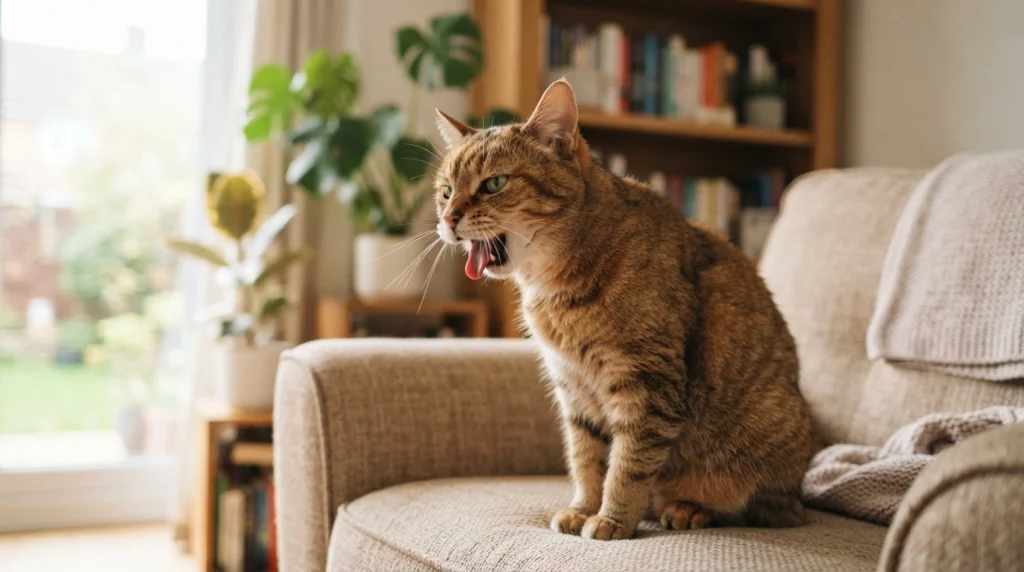
When a cat struggles to move air through a narrowed or irritated airway, its whole body reacts. The neck stretches forward, the abdomen contracts sharply, and the mouth opens as the animal tries to force air in and out faster than usual.
The tongue often slips out during this effort simply because the mouth is open wider than normal and the cat is focused entirely on breathing, not on how it looks.
In milder cases, this is a brief, almost comical moment that passes in seconds. In more serious cases, a cat coughing with tongue out may also show a bluish or pale tint to the tongue and gums a sign that oxygen levels are dropping and immediate veterinary care is needed.
Learning to tell these two situations apart is the single most useful skill a cat owner can build. Cat coughing with tongue out
Common Causes of Cat Coughing With Tongue Out
There isn’t one root cause behind this behavior. Vets typically narrow it down to a handful of possibilities, ranging from mild to life-threatening.
- Feline asthma – Inflammation narrows the lower airways, often triggered by dust, smoke, scented candles, or cleaning sprays.
- Hairballs and throat irritation – Trapped fur can trigger a gagging, coughing reflex that looks alarming but resolves once the hairball passes.
- Upper respiratory infections – Viral or bacterial infections inflame the throat and nasal passages, often paired with sneezing or discharge.
- Foreign object obstruction – A blade of grass, string, or small toy piece lodged in the throat can cause sudden, forceful coughing.
- Bronchitis – Chronic inflammation of the airway tubes leads to a dry, persistent, hacking cough.
- Heartworm disease – Even a small worm burden in a cat’s lungs can trigger repeated coughing fits.
- Heart disease – Fluid buildup around the lungs from congestive heart failure can mimic a respiratory cough.
- Collapsing trachea – Less common in cats than dogs, but it produces a distinctive “goose honk” sound during coughing episodes.
Feline Asthma: The Most Frequent Trigger
Asthma remains one of the leading reasons behind a cat coughing with tongue out, especially in indoor cats exposed to household irritants. During an attack, cats often breathe through an open mouth, and the tongue may take on a grayish or bluish tinge this is considered a medical emergency, not something to monitor at home.
According to VCA Animal Hospitals, asthmatic cats frequently show open-mouth breathing along with a discolored tongue during an active attack, and this combination always warrants urgent care. cat coughing with tongue out
Hairballs vs. True Coughing
Owners often confuse retching over a hairball with an actual respiratory cough. Both can involve tongue extension, but hairball episodes usually end with a small tube of fur being expelled, after which the cat returns to normal almost instantly. Cat coughing with tongue out
A cat coughing with tongue out due to hairballs rarely shows the labored breathing or bluish tongue color associated with asthma or heart disease.
Infections and Irritants
Bacterial and viral infections, including feline viral rhinotracheitis, are common culprits behind sudden coughing spells. These infections often bring along sneezing, watery eyes, and a mild fever. Most resolve with rest, fluids, and when bacteria are involved a course of antibiotics prescribed by a vet.
What Does the Tongue Position Actually Tell You?
The tongue itself is a diagnostic clue. A pink tongue during a brief cough usually points to a mild, self-limiting cause like a hairball or minor irritation. A pale, gray, or blue tongue signals that the body isn’t getting enough oxygen, which is far more concerning.
“Cats stick their tongues out while coughing when they are in respiratory distress, to help open their airways,” notes VEG ER for Pets, a veterinary emergency network.
This single detail tongue color often separates a “watch and wait” situation from one that needs an emergency vet visit within the hour.
Warning Signs That Require Immediate Vet Attention

Not every cough is urgent, but certain signs should never be ignored. Seek emergency veterinary care right away if you notice any of the following alongside the coughing:
- Bluish, gray, or pale gums and tongue
- Open-mouth breathing that doesn’t stop within a minute or two
- Coughing that continues for more than 24 hours
- Lethargy or reluctance to move
- Loss of appetite or refusal to eat
- Coughing up blood or blood-tinged mucus
- Wheezing or a whistling sound between breaths
- Rapid, shallow breathing even while resting
If your cat is coughing with tongue out and shows any of these symptoms together, this is not something to manage at home — it calls for same-day veterinary care.
How to Help a Cat Coughing With Tongue Out at Home
For mild, occasional episodes without emergency symptoms, there are a few sensible steps you can take while deciding whether a vet visit is necessary.
- Stay calm and observe. Note how long the coughing lasts, how often it happens, and whether your cat returns to normal breathing quickly.
- Remove possible irritants. Scented candles, air fresheners, dusty litter, and cigarette smoke are common asthma triggers worth eliminating.
- Offer fresh water. Hydration keeps mucus thinner and easier to clear from the airways.
- Check the mouth gently. If it’s safe to do so, look for a visible string or object caught at the back of the throat — but never force your fingers deep into a distressed cat’s mouth.
- Reduce stress. A quiet, calm room helps a cat recover from a coughing episode faster than a noisy, busy environment.
- Keep a symptom log. Recording frequency, duration, and any triggers gives your vet valuable information for diagnosis.
None of these steps replace a proper veterinary exam. They simply help you manage the situation safely until you can get one, or while monitoring a mild, infrequent cough. Cat coughing with tongue out
How Veterinarians Diagnose the Underlying Cause
When you bring in a cat coughing with tongue out, a vet typically starts with a physical exam, listening closely to the lungs and heart. From there, diagnostics may include: cat coughing with tongue out
Imaging and Lab Work
Chest X-rays remain the standard first step for spotting asthma, bronchitis, fluid buildup, or an enlarged heart. Bloodwork can rule out heartworm disease and check for signs of infection or inflammation.
In more complex cases, vets may recommend a thoracic ultrasound or even a bronchoscopy to look directly inside the airway.
Ruling Out Look-Alike Conditions
Vets also work to distinguish true coughing from vomiting, retching, or reverse sneezing, since each looks and sounds different but can be mistaken for the others by worried owners.
Reverse sneezing, for instance, produces a repetitive snorting sound with the lips flared outward, while true coughing involves a deeper chest effort and often that telltale tongue extension. cat coughing with tongue out
Treatment Options Based on Cause
Treatment naturally depends on what’s driving the cough:
- Asthma is typically managed with inhaled steroids or bronchodilators, often delivered through a cat-sized inhaler spacer.
- Infections may require antibiotics for bacterial cases, or supportive care like fluids and rest for viral ones.
- Heartworm disease is managed with preventive medication and close monitoring, since there’s no direct cure for adult worms in cats.
- Foreign objects usually require sedation and manual removal by a veterinarian.
- Heart disease is managed with medications that reduce fluid buildup and support heart function.
Most cats respond well once the correct cause is identified, which is why a proper diagnosis matters more than guessing at home remedies.
Preventing Future Coughing Episodes
While not every cause is preventable, several practical habits lower the odds of repeated coughing fits:
- Switch to low-dust, unscented litter
- Avoid aerosol sprays, candles, and incense near your cat’s living space
- Groom long-haired cats regularly to reduce hairball frequency
- Keep vaccinations current to guard against common respiratory viruses
- Use monthly heartworm prevention, even for indoor-only cats
- Schedule routine wellness checkups to catch issues early
- Keep small, swallowable objects like string or rubber bands out of reach
A cat coughing with tongue out from time to time isn’t automatically a sign of poor care but consistent prevention does reduce how often it happens.
FAQs
Is it normal for a cat to stick its tongue out while coughing?
Occasional tongue extension during a brief cough can be normal, especially with hairballs. But if it happens repeatedly, lasts long, or comes with labored breathing, it’s worth a vet visit. Cat coughing with tongue out
Should I worry if my cat coughs once and then seems fine?
A single, short episode followed by normal behavior is usually not an emergency. Keep an eye out for repeat episodes over the following days.
Can stress cause a cat to cough with its tongue out?
Stress alone rarely causes coughing, but it can worsen asthma attacks in cats already prone to airway inflammation.
What color should a cat’s tongue be during a cough?
A healthy tongue stays pink even during coughing. Blue, gray, or pale coloring signals low oxygen and requires emergency care.
How long can a cat cough before it’s considered an emergency?
Coughing that continues for more than 24 hours, or that’s paired with breathing difficulty, lethargy, or appetite loss, should be treated as urgent.
Can hairballs really cause a cat to cough with its tongue sticking out?
Yes, retching over a trapped hairball commonly involves the tongue extending briefly, though it typically resolves within seconds once the hairball is expelled. Cat coughing with tongue out
Do indoor cats get feline asthma too?
Indoor cats are actually more prone to asthma because they’re regularly exposed to household triggers like dust, cleaning sprays, and scented products. Cat coughing with tongue out
Conclusion
A cat coughing with tongue out can range from a harmless hairball moment to a genuine emergency, and the difference usually comes down to a few key details: how long it lasts, how often it happens, and what color the tongue turns during the episode.
Trust your instincts as an owner you know your cat’s normal behavior better than anyone. When in doubt, a quick call to your vet is always the safer choice, and for anything involving labored breathing or a discolored tongue, don’t wait to find out.
Fast action in those moments can make all the difference for your cat’s long-term health. Cat coughing with tongue out
References
- PetMD – “Cat Coughing: Why It Happens and When To Call Your Vet.”
- VCA Animal Hospitals – “Coughing in Cats.”
- VEG ER for Pets – “Why is my Cat Coughing?”
- Litter-Robot – “Why Is My Cat Coughing? 7 Common Causes.”
- Cornell University Feline Health Center – Feline Asthma Resources.