Safe, Healthy Choices
Quick Answer
The best cat food is a complete and balanced diet that matches your cat’s life stage, health needs, calorie requirements, and individual preferences. Look for a clear nutritional adequacy statement on the label rather than choosing food based only on marketing terms or a short ingredient list. Cornell University College of Veterinary Medicine and AAFCO both emphasize the importance of complete and balanced nutrition.
If you are searching because your cat is coughing up blood, vomiting blood, having trouble breathing, collapsing, or showing severe weakness, food selection can wait. Contact an emergency veterinarian immediately. Do not try to treat bleeding at home or force food or water into a distressed cat.
This guide explains how to evaluate cat food, choose between wet and dry diets, understand labels, recognize special dietary needs, and know when a health problem requires veterinary attention.
Editorial note: This article is informational and has been written with current veterinary nutrition guidance in mind. It is not a diagnosis or substitute for an examination by a veterinarian.
What Makes the Best Cat Food?
There is no single food that is ideal for every cat.
A kitten, healthy adult, senior cat, overweight cat, and cat with a diagnosed medical condition can have very different nutritional needs. A food that works well for one cat may not be appropriate for another.
When comparing foods, start with these factors:
- Complete and balanced nutritional adequacy
- Appropriate life stage
- Suitable calorie density
- Adequate protein and essential nutrients
- Appropriate fat levels
- Good palatability
- Safe feeding instructions
- Your veterinarian’s recommendations when medical conditions are present
“Complete and balanced” is more important than simply seeing words such as premium, natural, holistic, or high-protein on the front of a package. AAFCO explains that the nutritional adequacy statement is one of the most important parts of a pet-food label because it indicates whether the product is designed to provide required nutrients in appropriate proportions.
Why Complete and Balanced Nutrition Matters
Cats are obligate carnivores. Their bodies require specific nutrients, including certain amino acids, fatty acids, vitamins, and minerals.
Cornell notes that cats evolved eating prey containing relatively high protein, moderate fat, and low carbohydrate levels, but the goal of commercial nutrition is not simply to reproduce a prey animal. The diet must provide the required nutrients in appropriate amounts and ratios.
A nutritionally complete cat food should provide the nutrients your cat needs for its stated life stage.
Look for a nutritional adequacy statement indicating that the product:
- Meets the relevant AAFCO nutrient profile, or
- Has been shown through an appropriate feeding trial to provide complete and balanced nutrition.
The FDA explains that products carrying a valid “complete and balanced” nutritional adequacy statement are intended to provide a nutritionally balanced sole diet when fed according to their intended use.
Does AAFCO Approve Individual Cat Foods?
No.
This is an important distinction.
AAFCO establishes nutritional profiles and model standards used in pet-food regulation, but it does not “approve” or certify individual foods. AAFCO itself states that there is no such thing as an “AAFCO-approved” pet food.
Therefore, be cautious when marketing language makes an AAFCO reference sound like a product endorsement.
Best Cat Food for Different Life Stages
The right diet changes as a cat grows.
Kittens
Growing kittens have different nutritional requirements from adult cats.
Their food should be formulated for growth or an appropriate all-life-stages designation. Kittens generally need nutrient-dense food to support growth and development.
Do not assume an adult-maintenance diet is interchangeable with kitten food.
AAFCO recognizes different nutritional profiles for growth and reproduction and for adult maintenance because nutritional needs vary with life stage.
Adult Cats
A healthy adult cat generally needs a complete and balanced maintenance diet.
The most appropriate amount depends on factors such as:
- Body size
- Activity level
- Age
- Neuter status
- Body condition
- Individual metabolism
- Health status
Feeding directions on the package are useful starting points, but they are not a guarantee that every cat needs exactly that amount.
AAFCO notes that feeding instructions are guidelines and may need adjustment according to the individual animal’s needs and body condition.
Senior Cats
Older cats do not automatically require one specific type of “senior” food.
Some older cats remain healthy on a standard complete and balanced adult diet. Others develop conditions that require nutritional adjustments.
For example, a senior cat with kidney disease, diabetes, dental problems, obesity, or another diagnosed condition may need a veterinarian-guided diet.
Instead of choosing food based solely on the word “senior,” consider the individual cat.
Wet vs. Dry Cat Food
One of the most common questions from cat owners is whether wet or dry food is better.
The answer is not always either-or.
Wet Food
Canned food generally contains much more water than dry food. Cornell reports that wet cat food is typically about 70–80% water.
Potential advantages include:
- Higher moisture intake
- Often strong palatability
- Useful for cats that prefer soft textures
- Convenient for incorporating additional dietary moisture
Moisture can be especially relevant for cats that have difficulty maintaining adequate water intake.
Dry Food
Dry food can also provide complete and balanced nutrition when appropriately formulated.
Potential advantages include:
- Easy storage
- Convenient portioning
- Less mess
- Useful for some feeding routines
- Often economical per serving
However, cats eating mostly dry food should always have access to fresh water.
Cornell specifically emphasizes the importance of fresh water for all cats and notes that it is especially important for cats eating only dry food.
Can You Combine Wet and Dry Food?
Yes, a combination can work for many healthy cats.
The important issue is total daily nutrition and calorie intake.
For example, adding wet food while continuing to offer the same full amount of dry food can unintentionally increase calorie intake.
The feeding plan should account for the calories supplied by all foods, treats, and supplements.
How to Read a Cat Food Label
A package can look impressive without telling you everything you need to know at a glance.
Start with the nutritional adequacy statement.
Then examine:
1. Intended Life Stage
Determine whether the food is intended for:
- Growth
- Adult maintenance
- Gestation/lactation
- All life stages
A kitten and an adult cat should not automatically be fed the same diet simply because both foods contain animal ingredients.
2. Calorie Content
Look for the calorie statement on the package.
Calories matter because two foods can have very different energy densities.
A cat eating a highly calorie-dense food may require a smaller portion than a cat eating a less calorie-dense food.
3. Guaranteed Analysis
The guaranteed analysis typically provides information such as crude protein, crude fat, crude fiber, and moisture.
Be careful when comparing wet and dry foods.
The FDA explains that guaranteed-analysis percentages are generally expressed on an “as-fed” basis, while AAFCO nutrient profiles use a dry-matter basis. Directly comparing the percentages between a canned food and a dry food can therefore be misleading without accounting for moisture.
4. Feeding Directions
Use the feeding guide as a starting point.
Then monitor your cat’s:
- Weight
- Body condition
- Appetite
- Activity
- Stool quality
- Overall health
Your veterinarian can help determine whether the feeding amount is appropriate.
Ingredients: What Should Cat Owners Look For?
Ingredients matter, but they should not be interpreted in isolation.
A common mistake is to assume that the first ingredient alone determines whether a food is nutritionally superior.
A complete formulation depends on the entire recipe and nutrient profile.
AAFCO explains that animal ingredients can supply important proteins, amino acids, and minerals, while the complete formulation must account for the amount and ratios of nutrients required for the particular species and life stage.
What About Meat Byproducts?
The word “byproduct” sometimes worries pet owners.
But the presence of a byproduct does not automatically mean a food is poor quality.
AAFCO states that meat, poultry, fish, and their related byproducts are subject to safety requirements, and animal-derived ingredients can provide valuable nutrients.
Rather than rejecting a food because of one ingredient name, consider the complete nutritional formulation and whether the product is appropriate for your cat.
Best Cat Food for Cats With Health Problems
Medical diets require extra care.
A cat with a diagnosed condition may need a diet that differs substantially from the food given to a healthy cat.
Conditions that may affect dietary decisions include:
- Kidney disease
- Diabetes
- Obesity
- Food allergies
- Gastrointestinal disease
- Urinary disease
- Certain liver disorders
- Dental or oral problems
- Other chronic illnesses
Do not select a therapeutic diet based solely on an internet article.
Veterinary diets are formulated for specific nutritional goals, and your veterinarian may recommend them based on examination findings, laboratory testing, medical history, and body condition.
Cornell has a veterinary nutrition service specifically focused on optimizing diets for animals with medical and recovery needs.
Homemade Diets: Are They Better?
Homemade does not automatically mean healthier.
Creating a nutritionally complete homemade diet for a cat is difficult because cats require precise amounts and ratios of many nutrients.
AAFCO notes that formulating a complete and balanced homemade diet is complex because cat nutrient profiles contain numerous nutritional parameters, with requirements differing by life stage.
Merck Veterinary Manual similarly cautions that many home-cooked diets can be deficient in essential nutrients and recommends veterinary nutrition expertise when owners choose a home-prepared diet.
If you want to prepare food at home, discuss the plan with your veterinarian and, when appropriate, a veterinary nutrition specialist.
Raw Food and Cat Nutrition
Raw meat-based diets are another controversial topic.
Owners may choose them because they believe they are more natural. However, “natural” is not the same as nutritionally complete or risk-free.
Raw diets require careful consideration of:
- Nutritional completeness
- Food safety
- Bacterial contamination
- Appropriate nutrient balance
- Safe handling
- Individual health risks
Merck Veterinary Manual discusses the nutritional and safety considerations surrounding raw meat-based diets and emphasizes that complete nutritional formulation remains essential.
Speak with your veterinarian before changing a healthy cat—or especially a medically fragile cat—to a raw diet.
Could Cat Food Be Related to Coughing or Vomiting Blood?
This is where the emergency part of your search intent becomes important.
If your cat is coughing up blood or vomiting blood, do not assume the food is the cause and do not wait for a diet change to solve the problem.
Blood can originate from different body systems.
Coughing Up Blood
Blood associated with coughing may originate from the respiratory tract.
Possible causes can include respiratory infection, airway inflammation, trauma, foreign material, bleeding disorders, or other respiratory disease.
Terms you may encounter include:
- Hemoptysis
- Respiratory infection
- Feline bronchitis
- Upper respiratory tract disease
- Lower airway disease
A veterinarian must determine where the blood came from and why it occurred.
Vomiting Blood
Blood associated with vomiting is called hematemesis.
Potential causes can include gastrointestinal irritation or bleeding, swallowed blood, foreign material, certain medications or toxins, trauma, or other gastrointestinal disorders.
The appearance of blood can provide clues, but owners should not attempt to diagnose the cause from appearance alone.
Blood Appearance Is Not a Diagnosis
| What you may see | What it can suggest | What to do |
|---|---|---|
| Bright-red blood | Fresh bleeding somewhere in the mouth, airway, or GI tract may be possible | Contact a veterinarian promptly |
| Pink or frothy material | May occur with respiratory secretions or irritation | Veterinary assessment is needed |
| Dark brown/black material | Digested blood can sometimes appear darker | Treat as potentially serious |
| Coffee-ground-like material | May be associated with digested blood in vomit | Seek veterinary advice urgently |
| Blood mixed with mucus | Respiratory or gastrointestinal sources may be possible | Do not attempt to diagnose at home |
The appearance of blood cannot reliably tell you whether your cat is experiencing hemoptysis, hematemesis, or another type of bleeding.
If significant blood is present, particularly with breathing difficulty, weakness, collapse, pale gums, repeated vomiting, or abnormal behavior, seek emergency veterinary care.
What Should You Do If Your Cat Is Bleeding?
If your cat is actively coughing or vomiting blood:
- Call a veterinarian or emergency veterinary hospital immediately.
- Keep your cat quiet and minimize handling.
- Do not force food, water, supplements, or medication.
- Do not give human medications unless a veterinarian specifically instructs you to do so.
- If safe, take a photograph of the material for the veterinarian.
- Note whether the material was coughed up or vomited.
- Bring packaging for any suspected toxin, medication, or unusual substance your cat may have contacted.
- Follow the veterinary team’s instructions regarding transport and immediate care.
If poisoning is suspected in the United States, the ASPCA Animal Poison Control Center is an appropriate emergency resource. Veterinary advice should still be sought promptly.
Emergency Signs That Should Not Wait
Some symptoms require immediate attention rather than a routine appointment.
Seek emergency veterinary care if your cat has:
- Difficulty breathing
- Open-mouth breathing
- Significant or repeated bleeding
- Collapse
- Severe weakness
- Pale, white, gray, or blue-tinged gums
- Repeated vomiting with blood
- Severe pain
- Sudden inability to stand or walk normally
- Suspected poisoning
- Severe trauma
- Rapid deterioration
When breathing or major bleeding is involved, choosing a different cat food is not an appropriate first response. Veterinary assessment takes priority.
What Happens at the Veterinary Visit?
The veterinarian will first try to determine whether the problem is respiratory, gastrointestinal, oral, systemic, or related to another source.
The evaluation may include:
History
Expect questions about:
- When the problem began
- How often it happened
- Whether the cat coughed or vomited
- Food and treats
- Recent diet changes
- Medications
- Possible toxin exposure
- Trauma
- Appetite and drinking
- Stool and urine changes
- Previous medical conditions
Physical Examination
The veterinarian may examine the:
- Mouth
- Gums
- Nose
- Chest
- Abdomen
- Heart
- Respiratory rate and effort
- Body temperature
- Hydration
- Overall body condition
Diagnostic Testing
Depending on the clinical picture, testing can include blood work, imaging, fecal testing, urine testing, or other specialized diagnostics.
The purpose is not simply to identify a symptom. It is to determine the underlying cause and guide treatment.
General Treatment Approaches
Treatment depends entirely on the diagnosis.
Possible veterinary treatments may include:
- Fluid therapy
- Anti-nausea medication
- Treatment for an identified infection
- Management of gastrointestinal disease
- Respiratory support
- Treatment for toxin exposure
- Management of clotting abnormalities
- Nutritional support
- Surgical treatment when necessary
Do not attempt to reproduce veterinary treatment at home.
A cat that is actively bleeding, struggling to breathe, or repeatedly vomiting requires professional assessment rather than dietary experimentation.
How to Choose Food for a Healthy Cat
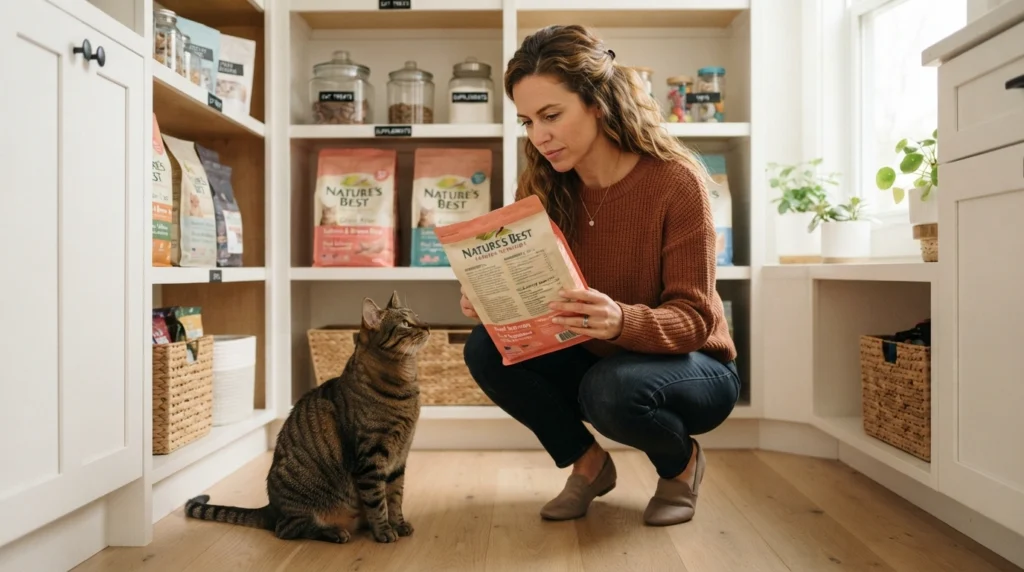
Once urgent health problems have been ruled out, choosing food becomes much easier.
Use this practical checklist:
Step 1: Confirm Nutritional Adequacy
Look for an appropriate complete-and-balanced statement.
Step 2: Match the Life Stage
Choose a diet intended for your cat’s current nutritional stage.
Step 3: Check Calories
Compare calorie content and follow feeding guidance.
Step 4: Consider Moisture
Wet food can contribute substantial dietary water, while dry food can be convenient for many households.
Step 5: Watch Body Condition
Do not judge portions solely by how much your cat wants to eat.
Step 6: Consider Medical Needs
If your cat has a diagnosed condition, ask your veterinarian whether a therapeutic diet is appropriate.
Step 7: Introduce Changes Gradually
Sudden dietary changes can cause digestive upset or food refusal in some cats. A gradual transition is often more practical than abruptly replacing the old diet.
How to Monitor Whether a Diet Is Working
Choosing a diet is not the end of the process.
Monitor your cat regularly.
Useful observations include:
- Body weight
- Body condition
- Appetite
- Stool consistency
- Vomiting
- Water intake
- Energy
- Coat condition
- Urination
- Changes in food preferences
A food may be nutritionally complete but still unsuitable for an individual cat if the cat refuses it, gains excessive weight, loses weight unexpectedly, or develops other concerning signs.
Cornell recommends working with a veterinarian to determine appropriate food, feeding methods, and healthy weight management for an individual cat.
Best Cat Food: Common Mistakes to Avoid
Even well-intentioned owners can make nutrition mistakes.
Avoid these common problems:
Choosing Marketing Over Nutrition
Words such as “natural,” “premium,” or “holistic” should not replace checking nutritional adequacy.
Ignoring Calories
A food can be complete and balanced while still providing too many calories for a sedentary cat.
Feeding Too Many Treats
Treats should fit into the overall feeding plan.
Making Frequent Food Changes
Constantly changing diets can make it difficult to identify what your cat tolerates well.
Assuming Expensive Means Better
Price alone does not determine nutritional adequacy.
Following Internet Homemade Recipes
A recipe that looks healthy may not provide the precise nutrient balance a cat requires.
Ignoring Sudden Appetite Changes
A cat that suddenly stops eating, repeatedly vomits, loses weight, or behaves unusually deserves veterinary attention.
When to Seek Emergency vs. Scheduled Veterinary Care
| Situation | Appropriate response |
|---|---|
| Cat is eating normally and maintaining a healthy body condition | Routine diet review |
| You want to switch foods | Gradual transition and routine veterinary guidance |
| Mild food preference issue | Discuss during routine care if persistent |
| Persistent vomiting or diarrhea | Veterinary appointment |
| Unexplained weight loss | Veterinary evaluation |
| Coughing with blood | Emergency veterinary assessment |
| Vomiting significant amounts of blood | Emergency veterinary assessment |
| Breathing difficulty | Immediate emergency care |
| Collapse or severe weakness | Immediate emergency care |
| Suspected toxin exposure | Immediate veterinary/poison-control guidance |
FAQs About the Best Cat Food
What is the best cat food for a healthy adult cat?
The best cat food for a healthy adult cat is a complete and balanced diet formulated for adult maintenance and appropriate for the cat’s calorie and nutritional needs. There is no single brand or formula that is ideal for every cat.
Is wet food better than dry food for cats?
Neither is automatically best for every cat. Wet food provides substantially more moisture, while dry food can be convenient and nutritionally complete. Many cats can do well with either or a combination when portions and total nutrition are appropriate.
How do I know whether cat food is nutritionally complete?
Look for the nutritional adequacy statement on the package. AAFCO explains that this statement identifies whether a product is complete and balanced for a specified life stage or intended use.
Should kittens eat adult cat food?
Kittens have different nutritional requirements during growth. Choose a food formulated for growth or an appropriate all-life-stages diet rather than assuming an adult-maintenance food is sufficient.
Is homemade cat food healthier?
Not necessarily. Homemade diets can become nutritionally deficient if they are not carefully formulated. If you want to prepare your cat’s food at home, discuss the recipe with your veterinarian or a qualified veterinary nutrition professional.
Should I change my cat’s food if it vomits?
Do not automatically blame the food. Vomiting can have many causes. If vomiting is repeated, severe, contains blood, or occurs with weakness or other concerning signs, contact a veterinarian promptly.
What if my cat is coughing up blood after eating?
Coughing up blood should not be treated as a normal food reaction. Hemoptysis can have respiratory or other causes and requires veterinary evaluation, particularly if breathing is difficult or the cat appears weak.
What if my cat vomits blood?
Vomiting blood, or hematemesis, can have multiple causes and should be taken seriously. If there is a significant amount of blood, repeated vomiting, weakness, pale gums, collapse, or other severe symptoms, seek emergency veterinary care.
Can a veterinarian help me choose cat food?
Yes. A veterinarian can consider your cat’s age, weight, body condition, lifestyle, medical history, and nutritional needs when helping you select an appropriate diet.
These links should point to genuinely relevant pages on your own website rather than unrelated pages created only to increase internal-link count.
Recommended External References
For supporting references, prioritize authoritative organizations and veterinary institutions.
- Cornell University College of Veterinary Medicine / Cornell Feline Health Center — useful for feline nutrition, feeding, weight, and general cat-health guidance.
- U.S. Food and Drug Administration (FDA) — useful for complete-and-balanced pet-food labeling and nutritional adequacy information.
- Association of American Feed Control Officials (AAFCO) — useful for understanding nutritional adequacy statements, life stages, feeding directions, and pet-food labels.
- Merck Veterinary Manual — useful for professional veterinary information concerning cat nutrition, commercial diets, homemade diets, and raw diets.
- ASPCA Animal Poison Control Center — appropriate as a supporting resource when discussing suspected poisoning or toxin exposure.
Conclusion
Choosing the best cat food is less about finding a universally perfect brand and more about matching a nutritionally complete diet to the individual cat.
Start with the nutritional adequacy statement, confirm the appropriate life stage, consider calories and moisture, monitor body condition, and ask your veterinarian about special dietary requirements.
Wet and dry foods can both fit into a healthy feeding plan. Homemade and raw diets require additional nutritional and safety considerations. Most importantly, food should never be used as a substitute for veterinary care when a cat is seriously ill.
If your cat is coughing up blood, vomiting blood, struggling to breathe, collapsing, or showing severe weakness, seek veterinary care immediately rather than waiting to change its diet.