Causes, Treatment, and When to Take Action
Cat coughing is one of those symptoms that can mean almost anything from a completely harmless, one-off reflex to an early sign of a chronic illness.
Because cats are naturally good at hiding discomfort, many owners don’t realize something is wrong until the coughing becomes frequent or severe.
Understanding what’s normal and what isn’t can make a real difference in catching problems early.
This guide covers everything you need to know about cat coughing: what causes it, how it’s treated, how to manage it at home, and the specific warning signs that mean it’s time to call your veterinarian.
Why Do Cats Cough?
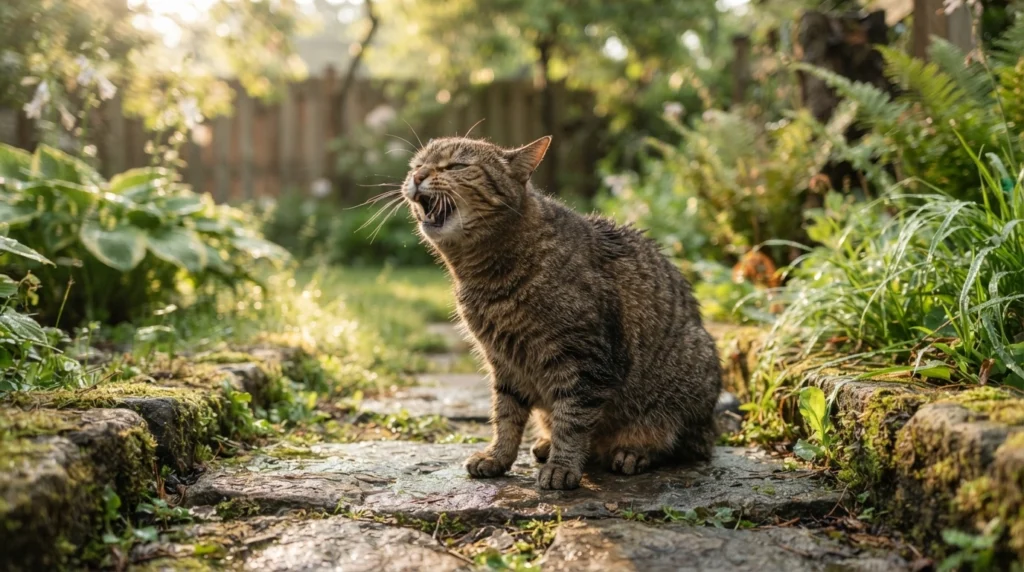
Coughing is a natural reflex designed to clear the airways of irritants, mucus, or foreign material. In cats, this reflex can be triggered by issues in the throat, lungs, airways, or even the heart.
Cat coughing isn’t a disease on its own it’s a symptom, which means the real goal is identifying what’s triggering it in the first place.
Some cats cough rarely and it resolves on its own. Others develop a chronic pattern that requires ongoing veterinary management. The key is paying attention to frequency, duration, and any additional symptoms that accompany the cough.
Types of Cat Coughing
Not all coughing sounds or behaves the same way. Recognizing the type can help narrow down the underlying cause before you even reach the vet’s office.
- Acute cough sudden onset, often triggered by irritants, foreign objects, or minor infections
- Chronic cough persists for weeks or months, often linked to asthma, bronchitis, or heart disease
- Productive cough brings up mucus, fluid, or hairball material
- Non-productive cough dry and hacking, with nothing expelled
- Paroxysmal cough comes in sudden, intense fits, sometimes associated with asthma attacks
Identifying which category your cat’s coughing falls into gives your veterinarian a valuable starting point for diagnosis.
Common Causes of Cat Coughing
There are numerous potential triggers behind cat coughing, ranging from mild to serious.
Hairballs
One of the most familiar causes of cat coughing is hairball buildup. As cats groom, they swallow loose fur that can accumulate in the stomach.
When it can’t pass through digestion normally, the body attempts to expel it through coughing and retching.
Feline Asthma
Feline asthma is a chronic condition involving inflammation and narrowing of the airways. It’s one of the leading causes of persistent cat coughing, often accompanied by wheezing, rapid breathing, or open-mouth breathing during flare-ups.
Respiratory Infections
Viral infections like feline herpesvirus and calicivirus, along with bacterial infections, are common causes of cat coughing, especially in kittens, shelter cats, and multi-cat households.
These infections often bring along sneezing, nasal discharge, and watery eyes.
Heartworm Disease
Heartworm disease, while less common in cats than dogs, can cause chronic cat coughing due to lung and airway inflammation. It’s a serious condition that requires preventive care and prompt veterinary attention if suspected.
Chronic Bronchitis
Long-term airway inflammation, known as chronic bronchitis, can cause a persistent dry cough. This condition often overlaps with asthma symptoms and requires long-term management.
Foreign Objects or Environmental Irritants
Grass, string, dust, smoke, or strong household chemicals can all trigger sudden cat coughing as the airway tries to expel the irritant. In these cases, the coughing typically appears out of nowhere and resolves once the trigger is removed.
Heart Disease
In older cats, coughing can sometimes be linked to fluid buildup around the lungs caused by underlying heart conditions. This type of cat coughing tends to worsen with activity and may appear alongside fatigue or reduced appetite.
“Coughing that persists beyond a few days, or that occurs alongside breathing difficulty, should always be evaluated by a veterinarian.” — American Veterinary Medical Association
How Vets Diagnose the Cause of Cat Coughing
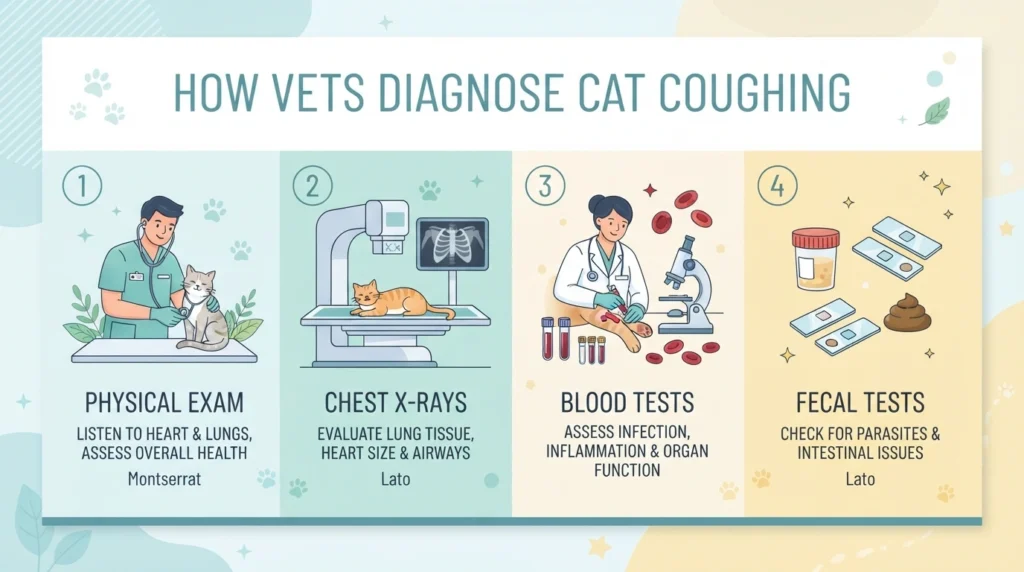
Because so many conditions can cause cat coughing, veterinarians typically follow a structured diagnostic approach:
- Physical examination — listening to the heart and lungs for abnormal sounds
- Chest X-rays — to detect fluid, inflammation, or structural abnormalities
- Bloodwork — to check for infection, parasites, or organ function issues
- Heartworm testing — particularly for cats with outdoor exposure
- Fecal examination — to rule out intestinal parasites contributing to symptoms
- Bronchoscopy or airway wash — used in chronic or unclear cases for a closer look at the airways
This process helps veterinarians rule out life-threatening causes first before settling on a treatment plan.
Treatment Options for Cat Coughing
Treatment for cat coughing depends entirely on the underlying cause, which is why an accurate diagnosis matters so much. Common treatment approaches include:
- Hairball control — dietary adjustments or supplements to reduce fur ingestion
- Bronchodilators or corticosteroids — used to manage asthma and chronic bronchitis
- Antibiotics — prescribed for confirmed bacterial respiratory infections
- Antiparasitic medication — used for heartworm-related cases
- Environmental management — reducing allergens, smoke, or irritants in the home
- Heart medication — prescribed when coughing is linked to cardiac issues
Never give a cat human cough medication or over-the-counter remedies without veterinary guidance, as many common ingredients are toxic to cats.
When Cat Coughing Becomes an Emergency
While occasional coughing is usually not a concern, certain accompanying symptoms indicate a medical emergency. Seek immediate veterinary care if you notice:
- Labored or rapid breathing
- Blue or pale gums
- Coughing that persists for more than a few days
- Sudden lethargy or collapse
- Significant weight loss
- Coughing up blood
- Open-mouth breathing at rest
“Any cat showing signs of respiratory distress alongside coughing needs urgent veterinary evaluation this combination can indicate a life-threatening condition.” — Cornell Feline Health Center
Home Care Tips for Mild Cat Coughing
If your veterinarian has ruled out serious causes, a few supportive steps can help reduce mild, occasional cat coughing:
- Brush your cat regularly to minimize loose fur ingestion
- Switch to a low-dust, fragrance-free litter
- Avoid smoking or using aerosol sprays indoors
- Use an air purifier to reduce airborne allergens
- Keep a symptom log noting frequency, duration, and triggers
These steps support recovery but shouldn’t replace a proper veterinary diagnosis for ongoing symptoms.
Preventing Cat Coughing Long-Term
While not every cause is preventable, consistent care significantly reduces the risk of chronic cat coughing:
- Schedule routine veterinary wellness exams
- Keep vaccinations current to prevent respiratory infections
- Use year-round heartworm and parasite prevention
- Reduce exposure to smoke, dust, and strong chemical odors
- Monitor senior cats closely for early signs of heart-related conditions
Preventive care remains the most reliable way to catch respiratory issues before they progress into something more serious.
Frequently Asked Questions
Is occasional cat coughing normal?
Yes, occasional coughing especially related to hairballs can be normal. However, frequent or worsening coughing should always be evaluated by a veterinarian.
How long should I wait before seeing a vet for cat coughing?
If coughing lasts more than 2–3 days, worsens, or is paired with breathing difficulty or lethargy, schedule a veterinary visit as soon as possible.
Can cat coughing be caused by stress?
Stress doesn’t directly cause coughing, but it can weaken immunity, making cats more susceptible to respiratory infections that lead to coughing.
Is cat coughing always related to asthma?
No. While asthma is a common cause, coughing can also result from hairballs, infections, heart disease, allergies, or foreign objects. A vet visit is needed to confirm the exact cause.
Can kittens experience coughing too?
Yes, kittens are particularly prone to upper respiratory infections, which often cause coughing along with sneezing and nasal discharge.
Conclusion
Cat coughing can range from a harmless, occasional reflex to a sign of a serious underlying condition like asthma, infection, or heart disease.
Paying attention to the frequency, sound, and accompanying symptoms of the cough is the best way to determine whether it warrants a wait-and-watch approach or an immediate veterinary visit.
When in doubt especially if breathing difficulty, lethargy, or appetite changes are involved consulting a veterinarian promptly gives your cat the best chance at a fast, effective recovery.
References
- American Veterinary Medical Association (AVMA) Feline Respiratory Disease:
- Cornell Feline Health Center Respiratory Health in Cats:
- VCA Animal Hospitals Coughing in Cats:
- American Association of Feline Practitioners (AAFP):
- American Heartworm Society Heartworm in Cats:
- ASPCA Cat Health and Wellness Resources: