Coughing Cat: Causes, Symptoms, and When to Worry
If you have noticed your coughing cat making strange, repetitive sounds, you are probably wondering whether it is something harmless or a sign of a bigger health problem.
Cats do not cough as often as dogs or humans, so when a coughing cat appears in your home, it is natural to feel concerned.
This guide explains everything you need to know about a coughing cat, from common triggers to home remedies and the point at which professional veterinary care becomes essential.
A coughing cat can be confusing to identify at first because the sound often resembles gagging, retching, or even a hairball attempt.
Understanding the difference is the first step toward helping your feline companion feel better and stay healthy for years to come.
Cats are naturally good at hiding discomfort, which is an instinct passed down from their wild ancestors who needed to appear strong to avoid predators.
This means that by the time you actually notice repeated coughing, the underlying issue may have already been present for some time.
What Does a Coughing Cat Sound Like?

A coughing cat typically crouches low, extends its neck, and produces a harsh, dry sound that can be mistaken for vomiting.
Unlike a hairball episode, true coughing usually does not bring up food or liquid. The sound is often short, repetitive, and forceful, and it may be followed by a gagging motion or a small amount of mucus.
Many pet owners describe the noise of a coughing cat as similar to a human clearing their throat, only sharper and more abrupt. Recognizing this pattern helps you separate genuine coughing from other common feline behaviors like hacking up hairballs or sneezing.
“A cough is the body’s natural reflex to clear the airway of irritants, mucus, or foreign material, and in cats it should never be dismissed as trivial.” Veterinary respiratory health literature
Common Causes Behind a Coughing Cat
There are several medical and environmental reasons why your coughing cat might be experiencing this symptom. Identifying the root cause is essential for proper treatment and long-term comfort.
Feline Asthma
Feline asthma is one of the leading reasons for chronic coughing in cats. It happens when the airways become inflamed and narrowed, making breathing difficult.
Affected cats often show wheezing, rapid breathing, and episodes of coughing that can appear suddenly, sometimes triggered by dust, pollen, or seasonal changes.
Asthma tends to affect younger to middle-aged cats more frequently, and certain breeds may show a slightly higher predisposition, though it can develop in any cat regardless of age or background.
Hairballs and Digestive Irritation
While hairballs are not technically a cough, they are frequently mistaken for one. A coughing cat trying to expel a hairball will hunch and retch, but this is different from a true respiratory cough because it usually results in the hairball being expelled.
Respiratory Infections
Viral and bacterial infections, such as feline herpesvirus or calicivirus, can inflame the throat and lungs, resulting in additional symptoms like sneezing, nasal discharge, watery eyes, and lethargy alongside the cough.
Kittens and senior cats are typically more vulnerable to these infections because their immune systems are either still developing or beginning to weaken with age.
Multi-cat households should be especially cautious, since many of these infections spread easily through shared litter boxes, food bowls, and close contact.
Heartworm Disease
Heartworm disease is a lesser-known but serious cause of chronic coughing. Even a small number of worms can cause significant lung damage, a condition sometimes called heartworm-associated respiratory disease, especially in cats living in mosquito-prone areas.
Unlike dogs, cats are considered atypical hosts, so even a single worm can trigger a disproportionately severe inflammatory reaction in the lungs.
Foreign Objects or Irritants
Household dust, smoke, strong perfumes, aerosol sprays, or a foreign object lodged in the throat can all trigger sudden coughing episodes.
A cat exposed to these irritants often shows noticeable relief once removed from the environment, which can itself be a useful clue for pinpointing the trigger.
Heart Disease
In some cases, an enlarged heart can press against the airway or cause fluid buildup in the lungs, a condition known as pulmonary edema, leading to fatigue, reduced appetite, or labored breathing alongside the cough.
Because heart-related coughing can escalate quickly, it is often considered one of the more urgent causes to rule out during a veterinary examination.
Symptoms to Watch Alongside a Coughing Cat
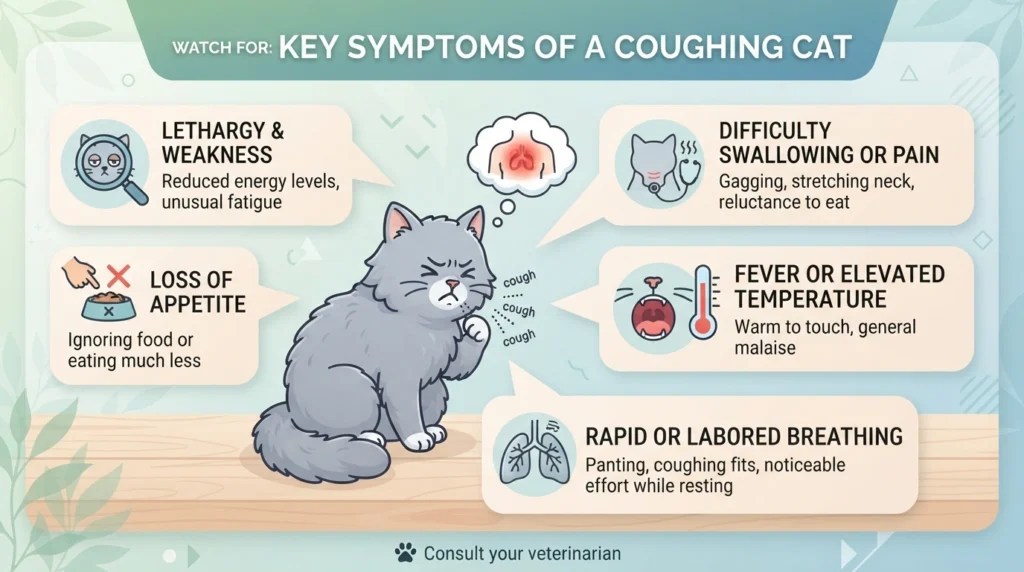
This symptom rarely shows up in isolation. Watching for accompanying signs helps determine the severity of the underlying issue.
- Wheezing or noisy breathing
- Open-mouth breathing or panting
- Nasal or eye discharge
- Loss of appetite or weight loss
- Lethargy or reduced activity
- Blue-tinged gums, indicating oxygen deprivation
- Frequent gagging without producing a hairball
If your cat shows any combination of these symptoms, especially open-mouth breathing or bluish gums, this should be treated as an emergency situation and warrants an immediate trip to the nearest veterinary clinic.
How Veterinarians Diagnose a Coughing Cat
When you bring a cat with a persistent cough to the veterinarian, the diagnostic process usually begins with a thorough physical examination, including listening carefully to the lungs and heart with a stethoscope. Veterinarians may also recommend the following steps to pinpoint the exact cause.
Diagnostic Tools Commonly Used
- Chest X-rays to check for fluid, masses, or lung changes
- Bloodwork to rule out infections or heartworm disease
- Fecal examination to detect parasites
- Bronchoscopy for a closer look at the airway in chronic cases
- Echocardiogram if heart disease is suspected
A cat that does not respond to initial treatment may require more advanced testing, such as a CT scan or referral to a veterinary specialist, to reach an accurate diagnosis.
Home Care Tips for a Coughing Cat
While professional veterinary care is essential for persistent symptoms, there are supportive steps you can take at home to ease discomfort in mild cases.
- Use an air purifier to reduce dust and allergens indoors
- Avoid scented candles, sprays, or strong cleaning chemicals near your cat
- Switch to dust-free, low-tracking litter
- Keep your cat’s weight in a healthy range to reduce breathing strain
- Ensure fresh water is always available to support respiratory health
- Groom your cat regularly to minimize hairball-related coughing
These small adjustments can make a noticeable difference when a cat is dealing with mild environmental triggers, though they are not a substitute for veterinary diagnosis when symptoms persist beyond a few days.
When Should You Take a Coughing Cat to the Vet?
Not every cough requires an emergency visit, but certain warning signs mean you should not wait. Your cat needs urgent veterinary attention if you notice:
- Coughing that lasts longer than a few days
- Difficulty breathing or rapid breathing at rest
- Blue or pale gums
- Noticeable weight loss
- Coughing accompanied by fever or lethargy
- Coughing up blood or unusual discharge
According to veterinary guidance, even a seemingly minor cough that persists beyond a week deserves professional evaluation, since early intervention often leads to better outcomes for chronic respiratory conditions.
Treatment Options for a Coughing Cat
Treatment depends entirely on the underlying cause identified during diagnosis. Common treatment paths for a coughing cat include the following.
Medication-Based Treatment
Veterinarians may prescribe bronchodilators or corticosteroids for asthma-related coughing, antibiotics for bacterial infections, or antiparasitic medication for heartworm-related cases.
Environmental Management
For cats with allergy-triggered coughing, reducing exposure to dust, smoke, and strong fragrances often improves symptoms significantly over time.
Surgical or Advanced Intervention
In rare cases involving foreign objects, tumors, or severe heart disease, more advanced procedures may be necessary to resolve the underlying condition permanently.
Recovery times vary widely depending on the procedure, and most veterinarians will recommend a follow-up examination a few weeks later to confirm the airway has healed properly.
Preventing Future Coughing Episodes in Cats
Prevention plays a major role in reducing the likelihood of chronic respiratory problems developing in the first place. Regular veterinary checkups, up-to-date vaccinations, parasite prevention, and a clean living environment all contribute to long-term respiratory health.
Feeding a balanced diet and maintaining a healthy weight also reduce strain on the heart and lungs, which lowers the risk of future episodes.
Routine grooming deserves special mention, since brushing your cat several times a week significantly reduces the amount of loose fur that gets swallowed and later triggers hairball-related gagging.
For households with multiple pets, keeping vaccination schedules current for every animal helps prevent the spread of contagious respiratory infections that could otherwise pass from one cat to another.
Finally, scheduling an annual wellness exam, even when your cat appears perfectly healthy, allows your veterinarian to catch subtle changes in lung sounds or heart rhythm long before they progress into a more serious problem.
Frequently Asked Questions
Is it normal for a cat to cough occasionally?
Occasional coughing, especially related to hairballs, can be normal. However, if your coughing cat shows this behavior frequently or alongside other symptoms, it is worth scheduling a veterinary checkup.
Can stress cause a cat to cough?
Stress itself does not directly cause coughing, but it can weaken the immune system, making a cat more susceptible to respiratory infections that lead to coughing episodes.
How long can a coughing cat go without treatment?
There is no safe timeline for ignoring persistent symptoms. If coughing continues for more than a few days or worsens, veterinary evaluation should not be delayed.
Is feline asthma curable?
Feline asthma is generally a manageable, lifelong condition rather than a curable one. With proper medication and environmental control, most cats live comfortably despite the diagnosis.
Can a coughing cat spread illness to other pets?
If the underlying cause is a viral or bacterial infection, it is possible for the illness to spread to other cats in the household, so isolation may be recommended until diagnosis is confirmed.
Conclusion
A coughing cat can be a source of worry, but understanding the possible causes, associated symptoms, and treatment options empowers you to respond appropriately.
While mild, occasional coughing may not be an emergency, persistent or severe symptoms in a coughing cat always warrant a veterinary visit.
Paying close attention to your cat’s breathing patterns, energy levels, and overall behavior will help you catch potential health issues early and give your feline companion the best chance at a long, comfortable life.
References
- Cornell Feline Health Center, “Feline Asthma,” Cornell University College of Veterinary Medicine.
- American College of Veterinary Internal Medicine (ACVIM), Consensus Statement on Feline Respiratory Disease.
- American Heartworm Society, “Heartworm in Cats.”
- VCA Animal Hospitals, “Coughing in Cats.”
- Merck Veterinary Manual, “Respiratory Diseases of Cats.”