Notice your cat sneezing and coughing more than usual lately? You’re not imagining it, and you’re definitely not alone.
While these two symptoms can occasionally show up on their own without any real concern, a cat sneezing and coughing together.
Especially if it seems to happen more during certain times of year or in certain rooms of your home, often points to an environmental trigger or seasonal pattern rather than a random coincidence.
This guide takes a closer look at the seasonal, household, and environmental reasons behind this specific combination of symptoms, how to identify what’s actually triggering it, practical remedies you can try at home, and the signs that mean it’s time to loop in your veterinarian.
Why Environmental Triggers Matter for Cat Sneezing and Coughing
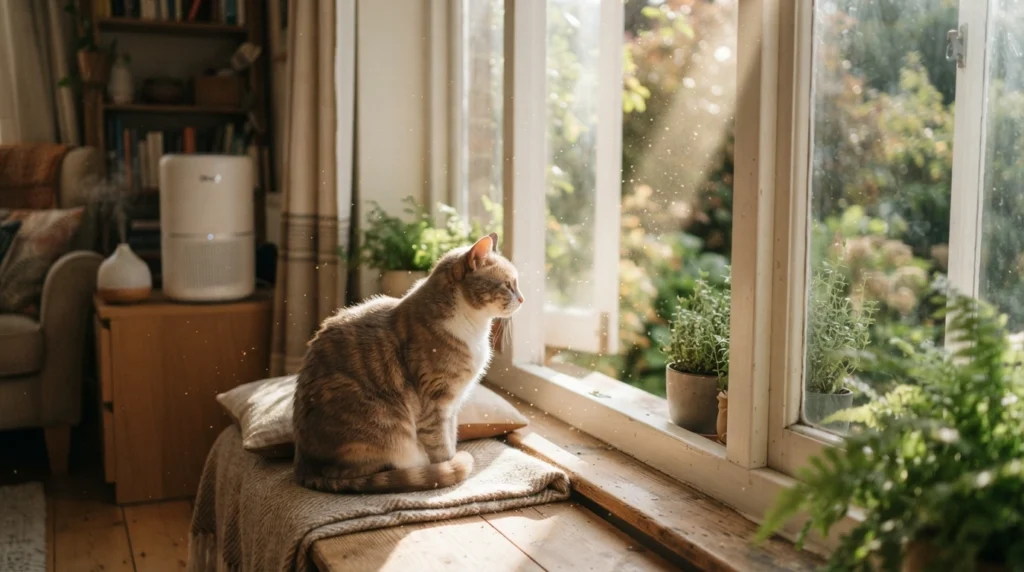
Cats have a far more sensitive respiratory system than most owners realize. Their nasal passages and airways can react to particles in the air that humans barely notice, which is why household changes, seasonal shifts, and even cleaning routines can trigger a sudden bout of sneezing and coughing.
Unlike a viral infection, which tends to come with additional symptoms like lethargy or reduced appetite, environmental triggers often cause symptoms that appear and disappear depending on your cat’s surroundings.
If the sneezing and coughing seem to ease up when your cat is in a different room, or worsen right after cleaning, that’s a strong clue pointing toward an irritant rather than an illness.
If your cat’s sneezing and coughing seem to follow a pattern tied to a specific room, activity, or time of year, an environmental trigger is more likely than an infection.
This is a genuinely useful distinction because it changes how you approach treatment. An infection typically needs veterinary diagnosis and, in some cases, medication to run its course, while an environmental trigger can often be resolved simply by identifying and removing the source.
Taking a few days to observe the pattern before assuming the worst can save you both stress and an unnecessary trip to the vet.
Seasonal Causes of Cat Sneezing and Coughing
Just like people, cats can experience seasonal sensitivities that flare up at predictable times of year.
Spring and Pollen Season
During spring, tree and grass pollen levels rise significantly, and even indoor cats can be affected by cat sneezing and coughing if windows are left open or pollen is tracked inside on clothing and shoes.
Summer Mold and Humidity
Warm, humid conditions can encourage mold growth in bathrooms, basements, or damp corners, which may irritate a cat’s airway and trigger both sneezing and coughing.
Fall Dust and Ragweed
As homes are closed up for cooler weather, dust that has accumulated over summer gets stirred up more, and ragweed pollen remains a common outdoor trigger well into autumn.
Winter Heating and Dry Air
Indoor heating systems dry out the air significantly during winter, which can irritate a cat’s nasal passages and throat, leading to more frequent sneezing and occasional coughing, even without any allergens present.
Household Triggers Behind Cat Sneezing and Coughing
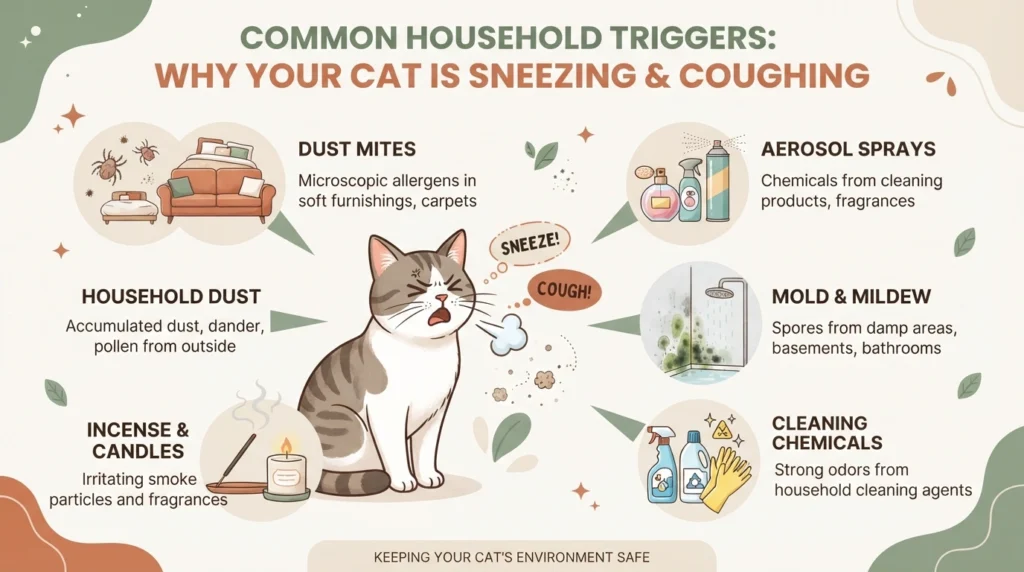
Beyond seasonal changes, everyday household items are one of the most overlooked causes of this symptom combination.
Common household irritants include:
- Scented candles and wax melts
- Aerosol air fresheners and room sprays
- Strong-smelling cleaning products
- Cigarette or vape smoke
- Dust from unwashed bedding or carpets
- Certain scented cat litters
- Fresh paint or new furniture fumes
Switching to unscented, cat-safe alternatives for cleaning products and litter is often enough to noticeably reduce symptoms within a week or two, particularly if the sneezing and coughing were tied to a recently introduced product.
Can Cat Litter Cause Sneezing and Coughing?
Yes, and this is one of the most commonly missed triggers. Clay-based and heavily scented litters can release fine dust particles every time your cat digs or covers their waste, which is inhaled directly and can irritate the nasal passages and throat with repeated exposure.
Cats with pre-existing sensitivities, such as mild asthma, tend to be especially reactive to dusty litter.
If you suspect litter might be the cause, switching to a low-dust, unscented, or natural alternative like paper-based or walnut-based litter for a trial period of two to three weeks can help confirm whether it’s the source of the irritation.
It’s also worth paying attention to how you scoop and refill the litter box. Pouring litter from a height, shaking the container vigorously, or using a scoop that stirs up a cloud of fine particles can all increase your cat’s exposure right at the moment they’re about to use the box.
Pouring gently and scooping with slower, more controlled movements can meaningfully cut down on the amount of dust released into the air. cat sneezing and coughing
Medical Causes That Can Still Be Behind Cat Sneezing and Coughing
While this guide focuses heavily on environmental and seasonal triggers, it’s worth acknowledging that medical causes remain possible and shouldn’t be ruled out entirely, especially if symptoms don’t improve after removing potential irritants.
- Upper respiratory infections, such as feline herpesvirus or calicivirus
- Feline asthma, which can be aggravated further by seasonal allergens
- Chronic sinus infections that flare up with weather changes
- Dental disease affecting the nasal passages
- Nasal polyps, more common in middle-aged and senior cats
If home adjustments don’t lead to improvement within a couple of weeks, it’s a strong sign that an underlying medical cause needs to be ruled out by a veterinarian. cat sneezing and coughing
How to Identify What’s Triggering Your Cat’s Symptoms
Pinpointing the exact cause of cat sneezing and coughing often takes a bit of detective work, especially when multiple potential triggers exist in the same home.
Keep a Simple Symptom Log
Note the date, time, location in the house, and any recent changes, like new cleaning products or a change in litter, whenever symptoms occur.
Try Elimination One Change at a Time
Remove one potential trigger, such as switching litter or avoiding scented candles, and monitor for at least a week before changing anything else, so you can clearly identify what made a difference.
Watch for Seasonal Patterns
If symptoms consistently appear during the same months each year, that’s a strong indicator of a seasonal allergen rather than a permanent household issue. cat sneezing and coughing
Consider Your Cat’s Access to the Outdoors
Cats that spend time outside, even briefly on a balcony or porch, have more direct exposure to pollen, mold spores, and other seasonal allergens than strictly indoor cats.
If your cat goes outside regularly and symptoms worsen during specific seasons, limiting outdoor time on high pollen count days can be a simple way to test whether outdoor exposure is playing a role.
Home Remedies for Mild Cat Sneezing and Coughing
If your cat’s symptoms are mild and you’ve identified a likely environmental cause, a few simple steps can help provide relief while things settle.
- Run a HEPA air purifier in rooms your cat spends the most time in
- Vacuum and dust regularly, especially soft furnishings and carpets
- Wash pet bedding weekly in unscented detergent
- Keep windows closed during high pollen days
- Switch to low-dust, unscented cat litter
- Use a cool-mist humidifier during dry winter months
These remedies work best for mild, environmentally triggered symptoms and aren’t a substitute for veterinary care if symptoms are severe or persistent.
When Cat Sneezing and Coughing Needs a Vet Visit
Even with a strong seasonal or household explanation, certain signs mean it’s time to stop troubleshooting at home and see a veterinarian. cat sneezing and coughing
Contact your vet if you notice:
- Thick yellow, green, or bloody nasal discharge
- Sneezing or coughing lasting more than two weeks
- Noticeable lethargy or reduced appetite
- Labored or open-mouth breathing
- Swelling around the face or eyes
- Symptoms that don’t improve after removing likely triggers
Veterinary professionals generally agree that symptoms lasting beyond two weeks, even if mild, warrant a proper examination rather than continued at-home monitoring.
Frequently Asked Questions
Why does my cat sneeze and cough more in certain seasons?
Seasonal pollen, mold, and dry indoor air from heating systems can all irritate a cat’s respiratory system at different times of year, leading to more frequent sneezing and coughing during specific months.
Can changing my cat’s litter really stop the sneezing and coughing?
Yes, dusty or heavily scented litter is a common irritant, and switching to a low-dust, unscented alternative often leads to noticeable improvement within one to two weeks if litter was the cause.
Is cat sneezing and coughing from allergies dangerous?
Mild allergy-related symptoms usually aren’t dangerous on their own, but chronic exposure to irritants can worsen conditions like asthma over time, so addressing the trigger is still important. cat sneezing and coughing
How do I know if it’s allergies or an infection?
Allergy-related symptoms tend to fluctuate with environment and season, while infections usually come with additional signs like lethargy, reduced appetite, or thick nasal discharge that don’t improve with environmental changes.
Can indoor cats really be affected by seasonal pollen?
Yes, pollen can enter homes through open windows, doors, or even on clothing and shoes, meaning indoor cats aren’t fully protected from seasonal allergens. cat sneezing and coughing
Should I use an air purifier for my cat’s sneezing and coughing?
A HEPA air purifier can help reduce airborne dust, pollen, and other particles, making it a reasonable and generally safe addition to your home if your cat’s symptoms seem tied to air quality.
Conclusion
A cat sneezing and coughing together doesn’t always mean something serious is wrong, especially when the pattern lines up with a specific season, household product, or type of litter. Identifying and removing the likely trigger often brings noticeable relief within a couple of weeks.
That said, persistent, worsening, or severe symptoms should never be brushed off as “just allergies,” and a veterinary visit is always the safer choice when home adjustments aren’t making a difference.
Paying close attention to timing and patterns will help you get to the bottom of it faster and keep your cat breathing comfortably all year round.
References
- Cornell Feline Health Center “Upper Respiratory Infections in Cats,” Cornell University College of Veterinary Medicine
- American Veterinary Medical Association (AVMA) “Respiratory Disease in Cats”
- VCA Animal Hospitals “Allergies in Cats”
- American Association of Feline Practitioners (AAFP) “Feline Respiratory Disease Guidelines”
- Merck Veterinary Manual “Respiratory Diseases of Cats”
- ASPCA “Common Cat Health Problems”
- PetMD “Sneezing and Nasal Discharge in Cats”
- Asthma and Allergy Foundation of America (AAFA) “Pet Allergies and Seasonal Triggers”