Cat Making Coughing Sound: Causes, Signs & What to Do
Cat making coughing sound can be alarming, especially when the noise appears suddenly or keeps happening repeatedly. A cat may cough because something has irritated its airway, but coughing can also occur with respiratory infections, asthma, parasites, inflammation, foreign material, or other conditions affecting the lungs and airways.
A cough is a protective reflex that helps clear irritating material or secretions from the respiratory tract. Veterinary references describe coughing as a nonspecific sign that can occur with problems anywhere from the larynx and trachea to the lungs.
The important point is that the sound alone cannot tell you exactly what is wrong. A cat may make a hacking, dry, raspy, or wet-sounding noise, and some episodes can even be confused with gagging, vomiting, or a hairball.
Quick Take: A cat making a coughing sound repeatedly should not automatically be assumed to have a hairball. Persistent coughing deserves veterinary attention.
This guide explains what different coughing sounds may mean, common causes, warning signs, how veterinarians investigate coughing, and what you can safely do when your cat develops a cough.
What Does a Cat Cough Sound Like?
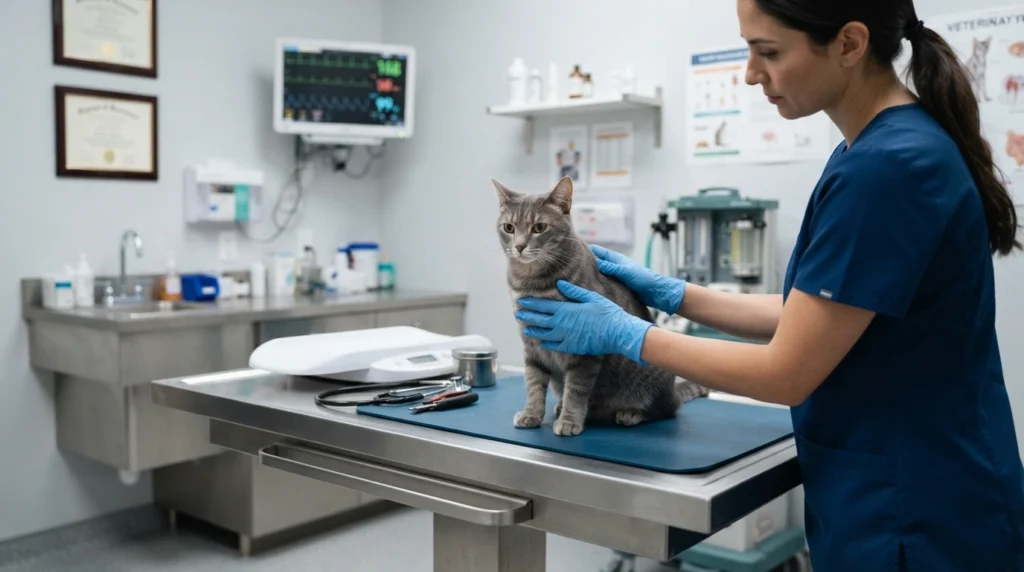
A cat making coughing sound usually involves a sudden, forceful expulsion of air. Your cat may crouch down, extend its neck, make a hacking or raspy noise, and contract its abdominal muscles.
Coughs can be:
- Dry and harsh
- Soft or raspy
- Deep
- Hacking
- Wet or productive
- Repeated in short episodes
Merck Veterinary Manual explains that coughs can be dry or productive and that characteristics such as pitch and quality may provide clues about the respiratory problem.
However, owners should avoid trying to diagnose a specific disease solely from the sound.
Why Does My Cat Sound Like It Is Hacking?
A hacking sound may occur when the airways are irritated. Inflammatory airway conditions, respiratory infections, foreign material, and other respiratory disorders can trigger coughing.
Some cats with asthma appear to crouch with their neck extended while coughing or wheezing. Cornell University’s Feline Health Center describes coughing, hacking, wheezing, rapid breathing, and open-mouth breathing among possible signs of feline asthma.
Is It Coughing or a Hairball?
This is one of the most common questions cat owners ask.
A cat making coughing sound may crouch low, extend its neck, and repeatedly force air out of the lungs without producing anything. A cat attempting to vomit may show retching and abdominal contractions and may eventually produce stomach contents or a hairball.
Because the distinction can be difficult to make from a brief episode, recording a video can be useful for your veterinarian.
Quick Take: If your cat repeatedly assumes a crouched position and forcefully hacks without producing a hairball, consider respiratory coughing rather than assuming it is a hairball.
Why Is My Cat Making Coughing Sound?
There are numerous reasons a cat may develop a cough. Some are relatively mild, while others require prompt or emergency veterinary treatment.
The major categories include:
- Airway irritation
- Respiratory infections
- Feline asthma
- Chronic bronchitis
- Parasites
- Foreign material
- Pneumonia
- Smoke or chemical exposure
- Lung or airway abnormalities
- Other systemic or cardiovascular conditions
Merck groups respiratory disease causes into categories including inflammatory or infectious disease, cardiac disease, pleural-space disease, and congenital abnormalities.
Let’s look at the most important possibilities.
Common Causes of Cat Coughing
Airway Irritation
A temporary irritant can cause a cat to cough.
Potential irritants include:
- Dust
- Smoke
- Aerosol sprays
- Strong cleaning-product fumes
- Powdery litter
- Mold
- Other airborne particles
Cats have sensitive respiratory systems, and inhaled irritants can inflame the airways.
Cornell lists tobacco smoke, dusty cat litter, household cleaning vapors, aerosol sprays, mold, mildew, dust mites, candles, and fireplace smoke among suspected triggers for feline asthma.
If your cat begins coughing after exposure to a strong airborne irritant, remove the source and monitor the cat closely. If coughing continues or breathing becomes abnormal, contact a veterinarian.
Respiratory Infection
Respiratory infections can produce coughing and other respiratory signs.
Depending on the infection and affected area, a cat making coughing sound also develop:
- Sneezing
- Nasal discharge
- Watery eyes
- Fever
- Reduced appetite
- Lethargy
- Mouth ulcers
Feline respiratory disease can involve viruses and other organisms. Merck identifies feline herpesvirus and feline calicivirus among the principal causes of feline respiratory disease complex, with other organisms potentially contributing to or complicating infections.
A cough accompanied by other signs of illness deserves veterinary assessment, particularly if symptoms are persistent or worsening.
Feline Asthma
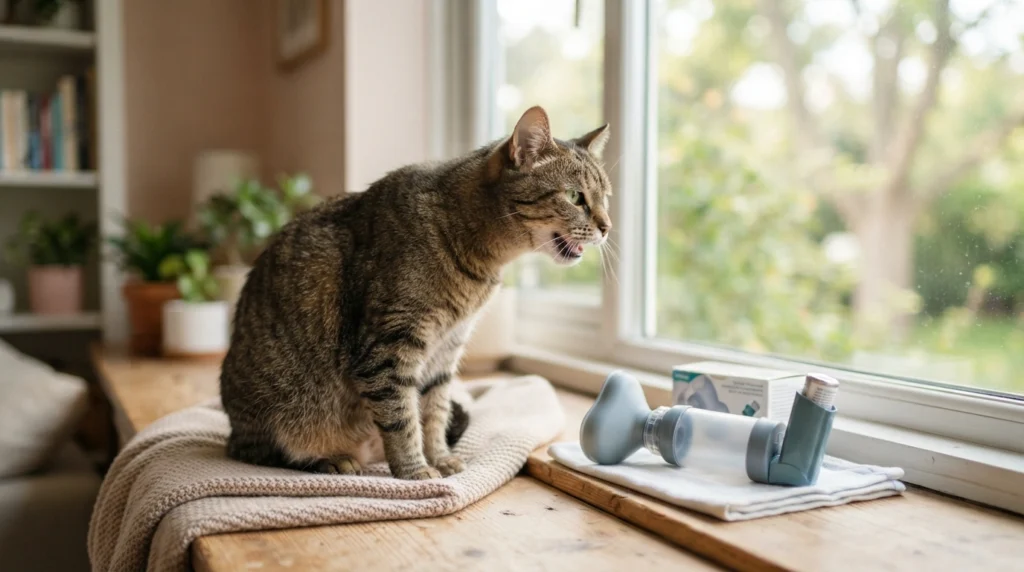
Feline asthma is an important cause of coughing and breathing problems in cats.
Cornell describes asthma as a disease of the lower airways associated with inflammation, airway narrowing, and mucus accumulation. Cats may show coughing or hacking, wheezing, rapid breathing, open-mouth breathing, or respiratory distress.
Asthma can range from relatively mild recurring symptoms to severe respiratory crises.
Possible signs include:
- Recurrent coughing
- Wheezing
- Rapid breathing
- Difficulty breathing
- Crouching close to the ground
- Extending the neck during an episode
- Open-mouth breathing
Asthma cannot be reliably diagnosed from coughing alone. Veterinarians may use the medical history, examination, chest X-rays, and other testing while ruling out conditions that produce similar symptoms.
Chronic Bronchitis
Inflammation of the bronchi can result in persistent coughing.
Bronchitis affects the larger airways and can cause coughing and breathing abnormalities. Merck notes that inflammation of structures including the larynx, trachea, and bronchi can result in coughing and potentially breathing difficulty.
A cat making coughing sound with a recurring cough should therefore be evaluated rather than repeatedly treated at home without knowing the cause.
Parasites
Some parasites can affect a cat’s respiratory system.
Lungworms and other parasitic infections can produce respiratory signs that resemble asthma or other airway disorders.
Cornell notes that lungworm infection is among the conditions veterinarians may need to rule out when investigating asthma-like respiratory symptoms.
Risk depends on factors such as outdoor access, hunting behavior, geographic location, and exposure to infected hosts.
Foreign Material
Sometimes a cat may inhale or aspirate foreign material.
This can irritate or obstruct the airway and produce sudden coughing.
A possible airway problem deserves particular attention if the coughing:
- Started suddenly
- Occurred immediately after eating or playing
- Is accompanied by breathing difficulty
- Continues intensely
- Is associated with distress
Do not blindly place your fingers into your cat’s throat while attempting to find an object. An animal with a significant airway obstruction needs professional veterinary care.
Pneumonia
Pneumonia affects lung tissue and can cause significant respiratory illness.
A cat making coughing sound with pneumonia may have coughing, rapid breathing, difficulty breathing, fever, lethargy, weakness, or reduced appetite.
Not every cat will show every sign.
Veterinarians may use chest radiographs and other diagnostic tests to evaluate suspected lower respiratory disease. Merck identifies chest X-rays as an important diagnostic tool for cats with lower respiratory signs.
Smoke and Chemical Exposure
Smoke and irritating fumes can negatively affect the respiratory tract.
Potential sources include:
- Cigarette smoke
- Fireplace smoke
- Aerosol products
- Strong cleaning chemicals
- Paint fumes
- Fragrances
- Other airborne irritants
Cornell specifically identifies tobacco smoke, household cleaning vapors, aerosol sprays, candles, and fireplace smoke as suspected asthma triggers.
Keeping your cat’s environment well ventilated and minimizing respiratory irritants is a sensible preventive measure.
Lung or Airway Disease
A cat making coughing sound can indicate a more complicated problem involving the lungs or airways.
Respiratory disease can result from infection, inflammation, parasites, tumors, trauma, inhaled irritants, congenital abnormalities, and other conditions.
This is why the duration and pattern of cat making coughing sound matter.
A cat that coughs once after inhaling a little dust is very different from a cat coughing several times every day for weeks.
Cardiovascular or Other Conditions
Although cat making coughing sound generally points veterinarians toward the respiratory system, respiratory signs can sometimes be associated with other body systems.
Merck notes that respiratory signs may occur because of disorders outside the respiratory tract, including cardiac disease.
If cat making coughing sound occurs alongside weakness, exercise intolerance, collapse, or breathing difficulty, professional evaluation becomes especially important.
Cat Making Coughing Sound: When Should I Worry?
Not every coughing episode means an emergency, but certain signs require immediate attention.
Emergency Warning Signs
Seek emergency veterinary care if your cat is:
- Struggling to breathe
- Breathing with its mouth open
- Collapsing
- Extremely weak
- Showing blue, gray, or very pale gums
- Experiencing severe breathing difficulty
- Rapidly deteriorating
- Showing obvious distress while breathing
Difficulty breathing is more concerning than the exact sound of the cough.
Cornell emphasizes that severe feline asthma attacks can become life-threatening and that respiratory crises require immediate treatment.
Quick Take: A coughing cat that cannot breathe comfortably needs veterinary attention immediately. Do not wait for the cough to disappear on its own.
Cat Coughing vs. Sneezing vs. Gagging
It can be surprisingly difficult to identify respiratory sounds.
| Behavior | Common Characteristics | Possible Source |
|---|---|---|
| Coughing | Forceful expulsion of air, hacking | Lower or central airway |
| Sneezing | Sudden burst of air, often through nose | Nasal passages |
| Gagging | Throat contractions, retching | Throat or gastrointestinal tract |
| Vomiting | Retching with abdominal contractions | Gastrointestinal tract |
| Wheezing | Whistling or musical breathing sound | Narrowed airways |
These descriptions are general rather than diagnostic.
Merck explains that sneezing is a protective response to nasal or nasopharyngeal irritation, whereas coughing is a forceful expulsion of air from the lungs triggered by irritation of central airways.
What Should I Do If My Cat Is Making a Coughing Sound?
If your cat appears comfortable and is breathing normally, start by observing the pattern.
Keep Your Cat Calm
Avoid unnecessary handling, running, or excitement.
Stress can make respiratory problems harder to manage, particularly in a cat already having difficulty breathing.
Remove Obvious Irritants
If safe to do so, eliminate exposure to:
- Smoke
- Aerosols
- Strong fragrances
- Cleaning fumes
- Excessive dust
Improving the environment can reduce exposure to potential airway irritants.
Record the Cough
A short video can be extremely useful.
Try to capture:
- The entire episode
- Your cat’s posture
- The sound
- Whether anything is produced
- Breathing immediately afterward
This can help a veterinarian distinguish coughing from other behaviors.
Monitor the Frequency
Keep track of:
- How often your cat coughs
- When coughing occurs
- Whether it happens during activity or rest
- Whether it occurs after eating
- Whether symptoms are getting worse
Contact Your Veterinarian
If cat making coughing sound is recurring, persistent, severe, or associated with other symptoms, arrange a veterinary examination.
Do not rely on cough medicine without veterinary guidance.
What Not to Do When Your Cat Is Coughing
Some well-intentioned responses can create additional problems while cat making coughing sound:
Avoid:
- Giving human cough medicine
- Giving leftover antibiotics
- Giving human painkillers
- Using another pet’s medication
- Forcing food or water during severe breathing difficulty
- Delaying emergency care because you suspect a hairball
- Exposing your cat to smoke or strong fragrances
Cats metabolize medications differently from humans, and treatment should be selected according to the actual diagnosis.
How Veterinarians Diagnose a Cat Making Coughing Sound
A veterinarian will usually begin with the cat’s history and physical examination.
Important questions may include:
- When did the coughing start?
- How frequently does it happen?
- Is it getting worse?
- Is the cough dry or productive?
- Does it happen after exercise?
- Does your cat go outdoors?
- Has there been exposure to smoke or chemicals?
- Is there nasal discharge?
- Has appetite changed?
- Has your cat lost weight?
- Are vaccinations and parasite prevention current?
Depending on the findings, diagnostic testing may include blood tests, chest X-rays, parasite testing, airway sampling, CT, or bronchoscopy.
Cornell notes that feline asthma diagnosis can involve health history, imaging, airway-cell evaluation, and sometimes blood or allergy testing.
Merck likewise explains that history and physical examination help determine the likely location and cause of respiratory disease and that imaging and laboratory tests may be required.
How Is Cat Coughing Treated?
Treatment depends on the underlying cause.
For example:
- Infections may require appropriate treatment based on the suspected organism.
- Asthma may be managed with veterinary-prescribed anti-inflammatory medication and, in appropriate cases, bronchodilators.
- Foreign material may need to be removed.
- Parasites require appropriate antiparasitic treatment.
- Severe respiratory disease may require oxygen and supportive care.
- Environmental triggers may need to be identified and reduced.
Cornell reports that feline asthma is commonly treated with corticosteroids to control airway inflammation, sometimes alongside bronchodilators to open the airways.
Treatment should therefore target the cause, rather than simply trying to suppress the cough.
Can You Prevent Cat Coughing?
Not every cat making coughing sound cause can be prevented, but several healthy practices can reduce respiratory risks.
Helpful Preventive Measures
- Keep vaccinations current according to veterinary recommendations.
- Follow an appropriate parasite-prevention program.
- Avoid cigarette smoke around cats.
- Minimize strong chemical fumes.
- Keep living areas reasonably clean and ventilated.
- Reduce exposure to excessive dust.
- Arrange routine veterinary examinations.
- Seek care for recurring respiratory symptoms.
Vaccination can help control some feline respiratory infections, although it does not eliminate every respiratory disease.
Frequently Asked Questions
Why is my cat making a coughing sound but acting normal?
A cat making coughing sound can appear normal between coughing episodes, particularly when the underlying condition is mild or intermittent. However, acting normally does not prove that the cough is harmless. Recurring coughing can occur with airway inflammation, asthma, infections, parasites, or other respiratory disorders, so persistent episodes should be discussed with a veterinarian.
Why does my cat sound like it is coughing up a hairball?
Cats can make hacking or retching sounds that owners associate with hairballs, but not every hacking episode produces a hairball. Respiratory coughing can sound similar. If your cat repeatedly coughs without producing a hairball, especially if episodes continue, veterinary assessment is appropriate.
What does a cat cough sound like?
A cat cough may sound dry, harsh, hacking, raspy, or wet. The cat may crouch, extend its neck, and forcefully expel air. Because coughing can resemble gagging or vomiting, watching the cat’s body movements and recording an episode can help a veterinarian identify what is happening.
Can cat asthma cause coughing?
Yes. Coughing or hacking is a recognized sign of feline asthma. Cats with asthma may also wheeze, breathe rapidly, experience breathing difficulty, or adopt a crouched posture with their neck extended. Asthma requires veterinary diagnosis because other respiratory diseases can produce similar signs.
Should I worry if my cat coughs once?
A single brief cough in an otherwise comfortable cat may not necessarily indicate a serious disease. However, repeated coughing, coughing that becomes more frequent, or coughing accompanied by breathing difficulty or other illness signs should not be ignored.
Can dust make my cat cough?
Yes. Airborne particles and irritants can affect the respiratory tract. Dust, smoke, aerosols, and other inhaled substances can irritate feline airways, and some suspected asthma triggers include dusty litter and airborne household irritants.
When should I take my coughing cat to the vet?
Arrange veterinary care when cat making coughing sound is persistent, recurrent, worsening, or accompanied by other symptoms. Seek emergency care if your cat has severe breathing difficulty, open-mouth breathing, collapse, blue or very pale gums, or obvious respiratory distress.
Can I give my cat cough medicine?
Do not give your cat human cough medicine or another animal’s medication unless your veterinarian specifically instructs you to do so. The correct treatment depends on the underlying cause, and inappropriate medication can be harmful.
Why is my cat coughing but not bringing anything up?
A dry or nonproductive cough may occur when the airways are irritated or inflamed. Asthma, bronchitis, infection, parasites, and other respiratory disorders can produce coughing without visible material. Persistent coughing should be investigated rather than assumed to be a hairball.
Can a coughing cat get better without treatment?
Some minor episodes may resolve, particularly when caused by temporary irritation. However, recurring coughing can indicate an underlying disease that needs treatment. If the coughing persists, becomes more frequent, or is accompanied by breathing changes, contact a veterinarian.
Conclusion
A cat making coughing sound may be experiencing something as simple as temporary airway irritation, but repeated coughing can also signal asthma, infection, parasites, bronchitis, pneumonia, foreign material, or another respiratory condition.
cat making coughing sound itself is useful information, but it is not enough to establish a diagnosis. Pay attention to how often the coughing occurs, whether your cat produces mucus or other material, what your cat’s breathing looks like, and whether additional symptoms develop.
Most importantly, do not dismiss repeated coughing as “just a hairball.” If your cat has difficulty breathing, open-mouth breathing, blue or pale gums, collapse, or severe distress, seek emergency veterinary care immediately.
For less urgent but recurring coughing, arrange a veterinary examination. A professional can determine whether the problem involves the upper airway, bronchi, lungs, or another body system and recommend appropriate testing and treatment.
The best approach to cat making coughing sound is to observe carefully, reduce potential respiratory irritants, avoid unapproved medications, document episodes when possible, and seek veterinary advice when the cough persists or appears alongside other concerning symptoms.
References / Sources
- Merck Veterinary Manual — Introduction to Lung and Airway Disorders of Cats.
- Merck Veterinary Manual — Clinical Signs of Respiratory Disease in Animals.
- Merck Veterinary Manual — Causes of Respiratory Disease in Animals.
- Merck Veterinary Manual — Feline Respiratory Disease Complex.
- Cornell University College of Veterinary Medicine — Feline Asthma: What You Need To Know.
- Cornell University College of Veterinary Medicine — Feline Asthma: A Risky Business for Many Cats.
- Cornell University College of Veterinary Medicine — Lung Ailments: A Widespread Source of Feline Woe.