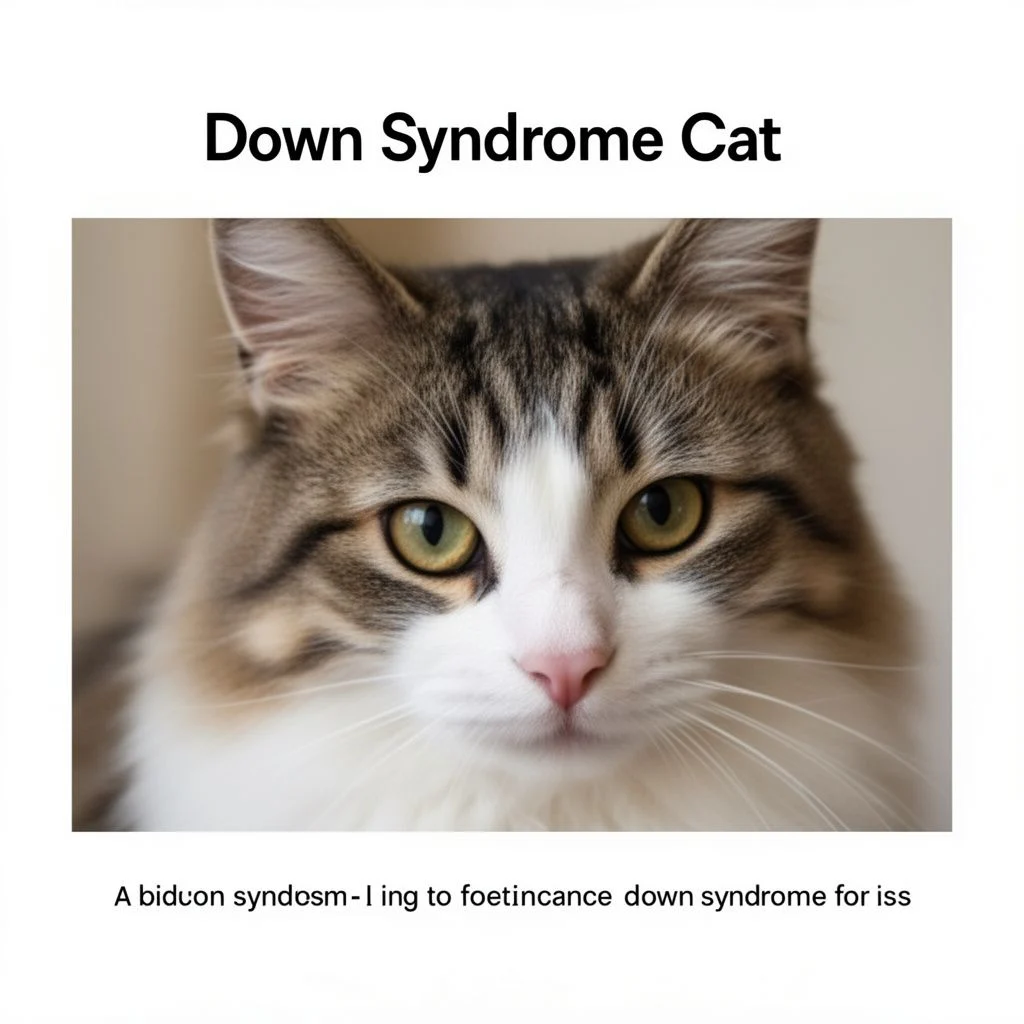
A down syndrome cat is a topic that comes up often in vet offices and online forums. Pet owners see a cat with wide-set eyes, a flat nose, or unusual behavior and wonder if their feline friend has the same chromosomal condition that affects humans. The short answer is no, cats cannot have Down syndrome. But the reasons behind this misconception are worth understanding, and the symptoms people notice are often signs of real, treatable health issues.
Quick Answer: Cats cannot have Down syndrome because they only have 19 pairs of chromosomes, while Down syndrome is caused by an extra copy of human chromosome 21. However, cats can be born with physical and neurological differences that look similar to Down syndrome symptoms in people.
Why Cats Cannot Have Down Syndrome
The biology here is pretty straightforward. Down syndrome in humans is a specific genetic condition called trisomy 21. It happens when a person inherits three copies of chromosome 21 instead of the usual two. This extra chromosome affects how the body and brain develop.
Cats have a completely different genetic blueprint. A healthy cat has 19 pairs of chromosomes, for a total of 38. Humans have 23 pairs, for 46 total. There is no chromosome 21 in a cat’s genome, and the genetic duplication that causes Down syndrome in humans simply does not occur in felines.
That said, cats can experience chromosomal abnormalities. These are rare and typically result in miscarriage or kittens that do not survive long after birth. A kitten born with a chromosomal defect might show developmental delays or physical differences, but this is not Down syndrome. It is a different genetic anomaly altogether.
Pro Tip: If someone tells you their cat has Down syndrome, they are almost certainly describing physical traits or behavioral quirks that have another underlying cause. A vet can help identify what is actually going on.
Conditions That Mimic Down Syndrome in Cats
So if cats cannot have Down syndrome, what are people actually seeing? Several real conditions can make a cat look or act differently in ways that remind people of Down syndrome symptoms.
Feline Dysautonomia
Feline dysautonomia is a neurological disorder that affects the autonomic nervous system. Cats with this condition may have dilated pupils, droopy eyelids, and difficulty eating or swallowing. The condition is more commonly reported in the United Kingdom, though cases appear worldwide. According to research published in the Journal of Feline Medicine and Surgery, feline dysautonomia remains poorly understood, with no definitive cause identified and no reliable treatment.
Cerebellar Hypoplasia
Cerebellar hypoplasia is a condition where the cerebellum, the part of the brain that controls coordination, does not develop fully. Kittens are born with it, often because the mother cat contracted feline panleukopenia virus during pregnancy. These cats have jerky, uncoordinated movements, head tremors, and a wide-based stance. They may seem clumsy or “different” in their movements, which some owners misinterpret as a cognitive disability.
A cat with cerebellar hypoplasia is not in pain and can live a full, happy life with some accommodations. They just wobble.
Hydrocephalus
Hydrocephalus is a buildup of fluid in the brain. It can cause an enlarged, dome-shaped head, wide-set eyes, and neurological symptoms like seizures or behavioral changes. Some cats are born with it, while others develop it after an infection or injury. This condition requires veterinary management and can range from mild to severe.
Facial Deformities and Flat Face Syndrome
Brachycephalic breeds like Persians, Himalayans, and Exotic Shorthairs are bred to have flat faces. Their facial structure naturally includes wide-set eyes, a short nose, and sometimes a protruding tongue. These are breed characteristics, not chromosomal abnormalities. However, the same features can cause breathing problems, eye issues, and dental problems.
Some cats are also born with cleft palates, missing eyes, or other congenital deformities that alter their appearance. These are structural issues present at birth, not genetic conditions equivalent to Down syndrome.
Comparison Table: Down Syndrome vs. Common Cat Conditions
| Feature | Human Down Syndrome | Cerebellar Hypoplasia | Feline Dysautonomia | Hydrocephalus | Brachycephalic Breeds |
|---|---|---|---|---|---|
| Cause | Extra chromosome 21 | Underdeveloped cerebellum | Unknown, affects autonomic nerves | Fluid buildup in brain | Selective breeding |
| Present at birth? | Yes | Yes | No, develops later | Sometimes | Yes |
| Physical appearance changes | Yes | No | Yes, eye changes | Yes, head shape | Yes, flat face |
| Coordination issues | Sometimes | Yes, significant | Sometimes | Sometimes | No |
| Treatable? | Manageable, not curable | Not curable, manageable | Poor prognosis | Sometimes treatable | Manageable with care |
| Life expectancy | Near normal with care | Normal | Often shortened | Varies | Normal with care |
Each of these conditions has distinct causes and treatment approaches. Understanding the difference helps owners get the right care for their cat.
Common Physical Traits People Notice
When someone searches for “down syndrome cat,” they usually have a specific cat in mind. Maybe it is their own pet or a photo they saw online. Here are the physical traits most commonly associated with this misconception:
- Wide-set eyes that appear larger or more prominent than usual
- A flat or broad nose bridge
- Small or unusually shaped ears
- Low muscle tone, making the cat seem floppy or less coordinated
- A tongue that protrudes slightly
- Unusual vocalizations or a quieter meow than expected
- Slower growth or smaller size compared to littermates
None of these traits on their own indicate a chromosomal disorder. Many are normal variations within the feline population. Some are breed-specific. Others point to an underlying medical condition that deserves veterinary attention.
Pro Tip: Take photos and videos of any concerning physical traits or behaviors before your vet visit. A short video of how your cat walks, eats, or plays gives your vet far more diagnostic information than a verbal description.
Behavioral Signs That Raise Questions
Physical appearance is only part of the story. Many owners notice behavioral differences that make them wonder about their cat’s cognitive function.
A cat that seems “slow” mentally, does not respond to its name, or struggles with litter box training might prompt the Down syndrome question. Here is what those behaviors could actually indicate:
- Cognitive dysfunction syndrome, which affects older cats similarly to dementia in humans
- Sensory impairments, including deafness or partial blindness from birth
- Trauma or brain injury from an accident or infection
- Malnutrition during kittenhood, which can delay brain development
- Exposure to toxins like certain plants, medications, or chemicals during pregnancy
- Neurological conditions such as seizures or vestibular disease
Kittens that are separated from their mothers too early may also struggle with normal cat behaviors like grooming or social interaction. This is an environmental issue, not a genetic one.
The key point is that behavioral differences have explanations. A good veterinarian can run tests, observe your cat, and help pinpoint the cause rather than settling for a label that does not apply.
What to Do If Your Cat Shows These Signs
If your cat has physical or behavioral traits that concern you, the path forward is practical. Here is a step-by-step approach:
- Schedule a veterinary exam. A full physical exam is the starting point. Your vet will check neurological function, eye health, heart function, and overall body condition.
- Bring records. If your cat is a rescue with unknown history, share whatever you know. Age, origin, and any observed symptoms matter.
- Ask about diagnostic testing. Blood work, X-rays, or an MRI may be recommended depending on the symptoms.
- Discuss quality of life. For conditions like cerebellar hypoplasia, the prognosis is good. For others, your vet will help you understand what to expect.
- Make home accommodations. Depending on the diagnosis, simple changes like non-slip rugs, raised food bowls, or a modified litter box can make a big difference.
The goal is not to find a label. The goal is to understand your cat’s health and give them the best possible life.
Pro Tip: Rescue organizations and shelters often have experience with special needs cats. If you adopt a cat with known physical or neurological differences, ask the shelter for documentation and any veterinary records. This gives your own vet a head start.
Key Takeaways
- Cats cannot have Down syndrome because they lack the human chromosome 21 where the condition originates.
- Physical traits like wide-set eyes, flat faces, or unusual movements often indicate breed characteristics or specific medical conditions.
- Cerebellar hypoplasia, hydrocephalus, and feline dysautonomia are real conditions that can mimic Down syndrome-like symptoms.
- Behavioral differences in cats usually stem from neurological issues, sensory impairments, or early life experiences, not chromosomal disorders.
- A veterinary exam is the only way to identify the actual cause of unusual physical or behavioral traits in your cat.
Frequently Asked Questions About Down Syndrome Cats
Q: Can a cat actually have Down syndrome?
A: No. Down syndrome is caused by an extra copy of human chromosome 21. Cats have 19 pairs of chromosomes and do not have a chromosome 21, so the condition cannot occur in felines.
Q: What is the cat version of Down syndrome?
A: There is no feline equivalent of Down syndrome. Cats can have other chromosomal abnormalities, but these are rare, usually fatal early in life, and are not the same as trisomy 21 in humans.
Q: Why does my cat look like it has Down syndrome?
A: Your cat likely has physical traits from its breed, such as a flat face in Persians, or a congenital condition like hydrocephalus or a facial deformity. A vet can help identify the specific cause.
Q: Can cats have autism?
A: There is no clinical diagnosis of autism in cats. Some cats display repetitive behaviors, social withdrawal, or sensory sensitivities, but these are usually linked to anxiety, neurological issues, or past trauma rather than autism.
Q: What is cerebellar hypoplasia in cats?
A: Cerebellar hypoplasia is a neurological condition where the cerebellum does not fully develop before birth. Affected cats have uncoordinated movements and tremors but are not in pain and can live normal lifespans.
Q: Do flat-faced cat breeds have more health problems?
A: Yes. Brachycephalic breeds like Persians and Exotic Shorthairs often experience breathing difficulties, eye problems, dental issues, and overheating. These are consequences of selective breeding, not chromosomal conditions.
Q: Can cats have mental retardation?
A: The term is not clinically applied to cats. Cats can have cognitive dysfunction, developmental delays from malnutrition or trauma, or neurological conditions that affect learning and behavior, but these are not classified the same way as intellectual disabilities in humans.
Q: How do I know if my cat has a neurological problem?
A: Signs include seizures, head tilting, circling, uncoordinated movement, sudden behavior changes, or loss of balance. Any of these symptoms warrants a prompt veterinary visit.
Q: Can special needs cats live happy lives?
A: Absolutely. Many cats with conditions like cerebellar hypoplasia, blindness, or deafness adapt remarkably well. With the right home environment and veterinary care, these cats can live full, comfortable, and happy lives.
Q: Should I adopt a cat that looks different?
A: If a cat’s unique appearance or behavior draws you in, do not let a label stop you. Talk to the shelter staff, understand any known medical needs, and consult with a vet. Many of these cats make wonderful companions.
References & Further Reading
- International Cat Care: Cerebellar Hypoplasia in Cats
- Cornell Feline Health Center: Feline Health Topics
- National Down Syndrome Society: What is Down Syndrome?
- Merck Veterinary Manual: Congenital and Inherited Anomalies of the Nervous System in Cats
About This Article
This article was written by a content strategist specializing in veterinary and animal health topics, with research support from peer-reviewed veterinary sources and established animal health organizations. The information provided is for educational purposes and should not replace professional veterinary advice. If your cat shows unusual physical or behavioral symptoms, consult a licensed veterinarian for a proper diagnosis and treatment plan.